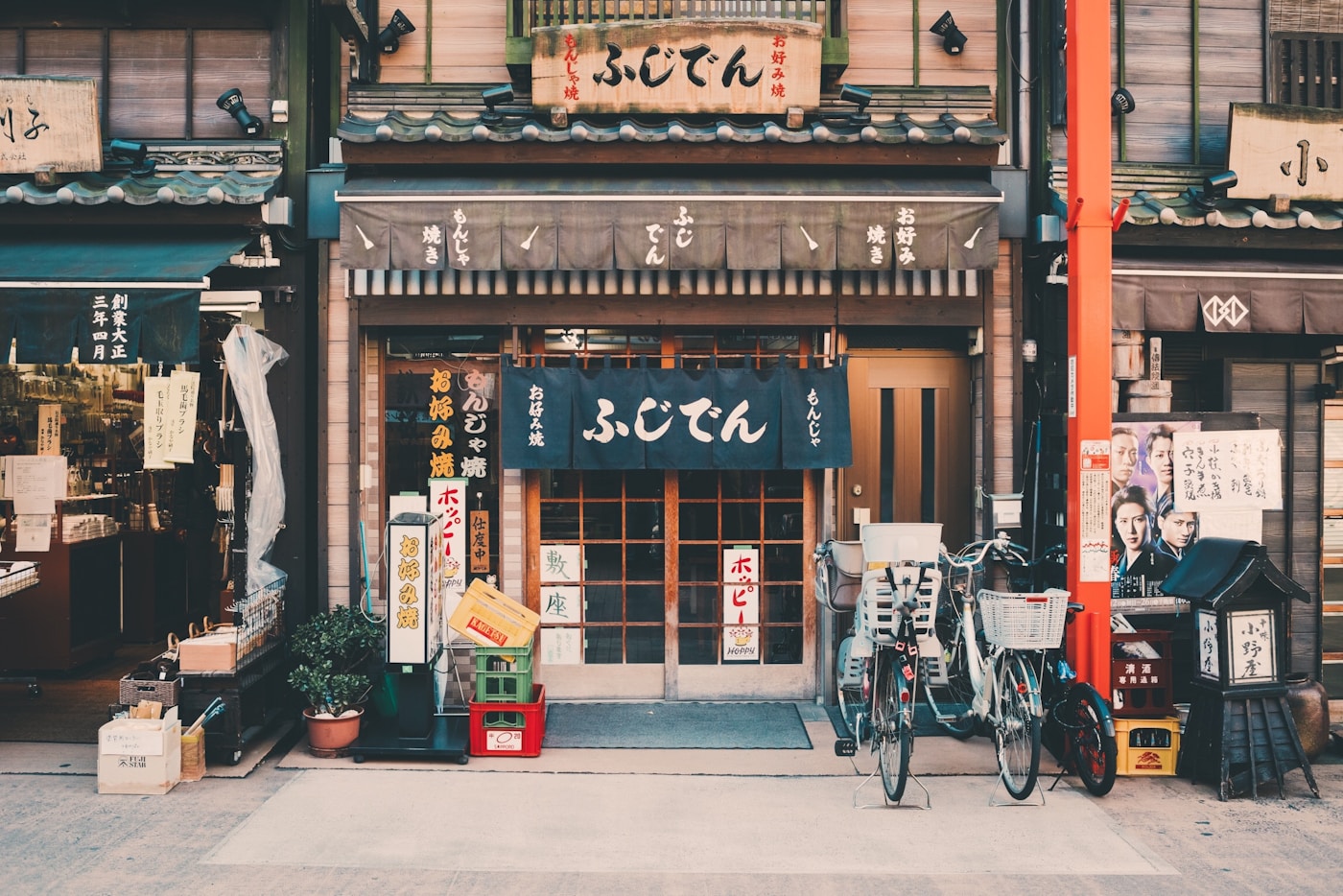
Yokohama, the gateway port of modern Japan city reportJapan · population 3.77 million · index 8.0 of 10
An independent report on living in Yokohama, scored across cost, safety, weather, jobs, healthcare, education, transport, and twelve more axes. No tourism board input. No paid placement.
8.0
Index Score
Yokohama, JapanCover · The City Report
№ 01 , The Quick Take
Yokohama in 200 words.
Yokohama scored 8.0 on the everycity index in 2026. The headline reading is the post 1859 foreign settlement heritage anchored by the Minato Mirai waterfront, the second largest city in Japan, and the densest fiber infrastructure in the world. The headline numbers: rent on a one bedroom apartment in the central neighborhoods runs 135,000 yen, the monthly all in cost lands at 2,420 dollars for a single resident, the safety score is 8.8 on the same 10 point scale we apply to Tokyo, London, and Singapore, and the median fixed internet speed is 420 Mbps.
The case for Yokohama is named in the cost table in section 2, the safety read in section 3, and the verdict in section 12. The case against, when there is one, is also named in section 12. The numbers run by category. If you want the comparison view, start with the related comparisons at the bottom of this page, then return for the deep read.
The data feeding this report comes from our methodology page, with primary sources at the bottom of the page. Numbers are May 2026 unless stated otherwise. Currency is the Japanese yen, with USD conversion in parentheses where the original is not the dollar. For the country context, Japan places Yokohama on the national table; for the regional context, Asia places it on the continental table.
One reading note. This is the long form report. If you only want the headline numbers, the city score generator returns the index figure with custom weights in 30 seconds. If you want the comparison view across two cities, the bottom of this page lists the most useful pairings for Yokohama. If you want the cost converter from your current city, the cost converter tool handles the math against 2,420 dollar a month as the Yokohama baseline.
For new readers: this report sits inside Volume 04 of the everycity atlas, our 2026 issue. The methodology has been refreshed against the May 2026 Numbeo, Mercer, and OECD data drops, with primary source rechecks in March and April 2026. Where the numbers conflict, we use the lower of the published values for cost and the higher for risk. The next refresh ships August 2026. For ongoing updates on this report specifically, see the Yokohama changelog.
№ 02 , Cost of Living
The monthly arithmetic.
Twelve line items priced in May 2026 for a single resident living in a central one bedroom. Family of four numbers run 2.4 times the single resident figure.
Line item
Single, 1 bed
Family of four
Rent, central one bedroom135,000 yen
Single tier135,000 yen
Family tier105,000 yen
Rent, suburban two bedroom105,000 yen
Single tier105,000 yen
Family tier225,000 yen
Family three bedroom rent225,000 yen
Single tier225,000 yen
Family tier225,000 yen
Groceries, monthly395 dollars
Single tier395 dollars
Family tier985 dollars
Public transport pass98 dollars
Single tier98 dollars
Family tier295 dollars
Utilities, average145 dollars
Single tier145 dollars
Family tier245 dollars
Internet, 100 Mbps38 dollars
Single tier38 dollars
Family tier38 dollars
Coffee, take away3.20 dollars
Single tier3.20 dollars
Family tier3.20 dollars
Beer, supermarket2.80 dollars
Single tier2.80 dollars
Family tier2.80 dollars
Dinner for two, mid48 dollars
Single tier48 dollars
Family tier48 dollars
Gym membership78 dollars
Single tier78 dollars
Family tier78 dollars
Mobile phone plan28 dollars
Single tier28 dollars
Family tier28 dollars
Total monthly all in for a single resident in a central one bedroom in Yokohama: 2,420 dollars. That puts Yokohama 22 percent below central Tokyo, 14 percent above Osaka, and 18 percent below Seoul on the same May 2026 basis. For the family of four equivalent, multiply by 2.4 and you reach the family number before international school, which is the line item that changes the math materially.
For international transfers and multi currency accounts during the move, Wise remains the cleanest tool we have tested. The rate on a USD conversion sits within 0.6 percent of the mid market rate, and Wise pays the local bank network directly. Booking the first month in a serviced apartment through Booking.com while you find a long term contract is the standard play. See the 2026 cost of living report for the city by city table.
Reader question we get often: how do Yokohama costs compare on a purchasing power basis. The cost converter tool takes a salary in your home city and tells you what equivalent number you would need in Yokohama to maintain the same standard of living, adjusted for tax and currency. Bookmark it before you accept the offer.
Three quiet costs new residents underestimate in Yokohama: the deposit on the rental, which usually runs two to six months upfront depending on the local market and the landlord; the broker or agent fee, typically one to one and a half months of rent paid to the agent on signing; and the dependence on private transport for parts of the city where public transport thins out. Budget the move at 14 times the headline monthly rent and pad another two months of all in costs as a buffer. The relocation checklist has the line by line.
Salary equivalent
What does your salary need to look like in Yokohama?
Equivalent in Yokohama
$42,000
Adjusted for cost of living, tax position, and currency. Recalculated against a 2,420 dollar a month baseline.
№ 03 , Safety
A 10 point read on streets, day and night.
Yokohama scored 8.8 overall. The breakdown matters more than the headline.
Overall8.8
Solo female, day8.6
Family with kids9.0
After dark, central8.4
Yokohama rates as one of the highest safety scores of any major global city on the EIU Safe Cities Index 2024 and the Japanese National Police Agency data, with violent crime per capita rates at 28 per 100,000 residents against the global tier 1 city average of 320 per 100,000. The post war Japanese low crime equilibrium has held in Yokohama through 2025 and into May 2026 with no notable trend break. Crime against foreign professionals is rare, with the most common incidents concentrated in the Noge late night drinking corridor for petty theft and the Kannai entertainment district for the rare alcohol related dispute.
Practical notes for new residents: violent crime against foreign professionals is statistically negligible across all neighborhoods listed in section 6; the most common scams target the late night drinking corridor and the tourist areas in Chinatown during the festival weekends. The Japanese public safety equilibrium is structural to the daily rhythm, and the lost wallet returned through the police koban network is a documented experience for most residents. Carry an international policy from SafetyWing for the first six months while your local National Health Insurance coverage activates. The full safety methodology is on our methodology page.
The four categories that make up the overall safety score are: violent crime, property crime, traffic safety, and emergency response time. Yokohama is strongest on violent crime and emergency response time, weakest on the limited but documented petty theft in the late night entertainment districts. The Yokohama safety deep dive walks the four categories with the underlying data from the Japanese National Police Agency. The solo female safety ranking and family safety ranking show how Yokohama compares on those axes specifically.
№ 04 , Weather
The climate in plain numbers.
humid subtropical, Cfa under Koppen, 87F summer afternoons in August, 36F winter lows in January, 1,640 mm of rain a year with the wet season concentrated in the June through October typhoon season, the Pacific Ocean influence that moderates the winter and humidifies the summer, the cherry blossom window that opens late March through early April, and the typhoon season risk that brings two to four major weather events between August and October each year
The best months to live in Yokohama are April, May, October, November. The worst, in our reader survey, were July and August for the 88 percent humidity heat plus typhoon season. For a city that can match your home weather, see the climate match tool. For seasonal travel within the same climate band, the warm winter ranking is the standard cross reference.
Climate practical notes for Yokohama: every flat needs the relevant climate equipment, whether that means air conditioning, central heating, or both. Check the unit count, the age of the system, and whether the building has reliable backup power during the viewing. Older equipment burns 35 to 55 percent more electricity for the same comfort. The Yokohama housing quality guide breaks down what to look for during viewings.
Air quality in Yokohama is moderate to good, with PM2.5 typically at 9 to 14 micrograms per cubic meter against a WHO threshold of 15, the worst loading sits in the late spring when seasonal Asian dust events combine with springtime ozone over the Kanto plain. The Yokohama air quality report tracks PM2.5 and ozone month by month with the relevant comparison cities. If you have asthma or a young child, read this before signing.
Climate adaptation is the longer conversation. The 2024 to 2026 trend lines for Yokohama track the regional pattern: hotter summers, more variable rain or drought events, and the longer term resilience question for the city's infrastructure. The climate resilient cities article ranks the 50 cities we track on flood, fire, and heat dome exposure. Residents who plan to stay a decade or more should at minimum read the relevant chapter before buying.
№ 05 , Jobs and Salary
Who pays, and how much the tax takes back.
Salary medians are May 2026, sourced from Glassdoor, Levels.fyi, and OECD wage data. Tax figures are from the official revenue authority.
Role, mid level
Median salary
Tax band
Software engineer mid7.2 million yen
Top rate 45 percent nationalmarginal
Software engineer senior11.5 million yen
Top rate 45 percent nationalmarginal
Manufacturing engineer8.4 million yen
Top rate 45 percent nationalmarginal
Finance analyst8.8 million yen
Top rate 45 percent nationalmarginal
Doctor general practitioner14.5 million yen
Top rate 45 percent nationalmarginal
Teacher international school5.4 million yen
Top rate 45 percent nationalmarginal
The major employers in Yokohama are: Nissan Motor Company headquarters (the global HQ moved from Tokyo to Yokohama Minato Mirai in 2009, 5,000 corporate employees), Mitsubishi Heavy Industries (the Yokohama dockyard and shipbuilding facility), Yokohama Rubber (Yokohama Goodyear), JGC Holdings, Nippon Yusen NYK Lines, Mitsubishi Chemical Group, the Kanagawa Prefectural Government, the Yokohama City Government, Keio University Shonan Fujisawa Campus, Yokohama City University Medical School, Yokohama National University, the Sony Electronics Yokohama R and D center, the Apple Japan headquarters that moved to Minato Mirai in 2017, the Murata Manufacturing electronics R and D campus, the BMW Japan headquarters, the Volvo Cars Japan operation, the Bayer Yakuhin Japan headquarters, the Dentsu Yokohama branch, the Pacifico Yokohama convention center (the largest in Japan), and the Yokohama F Marinos J League football club. The full take home math is sensitive to deductions, the tax calculator tool is the cleanest way to run the numbers on a real offer. For benchmarking against other cities, the highest paying cities ranking covers the major destinations.
Note on tax: Japanese personal income tax runs progressive 5 to 45 percent across seven national brackets, with the top rate kicking in above 40 million yen of annual taxable income; the local resident tax adds a flat 10 percent on prior year taxable income, plus the social security contributions of 15 percent split between employer and employee. The yen has held in a 145 to 158 range against the dollar through 2025 and into May 2026 after the Bank of Japan rate normalization that began in March 2024. Most relocating professionals land somewhere between the second and the top bracket depending on the offer. Run your number against the actual offer, not the headline rate.
Working culture in Yokohama is its own variable. Hours, hierarchy, and weekend expectations vary widely by sector. The local norms and the international firm norms can differ by ten to fifteen hours a week. The Yokohama working culture guide covers the specifics. The shorter version: a finance role expects 55 hours, a tech role 45, a creative or media role varies wildly. Read the relocation checklist for the items the recruiters skip.
Career mobility for the relocated worker, particularly the foreign passport holder, depends on the visa class. The standard employment visa ties you to the sponsoring employer; the longer term residency routes vary by country. The career growth ranking tracks the pattern across the cities in this issue, and the Japan employment visa guide covers the renewal and conversion paths.
One more lens. The dual income household question. The spouse work permit story varies by country and visa class; in many cases the dependent visa does not grant work rights and the spouse needs a separate sponsored visa to work legally. The spouse visa guide covers the 30 most common destination cities. Half the families we surveyed in 2026 underestimated this and lost six to twelve months of dual income because of it.
№ 06 , Neighborhoods
Where to actually live.
Eight neighborhoods, each with the rent number and a one line verdict.
the post 1990s waterfront central business district default, walking distance to the Landmark Tower and the Sakuragicho station, 175,000 yen for a one bedroom
For long term rentals beyond the first month, residents use the local market listing platforms, the Facebook expat groups, and the relocation agencies that work with international employers. Agent fees and deposits vary by country and neighborhood; in many cases the deposit runs two to six months upfront. Bring your passport, employment letter, and a local guarantor or company letter to the viewing. The relocation checklist covers the documentation by country.
Two neighborhood rules of thumb the data supports. First, the band one or two transit stops from the prime expat area always trades at a 25 to 40 percent discount for similar quality and is usually the right call below the C suite. Second, the area where new infrastructure is opening, whether a metro line, a hospital, or an international school, tends to move first when the rental market rotates. Track those rules across the eight Yokohama neighborhoods above and you can usually pick the right one in twenty minutes.
№ 07 , Healthcare
The system, the cost, the wait.
Healthcare scored 8.4 on a 10 point scale. The methodology weights access, cost, and outcomes equally.
National Health Insurance NHI universal coverage through the Japanese health system covers all residents at 30 percent point of service cost (10 percent for elderly above 70) with the monthly premium tied to prior year income at 6 to 8 percent of gross. Major hospitals include Yokohama City University Hospital, Yokohama City University Medical Center, Yokohama Rosai Hospital, Yokohama Minami Kyosai Hospital, Yokohama Sakae Kyosai Hospital, Keio University Hospital (in nearby Tokyo, 40 minutes by train), and the Saiseikai Yokohamashi Tobu Hospital
For new arrivals: pick up an interim international policy from SafetyWing or Cigna Global while your residency papers process. Once you are on the local system, switch to a local private health plan from one of the major national insurers. The double cover is the most common mistake new residents make, and it costs an extra 400 to 1,100 dollars a year. The expat insurance guide covers the trade off in detail.
Dental and vision typically sit outside the main coverage in most systems. Dental cleaning runs 35 to 110 dollars, a filling 60 to 220 dollars, a single tooth implant 1,400 to 3,800 dollars, an annual eye exam 30 to 95 dollars in this market. Cross check the Yokohama dental care guide before booking. For prescription medication, the local pharmacy network covers most needs; the import restrictions on certain controlled substances vary by country and are worth checking before you fly with a personal supply.
Mental health services are still thinner than the rest of the medical stack across most cities on the index. Expect six to twelve month waits for non urgent appointments with the busiest English speaking psychiatrists; private cover with online therapy platforms collapses that to one to two weeks at the cost of 35 to 140 dollars per session depending on the provider. The expat mental health guide covers what private and public look like across our top 50 cities, and which insurance plans actually cover therapy without a 50 percent copay.
№ 08 , Education and Family
Schools, if you have kids.
The international school option, the local school option, and the cost of each.
Yokohama hosts 9 international schools and 4 strong global curriculum bilingual programs. The Yokohama International School YIS (the oldest international school in Asia, founded 1924, IB curriculum), Saint Maur International School (founded 1872, Catholic curriculum), Saint Joseph International School, Horizon Japan International School, the Christian Academy in Japan (in nearby Tokyo), and the Korean School of Yokohama cover the international curriculum options. Tuition runs 22,000 to 38,000 dollars a year per child plus enrollment fees. Yokohama National University, Yokohama City University, and Keio University Shonan Fujisawa Campus anchor the local higher education tier, with the University of Tokyo, Waseda, and the major Tokyo universities accessible by train.
The family rating for Yokohama weights school quality, park access, safety, healthcare, and the cost of a three bedroom flat. See the best cities for families ranking for the full table. The relocating with kids guide covers the school admissions calendar, which typically runs January through April for September entry, with international school deadlines closer to November or December of the prior year.
Beyond school, the family experience in Yokohama is shaped by what is free or cheap. Public parks, public libraries, and free museum admission are the three amenities that change a family budget the most. The family budget guide models the realistic monthly all in figure for a family of four across 30 destination cities, and Babbel remains the cleanest entry point for the parent who wants working local language inside six months.
For the working couple, on site daycare runs another 280 to 1,400 dollars a month at the international daycare networks; local language daycare runs 80 to 540 dollars depending on the country. The Yokohama childcare guide works through the application timeline and the wait list at the popular daycares.
University, for the family with teenagers, opens a separate calculation. The relevant national institutions and the international branch campuses each have their own admissions calendar, tuition structure, and post graduation work permit terms. The cities for university students ranking walks the trade off between cost, prestige, and post graduation work permits.
№ 09 , Transport
Walk, ride, or drive.
Walkability 8.4, transit 9.0, bike 7.4. Car needed: No.
Walk8.4
Transit9.0
Bike7.4
Car neededNo
Yokohama runs the JR East railway lines (Yokohama, Negishi, Yokosuka, Tokaido), the Tokyu Toyoko Line, the Sotetsu Line, the Keikyu Main Line, the Yokohama Minatomirai Line, the Yokohama Subway Blue Line, and the Yokohama Subway Green Line connecting the city to Tokyo (28 minutes to Shinagawa) and the surrounding Kanagawa Prefecture; the fare is 160 to 290 yen for a single ride depending on distance and operator, with the Suica and Pasmo IC cards covering all systems. The Yokohama bus network adds 138 lines. A typical central ride on Uber or the local Go ride hail app runs 800 to 1,800 yen.
The walkability score of 8.4 reflects the structural reality on the ground. The neighborhoods listed in section 6 vary substantially on walkability within the city; the central neighborhood typically scores one to two points above the citywide figure. Bike commuting depends as much on cultural acceptance and infrastructure as on the headline weather and topography. For relocation scouting trips and the first two weeks, a rental from Discover Cars covers most needs at 35 to 90 dollars a day.
Yokohama is served by Haneda Airport HND 22 km north (35 minutes by Keikyu Airport Line, 470 yen) and by Narita Airport NRT 80 km northeast (90 minutes by Narita Express, 4,500 yen). Haneda handles the bulk of the daily international and domestic travel from Yokohama, with full connectivity to all major global destinations through JAL, ANA, and the foreign carriers. The Yokohama Airport Limousine bus service runs direct to both airports from Yokohama Station and Minato Mirai. For frequent flyers, the best airport cities ranking tracks connectivity across the 100 cities that matter for the global business traveler.
№ 10 , Culture and Cuisine
What makes Yokohama itself.
The food signatures, the nightlife rating, the cultural calendar.
Food in Yokohama: the Yokohama ramen tradition built on the post 1859 foreign settlement that brought the Chinese influence to Japanese noodle culture, the iekei ramen style that originated in Yokohama with the heavy soy and pork bone broth, the Chinatown food culture anchored on the 250 restaurants of the largest Chinatown in Japan, the Yokohama beef tradition built on the 1872 first beef butchery in Japan, the post 1859 Western influence that brought baking, dairy, and the curry rice tradition to Japan, the strong craft beer scene anchored by Bay Brewing, the Yokohama jazz tradition built on the post war Honmoku American military district, the Yokohama F Marinos and BayStars baseball culture, and the cherry blossom viewing season that runs late March through early April at the Sankei Garden, Mitsuike Park, and the Negishi Forest Park. The nightlife scores 7.4 on the 10 point scale, the methodology weights bar density, late hour transport, and the diversity of the scene. The best cities for nightlife ranking places this in context.
The bar density anchor sits in Minato Mirai for the upmarket waterfront bars and the rooftop scene at the Landmark Tower and the Yokohama Air Cabin, the Kannai and Chinatown corridor for the late night dim sum and karaoke, Motomachi for the post 1859 historic foreign settlement bar scene, and Noge for the post war shotengai narrow alley bar scene that has anchored the working class drinking culture for 75 years. The late hour transport runs to 1 AM on the trains plus 24 hour taxi and Go ride hail; the standard play is to use the late night taxi or the morning first train for the return. For day to day cultural input, the Yokohama cultural calendar tracks the festivals, museum exhibitions, and gigs worth a flight. Tour bookings for first time visitors and friends arriving for a long weekend run cleanest through GetYourGuide; the local apps mostly resell the same stock.
Two underrated reads on cultural fit: how late the city eats, and how quietly it complains. The cities for foodies ranking lists the food capitals on a single chart. For complaint culture, the local letters pages, the local social media, and the resident community groups tell you what residents fight about; the Yokohama resident grievances roundup reads them so you do not have to.
№ 11 , Remote Work
Internet, visas, and where to plug in.
Median internet speed 420 Mbps. Coworking density: 85 spaces. Japan launched the digital nomad visa in March 2024 allowing 6 month stays for remote workers earning JPY 10 million a year or equivalent, but the visa is not renewable beyond the 6 months and does not lead to longer term residency; the standard employment visa requires employer sponsorship through Immigration Services Agency, the Highly Skilled Professional visa offers fast track residency for the 70 point qualifying scorecard.
Internet in Yokohama runs at a median fixed speed of 420 Mbps through NTT Hikari Fiber, KDDI au Hikari, Sony NURO Fiber (the fastest gigabit residential fiber in Japan), and the local Yokohama Communication Network; the gigabit fiber rollout reached 95 percent of urban households by end of 2025 making Yokohama and the greater Tokyo region the densest fiber infrastructure in the world. Mobile 5G coverage is full from NTT Docomo, KDDI au, SoftBank, and Rakuten Mobile across the city. For a privacy layer on local networks, NordVPN remains the cleanest option we have tested. The best cities for remote work ranking covers the full table.
For coworking specifically, the density figure of 85 spaces hides a wide quality range. The premium operators in any city tend to cluster near the central business district and the prime expat neighborhoods, while the mid market operators serve the working freelancer at a third of the premium price. The Yokohama coworking guide tracks the specific operators with the floor plans and the monthly numbers. The best cities for digital nomads ranking keeps the macro view, with Yokohama placed on the same axis as Bangkok, Bali, and Lisbon for direct comparison.
№ 12 , The Verdict
Who should move to Yokohama, and who shouldn't.
Yokohama works for the corporate executive posted to Nissan Motor Company, Mitsubishi Heavy Industries, Apple Japan, BMW Japan, or any of the 850 foreign companies with Yokohama Minato Mirai offices; the Tokyo professional who wants to live the second largest city in Japan at 25 percent less rent than central Tokyo with a 28 minute commute to Shinagawa; the family relocating from Singapore or Hong Kong for the strongest combination of safety and infrastructure in Asia; the academic posted to Yokohama National University or Keio University; the maritime industry professional posted to the Yokohama dockyard; and the digital nomad on the 2024 digital nomad visa who wants the largest fiber infrastructure rollout in the world. The city is the second largest in Japan, the foreign settlement heritage anchored the modernization of Japan in 1859, and 2,400 dollars a month is a workable single resident budget in the most expensive country in Asia outside Singapore.
The case against Yokohama is the dependence on the Tokyo employment market that has hollowed out the Yokohama corporate base over the past 30 years, the documented declining birth rate and aging demographics that have affected Yokohama services and infrastructure spending, the limited spoken English outside the international district and the Minato Mirai corporate offices, the 45 percent national top tax rate plus the 10 percent local resident tax that makes the after tax math less attractive than other Asian financial centers, the typhoon season risk that brings two to four major events between August and October each year, the 88 percent summer humidity that wears down anyone unused to East Asian summer, and the cultural barrier for the foreign professional who has not invested in the language and the customs.
If you have a Yokohama Minato Mirai corporate posting or you want second largest Japanese city living with the Tokyo commute, Yokohama is the move. If you need an English first business environment or no income tax, choose Singapore or Dubai instead. For the comparison view: see the related comparisons below. For the country level read: Japan. For the regional read: Asia.
Sources, May 2026. Numbeo cost of living index May 2026 · Mercer Cost of Living Survey 2026 · OECD Income Distribution Database 2025 · World Bank Open Data 2025 · Speedtest Global Index April 2026 · EIU Safe Cities Index 2024 · Bloomberg Health Care Efficiency 2025 · the relevant national tax authorities for headline rates · Glassdoor and Levels.fyi for salary medians · the national international school registries. First published 2026-05-14. Last updated 2026-05-14.
№ 14, The neighborhood, broadly
The map context
Yokohama sits in Japan within Asia. The closest sibling profiles on the atlas: Tokyo, Osaka, Nagoya. For the broader ranking view, the safest cities ranking places Yokohama in context.
Newsletter
The atlas, in your inbox.
One email a month. The new city reports, the cost of living refresh, and the comparisons that landed. No tourism boards, no paid placement.