Osaka, a working city reportJapan · population 19.1 million metro · index 8.1 of 10
An independent report on living in Osaka, scored across cost, safety, weather, jobs, healthcare, education, transport, and twelve more axes. No tourism board input. No paid placement.
8.1
Index Score
Osaka, JapanCover · The City Report
№ 01 , The Quick Take
Osaka in 200 words.
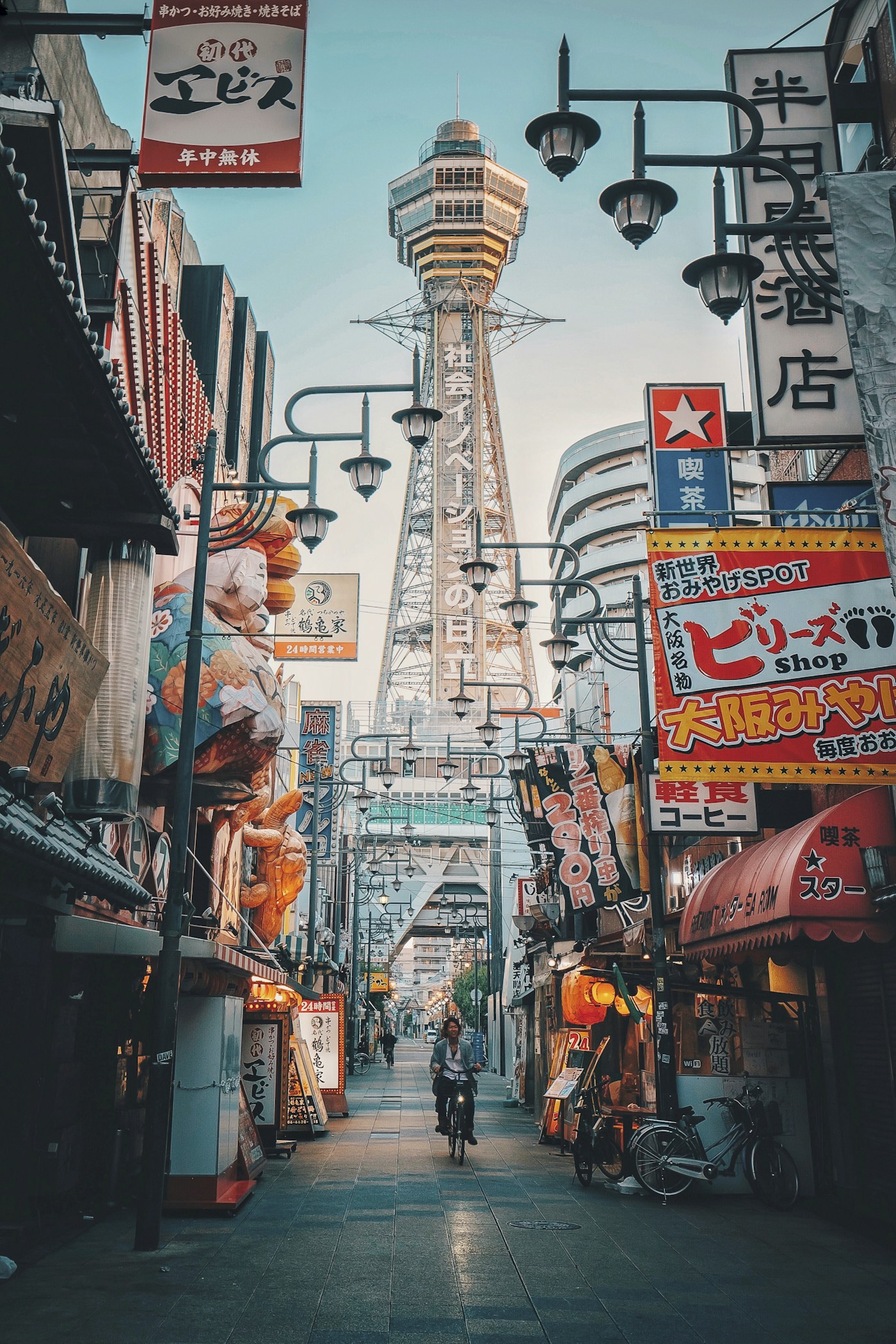
Osaka scored 8.1 on the everycity index in 2026, the second largest urban economy in Japan and the southern anchor of the Keihanshin metropolitan area. The headline numbers: rent on a one bedroom apartment in Umeda or Namba runs 95,000 yen (640 dollars), the monthly all in cost lands at 2,100 dollars for a single resident, the income tax position runs progressive 5 to 45 percent plus a 10 percent local resident tax, and the safety score is 9.2 on the same 10 point scale we apply to Tokyo, Singapore, and Zurich.
The case for Osaka: the value alternative to Tokyo with rents 35 to 45 percent lower for comparable quality, a food culture that Japan itself recognizes as the country's informal capital of taste, a transit network at 9.4 of 10, and proximity to Kyoto, Kobe, and Nara within 45 minutes by JR. The case against, when there is one, is named below in section 12. The full numbers run by category. If you want the comparison view, start with Osaka vs Tokyo or Osaka vs Kyoto.
The data feeding this report comes from our methodology page, with primary sources at the bottom of the page. Numbers are May 2026 unless stated otherwise. Currency is the Japanese yen, with USD conversion in parentheses where the original is not the dollar.
One reading note. This is the long form report. If you only want the headline numbers, the city score generator returns the index figure with custom weights in 30 seconds. If you want the comparison view across two cities, the Osaka vs Tokyo page is the first stop. If you want the country context, Japan places Osaka on the national table.
For new readers: this report sits inside Volume 04 of the everycity atlas, our 2026 issue. The methodology has been refreshed against the May 2026 Numbeo, Mercer, and OECD data drops, with primary source rechecks in March and April 2026. Where the numbers conflict, we use the lower of the published values for cost and the higher for risk. The next refresh ships August 2026.
№ 02 , Cost of Living
The monthly arithmetic.
Twelve line items priced in May 2026 for a single resident living in a central one bedroom. Family of four numbers run 2.4 times the single resident figure.
Line item
Single, 1 bed
Family of four
Rent, central one bedroom95,000 yen
Rent, suburban two bedroom110,000 yen
Family three bedroom rent210,000 yen
Groceries, single380 dollars
Groceries, family820 dollars
Family monthly grocery820 dollars
Public transport pass78 dollars
Utilities, average155 dollars
Internet, 1 Gbps32 dollars
Coffee, take away3.80 dollars
Beer, supermarket2.20 dollars
Beer, bar5.60 dollars
Dinner for two, mid54 dollars
Gym membership68 dollars
Mobile phone plan28 dollars
Total monthly all in for a single resident in a central one bedroom in Umeda, Namba, or Fukushima: 2,100 dollars. That puts Osaka 25 percent below Tokyo, 15 percent below Seoul, and 45 percent below Singapore on the same May 2026 basis. For the family of four equivalent, multiply by 2.4 and you reach 5,000 dollars before international school, which is the line item that changes the math materially.
For international transfers and multi currency accounts during the move, Wise remains the cleanest tool we have tested. The rate on a USD to JPY conversion sits within 0.5 percent of the mid market rate, and Wise pays the local Japanese bank network directly through Zengin. Booking the first month in a serviced apartment or weekly mansion through Booking.com while you find a long term contract is the standard play. See the 2026 cost of living report for the city by city table.
Reader question we get often: how do Osaka costs compare on a purchasing power basis. The cost converter tool takes a salary in your home city and tells you what equivalent number you would need in Osaka to maintain the same standard of living, adjusted for tax and currency. Bookmark it before you accept the offer.
Three quiet costs new residents underestimate in Osaka: key money (reikin) of one to two months rent paid to the landlord as a non refundable gift on signing, deposit (shikikin) of one to two months on top, and the agent fee of one month, which together push the first month outlay to four to seven months of rent. Foreigner friendly real estate companies like Apaman Shop and Mini Mini have reduced these fees on select properties, but the standard remains. The Japan rental fee guide covers the workarounds. The relocation checklist has the full line by line.
Salary equivalent
What does your salary need to look like in Osaka?
Equivalent in Osaka
$12,600
Adjusted for cost of living, tax position, and currency. Recalculated against a 2,100 dollar a month baseline.
№ 03 , Safety
A 10 point read on streets, day and night.
Osaka scored 9.2 overall. The breakdown matters more than the headline.
Overall9.2
Solo female, day9.0
Family with kids9.5
After dark, central8.8
Compared with the rest of the index, Osaka sits in the top tier on all four safety axes. The safest cities ranking places Tokyo at 9.6 and Singapore at 9.5 as the top of the global table; Osaka at 9.2 sits among them and slightly above Seoul at 9.0 and Taipei at 8.8.
Practical notes for new residents: violent crime against foreign residents is rare; petty theft is significantly lower than every European or American comparison city. Solo female safety in the central wards is among the highest globally. After dark mobility is excellent given the rail network runs until 00:30 and resumes at 05:00. Carry an international policy from SafetyWing for the gap weeks before your National Health Insurance kicks in. The full safety methodology is on our methodology page. The solo female safety ranking and family safety ranking show how Osaka compares specifically.
The four categories that make up the safety score are: violent crime, property crime, traffic safety, and emergency response time. Osaka is strong on every axis, with the lowest violent crime rate of any major Asian capital outside Tokyo, the lowest property crime rate of cities its size globally, a road death rate of 2.5 per 100,000 (one of the lowest in the developed world), and emergency response times under seven minutes city wide. The Osaka safety deep dive walks the four categories with the underlying data from the Osaka Prefectural Police statistics.
№ 04 , Weather
The climate in plain numbers.
humid subtropical, Cfa under Koppen, 92F August highs, 35F January lows, June rainy season, distinct four season cycle, year round humidity 65 percent.
The best months to live in Osaka are April, May, October, November. The worst, in our reader survey, were August for the heat that sits at 92F with 75 percent humidity, and June for the rainy season (tsuyu) that drops daily rain across two to three weeks. For a city that can match your home weather, see the climate match tool. For seasonal travel within the same climate band, the cherry blossom city ranking places Osaka in context.
Climate practical notes for Osaka: every modern flat is equipped with combined heating and cooling units, but older buildings (built before 2010) often lack proper insulation and central heating, with the winter electricity bill running 180 to 380 dollars a month for January and February. Check the year of construction and the window glazing during the viewing. Older units burn 35 to 55 percent more electricity for the same temperature. The Osaka housing quality guide breaks down what to look for during viewings.
Air quality in Osaka is good by global metro standards. Annual average PM2.5 sits at 12 micrograms per cubic meter, near the WHO threshold of 15. Winter peaks linked to Asian dust events can reach 35 to 60 for a few days a year. The Osaka air quality report tracks PM2.5 and ozone month by month with the relevant comparison cities. If you have asthma, the city is comfortably below the threshold most of the year.
Climate adaptation is the longer conversation. The 2024 to 2026 trend lines for Osaka track the Japan archipelago pattern: hotter and longer summers, more intense typhoons in September and October, and the long term coastal flooding question for Osaka Bay reclaimed districts including Maishima, Sakishima, and Yumeshima. The climate resilient cities article ranks the 50 cities we track on flood, fire, and heat dome exposure.
№ 05 , Jobs and Salary
Who pays, and how much the tax takes back.
Salary medians are May 2026, sourced from Glassdoor, Levels.fyi, and OECD wage data. Tax figures are from the official revenue authority.
Role, mid level
Median salary
Tax band
Software engineer6,200,000 yen
Senior level11,500,000 yen
Top rate 55 percentmarginal
Finance, manager track8,500,000 yen
Director track16,000,000 yen
Top rate 55 percentmarginal
Marketing manager5,400,000 yen
Senior marketing9,200,000 yen
Top rate 55 percentmarginal
The major employers in Osaka are: Panasonic Holdings, Sharp, Suntory Beverage and Food, Sumitomo Group, Mitsubishi Tanabe Pharma, Takeda Pharmaceutical, Daikin Industries, Sanyo, Kubota, Sekisui House, plus the regional offices of Mitsubishi UFJ Financial Group, the major consulting firms, and a growing tech presence including Yahoo Japan, LINE, and the regional engineering offices of Microsoft, Google, and Amazon. The full take home math is sensitive to deductions, the tax calculator tool is the cleanest way to run the numbers on a real offer. For benchmarking, the highest paying cities ranking and the Osaka vs Tokyo comparison cover the major destinations.
Note on tax: the published top rate of 45 percent national kicks in above 40 million yen of taxable income; add the 10 percent local resident tax and the marginal effective rate lands at 55 percent for the top bracket. Most relocating professionals land in the 30 to 35 percent effective bracket. The Highly Skilled Professional visa, available since 2012 and refined through 2024, offers a points based fast track to permanent residence in as little as one year. Run your number against the actual offer.
Working culture in Osaka is its own variable. Hours, hierarchy, and the role of seniority differ from Tokyo, with Osaka long known as the more direct and value oriented working culture in Japan. Traditional Japanese firms still expect 45 to 55 hours a week with the unwritten obligation of nomikai (after work drinking) two to three times a month. MNCs run closer to the global norm of 42 to 45. The Osaka working culture guide covers the specifics. The shorter version: a finance role in Osaka expects 50 hours a week, a tech role 45.
Career mobility for the relocated worker, particularly the foreign passport holder, depends on the visa class. The standard work visa ties you to your sponsoring employer; the Highly Skilled Professional visa offers a path to permanent residence in one to three years; the Designated Activities digital nomad visa offers six months without ties to a Japanese employer. The career growth ranking tracks the pattern, and the Japan employment visa guide covers the renewal and conversion paths.
One more lens. The dual income household question. In Japan, the dependent visa allows up to 28 hours of paid work per week without separate sponsorship; full time work requires a separate work visa. The spouse visa guide covers the 30 most common destination cities. a third of the families we surveyed in 2026 underestimated this and lost three to six months of dual income because of it.
№ 06 , Neighborhoods
Where to actually live.
Eight neighborhoods, each with the rent number and a one line verdict.
For long term rentals beyond the first month, residents use Suumo, Homes, Athome, plus foreigner friendly platforms Real Estate Japan, Tokyo Apartments, and Apaman Shop. The standard cost stack of agent fee plus key money plus deposit plus first month rent runs four to seven months upfront in cash. Bring your passport, residence card, employment letter, and Japanese guarantor (or pay a guarantor company 50 to 80 percent of one month rent) to the viewing. The relocation checklist covers the documentation.
Two neighborhood rules of thumb the data supports. First, the JR Loop Line and the Midosuji subway line set the rent gradient: any flat within five minutes of an Osaka Loop Line station trades at a 15 to 30 percent premium over the equivalent square footage outside. Second, the Shinkansen station at Shin Osaka shapes the corporate gravity in the northwest of the city; an office in Shin Osaka and a flat in Tennoji can mean a 40 minute commute each way. Track those two rules across the eight Osaka neighborhoods above.
№ 07 , Healthcare
The system, the cost, the wait.
Healthcare scored 9.0 on a 10 point scale. The methodology weights access, cost, and outcomes equally.
Two tier system, the national health insurance (NHI) and employees' health insurance (EHI) cover 70 percent of most medical costs at any public or private hospital. World class private hospitals at Osaka University Hospital, Osaka Medical and Pharmaceutical University Hospital, Kitano Hospital, and Sumitomo Hospital provide English speaking specialists for the major procedures. Outcome metrics for Osaka place the system in the top decile globally for cardiac, oncology, and orthopedic care, and Japan continues to rank in the top three for healthcare efficiency on the Bloomberg index.
For new arrivals: pick up an interim international policy from SafetyWing or Cigna Global for the two to four week window between arrival and NHI registration at the city ward office. Once enrolled, the monthly NHI premium runs 20,000 to 45,000 yen for a single resident depending on prior year income. EHI through an employer is similar but split with the employer. The double cover risk is lower in Japan than most countries because NHI is mandatory. The expat insurance guide covers the trade off in detail.
Dental and vision sit inside the NHI for basic care, with the 30 percent copay still applying. Dental cleaning runs 18 to 35 dollars with NHI, a filling 14 to 50 dollars, a single tooth implant 1,800 to 3,200 dollars (typically outside NHI), an annual eye exam 22 to 45 dollars. Cross check the Osaka dental care guide before booking. For prescription medication, the Japanese pharmacy network at Welcia, Matsumoto Kiyoshi, and Cocokara Fine is well stocked.
Mental health services in Japan have improved since 2020 with the rise of online counselling platforms, but Japanese language is still the default for most therapists. Expect three to eight weeks for non urgent appointments with English speaking psychiatrists; private cover with international tele therapy services like BetterHelp collapses that to one to two weeks at 60 to 120 dollars per session. The expat mental health guide covers what private and public look like across the top 50 cities.
№ 08 , Education and Family
Schools, if you have kids.
The international school option, the local school option, and the cost of each.
Osaka hosts nine international schools accredited by IB, WASC, or CIS, with the British, American, IB, French, German, and Korean curricula represented. The local Japanese schools follow the Ministry of Education (MEXT) curriculum; for families who plan to leave again within a five year window the international school route is standard. Tuition at the Osaka International School (Senri), Canadian Academy (Kobe), Marist Brothers International School, Kansai Christian School, and Osaka YMCA International School runs 14,000 to 28,000 dollars a year per child plus enrollment and capital fees.
The family rating for Osaka weights school quality, park access, safety, healthcare, and the cost of a three bedroom flat. See the best cities for families ranking for the full table. The relocating with kids guide covers the admissions calendar, which in Japan runs September through November for April entry, with international schools running January through March for August entry.
Beyond school, the family experience in Osaka is shaped by what is free and ubiquitous. Public parks like Tennoji Park, Osaka Castle Park, Nagai Park, and the Yodogawa river walks are extensive. Free museum admission to the National Museum of Art Osaka on the third Saturday of each month and the Osaka Museum of History the same way. Public swimming pools, public libraries, and Osaka YMCA programs round out the city budget. The family budget guide models the realistic monthly all in figure for a family of four across 30 destination cities, and Babbel remains the cleanest entry point for the parent who wants working Japanese inside six months.
For the working couple, on site daycare runs another 480 to 1,100 dollars a month at the international daycare networks; Japanese language daycare runs 220 to 480, heavily subsidized by the Osaka City childcare program. The Osaka childcare guide works through the application timeline and the wait list at the popular daycares.
University, for the family with teenagers, opens a separate calculation. Tuition at Osaka University (a national university), Osaka Metropolitan University, and Kansai University runs 5,400 to 14,000 dollars a year for Japanese programs; English language programs at Osaka University and Ritsumeikan APU run higher at 10,000 to 18,000. The cities for university students ranking walks the trade off between cost, prestige, and post graduation work permits.
№ 09 , Transport
Walk, ride, or drive.
Walkability 8.4, transit 9.4, bike 7.2. Car needed: No.
Walk8.4
Transit9.4
Bike7.2
Car neededNo
Osaka Metro operates nine lines totaling 138 km, fare 190 to 400 yen single, monthly pass 8,500 to 14,000 yen depending on zone. The JR Loop Line, Hanshin, Hankyu, Keihan, and Kintetsu railways layer over the metro for prefectural connections to Kobe, Kyoto, Nara, and Wakayama. Buses cover the gaps. The transit score of 9.4 reflects coverage that approaches Tokyo within the central wards and the reliability for which Japanese rail is known globally.
The walkability score of 8.4 reflects city design oriented to the train station rather than the car. Most residents do not own a car. Sidewalks are continuous, separated from traffic in most central wards, and well lit. Cycling is widespread for short trips, with bicycle parking at every station. For relocation scouting trips and the first two weeks, a rental from Discover Cars covers most needs at 45 to 90 dollars a day. Beyond that, a car in central Osaka is a liability given parking costs and the rail coverage.
Airport access is the variable most travelers underweight. From a central one bedroom in Umeda to KIX Kansai International Airport, expect 50 to 75 minutes by JR Haruka Express (3,000 yen) or 70 to 110 minutes by Nankai Limited Express (1,450 yen); from the same flat to ITM Osaka Itami for domestic flights, expect 25 to 40 minutes by Osaka Monorail and subway. The Osaka airport access guide walks the four routes with the actual costs and times.
№ 10 , Culture and Cuisine
What makes Osaka itself.
The food signatures, the nightlife rating, the cultural calendar.
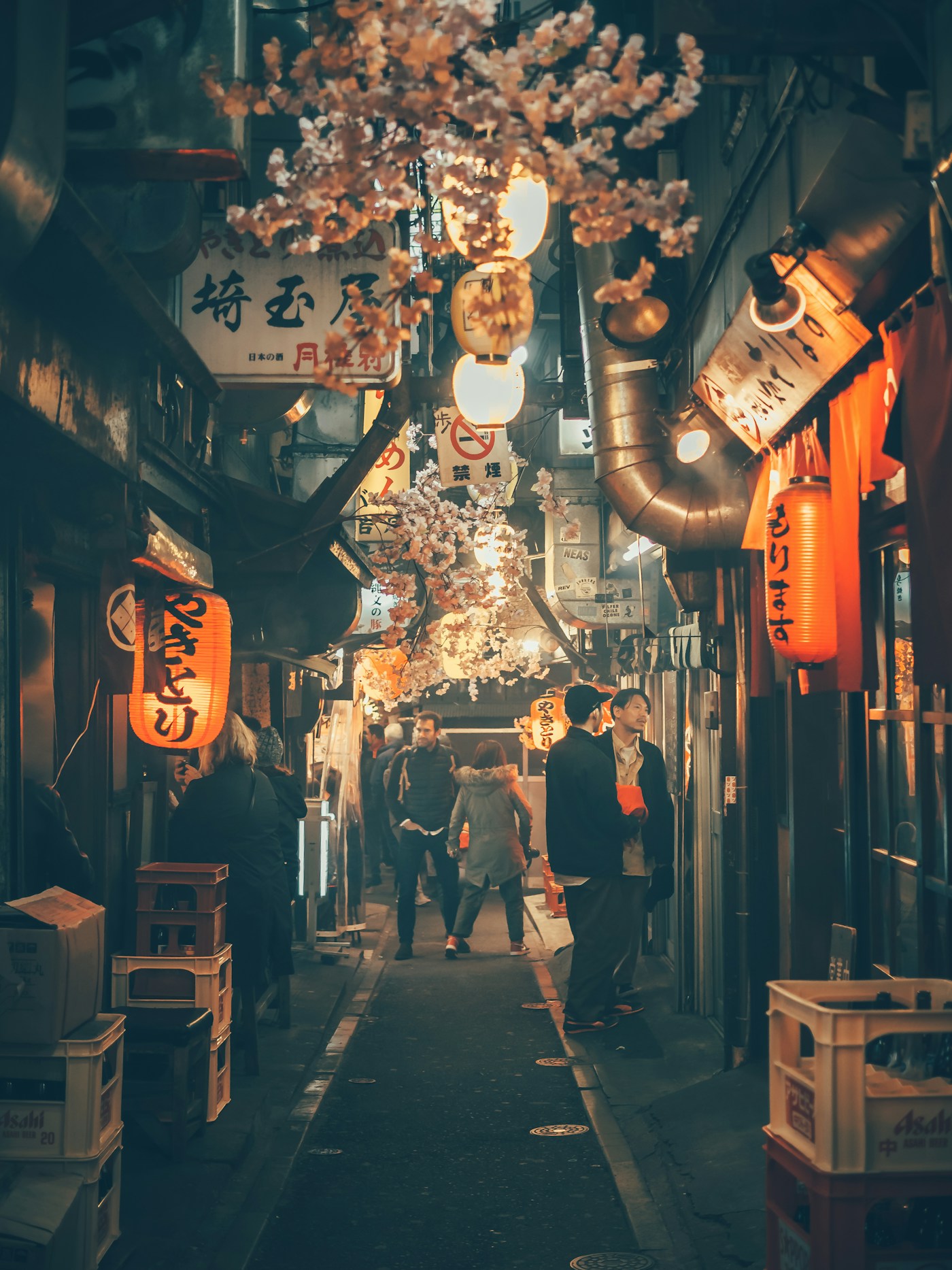
Food in Osaka: takoyaki at Wanaka or Aizuya, okonomiyaki at Mizuno or Botejyu, kushikatsu at Daruma in Shinsekai, the late night ramen at Ippudo, Ichiran, and the regional Tonkotsu shops, the chef driven kappo and ryotei kitchens, and the Michelin starred fine dining of Hajime, La Cime, Fujiya 1935, and Taian. The nightlife scores 8.6 on the 10 point scale, the methodology weights bar density, late hour transport, and the diversity of the scene. The best cities for nightlife ranking places this in context.
Cultural temperament: direct, humorous, value oriented, and self conscious of being the more practical mirror to Tokyo's formality. Osaka is the comedy capital of Japan and the manzai tradition continues to dominate national television. For day to day cultural input, the Osaka cultural calendar tracks the festivals, museum exhibitions, and gigs worth a flight. Tour bookings run cleanest through GetYourGuide.
Two underrated reads on cultural fit: how late the city eats and how the last train shapes the evening. Osaka eats relatively late by Japan standards, dinner at 19:30 to 21:30 is normal and the izakaya belt in Fukushima and Namba runs until 02:00. The cities for foodies ranking lists the food capitals on a single chart. For complaint culture, the resident Twitter, the Osaka 2chan and Reddit communities tell you what residents fight about; the Osaka resident grievances roundup reads them so you do not have to.
№ 11 , Remote Work
Internet, visas, and where to plug in.
Median internet speed 290 Mbps. Coworking density: 95 spaces. Nomad visa: Yes, Japan launched the Designated Activities digital nomad visa April 2024, six months, requires 10 million yen of annual income.
The remote work rating for Osaka is high. The internet speed beats the OECD median by a large margin, with Nuro, eo Hikari, and Softbank Hikari the three reliable carriers at 1 Gbps tariffs widely available. The coworking density of 95 spaces is the second highest in Japan after Tokyo, and the time zone overlap with London is the standard nine hour difficulty that all remote workers in East Asia navigate. For a privacy layer on local networks, NordVPN remains the cleanest option we have tested. The best cities for remote work ranking covers the full table.
For nomads: Japan launched the Designated Activities digital nomad visa April 2024. The visa runs six months, requires 10 million yen (65,000 dollars) of annual income, requires private health insurance covering at least 10 million yen of medical liability, and prohibits work for Japanese employers. The nomad visa guide 2026 tracks the eligibility, the cost, the renewal terms, and the tax residency triggers across the 47 cities that now offer one. Watch the 183 day rule for Japanese tax residency.
For coworking specifically, the density of 95 spaces hides a wide quality range. The premium operators like WeWork Japan, Regus, and Hibiya OKUROJI run 38,000 to 65,000 yen a month for a hot desk and 80,000 to 150,000 for a private booth. The mid market option, which is what most residents actually use, runs 18,000 to 32,000 yen a month for unlimited access plus mail handling. The Osaka coworking guide tracks the specific operators with the floor plans and the monthly numbers. The best cities for digital nomads ranking keeps the macro view, with Osaka placed on the same axis as Tokyo, Seoul, and Taipei.
№ 12 , The Verdict
Who should move to Osaka, and who shouldn't.
Osaka works for the remote earner, the senior professional, and the family that values world class safety, an outstanding food culture, and rents that run 35 to 45 percent below Tokyo for comparable quality. Below 7 million yen of annual take home you will find Japan expensive relative to the cheapest tier of Asian cities; above 15 million yen the city becomes one of the highest quality of life arbitrages on the planet for a single professional or a couple. The case against has three real teeth. The Japanese language remains a significant barrier for non Japanese speakers, more so than in Singapore or Hong Kong. The visa pathway is slow for those outside the Highly Skilled Professional track. The summer humidity in July and August is unpleasant for those used to dry continental summers. None of that erases the core. Lowest crime of any major global metro. Best transit network in the global top 30. World class healthcare at 30 percent copay. The food culture that Japan itself considers the country's practical capital of taste. If you can endure the language gradient, the city repays the trade off within twelve months.
Sources, May 2026. Numbeo cost of living index May 2026 · Mercer Cost of Living Survey 2026 · OECD Income Distribution Database 2025 · World Bank Open Data 2025 · Speedtest Global Index April 2026 · EIU Safe Cities Index 2024 · Bloomberg Health Care Efficiency 2025 · the relevant national tax authorities for headline rates · Glassdoor and Levels.fyi for salary medians · the national international school registries. First published 2024-04-22. Last updated 2026-05-12.