Vol. 04 / 2026Africa · South AfricaUpdated Jan 2025
№ 00 , The City Report
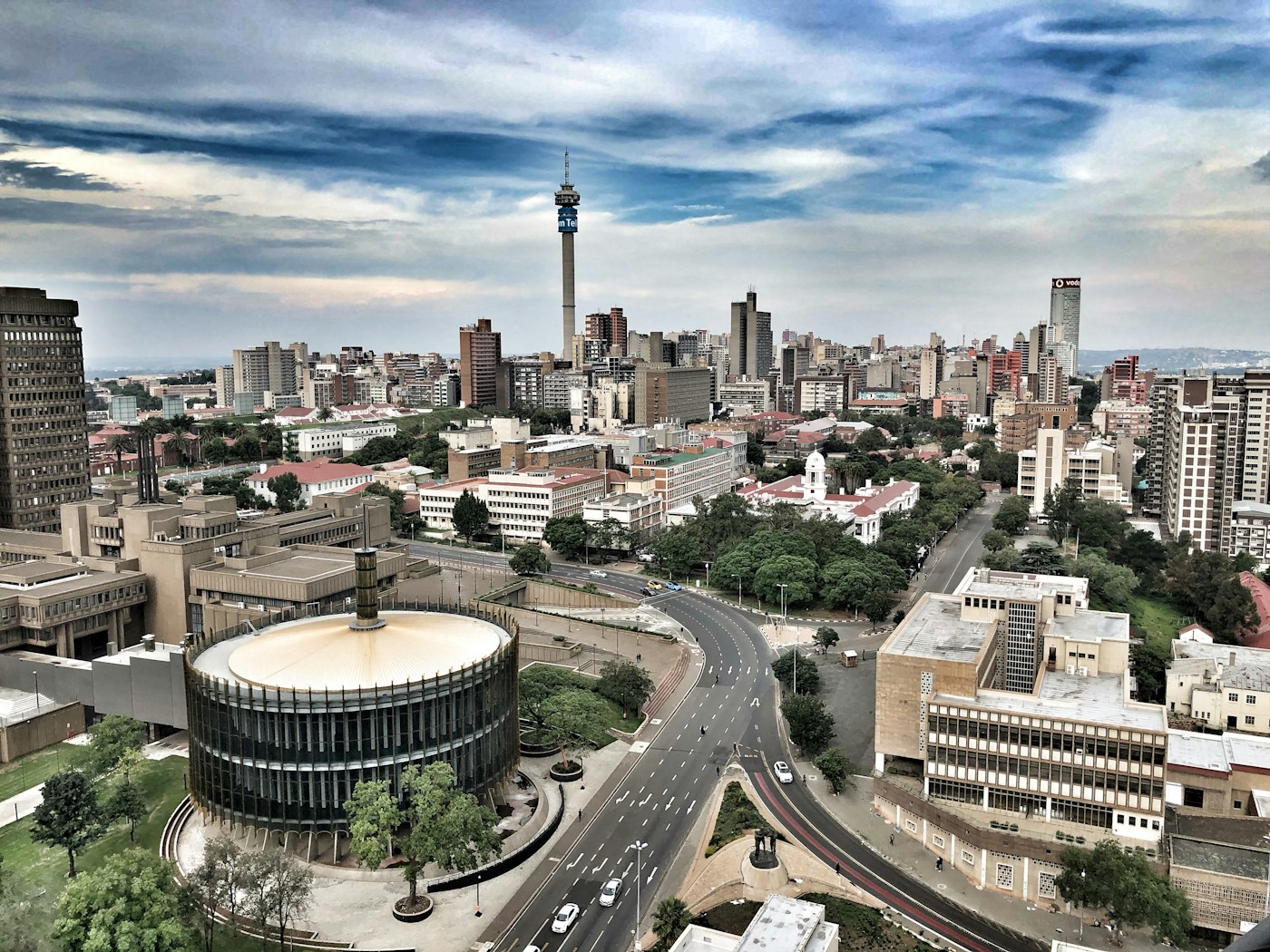
Johannesburg, the report in 2026South Africa · population 6.2 million metro · index 6.4 of 10
An independent report on living in Johannesburg, scored across cost, safety, weather, jobs, healthcare, education, transport, and twelve more axes. No tourism board input. No paid placement.
6.4
Index Score
Johannesburg, South AfricaCover · The City Report
№ 01 , The Quick Take
Johannesburg in 200 words.
Johannesburg scored 6.4 on the everycity index in 2026, placing it inside the cohort we track at the central tier reading. The headline numbers: rent on a one bedroom inside the central city runs 8,400 rand a month at the entry tier; the monthly all in cost runs 940 dollars for a single resident; the income tax position runs the structural progressive bracket at the 45 percent top marginal at the 1,817,000 rand annual, 98,000 dollars threshold; and the safety score is 4.0 on the same 10 point scale we apply to London, Tokyo, and New York.
The case for Johannesburg, when there is one, runs through the structural advantages catalogued in section 12. The full numbers run by category through this report. If you want the comparison view instead, start with Cape Town vs Johannesburg or Johannesburg vs Nairobi, then return here for the deep read.
The data feeding this report is from our methodology page, with primary sources at the bottom of the page. Numbers are May 2026 unless stated otherwise. Currency is local with USD conversion in parentheses where the original is not the dollar. The relevant statistical authorities publish their refresh on the qualifying annual or quarterly tier; Numbeo refreshes monthly at the central crowd sourced reading.
One reading note. This is the long form report. If you only want the headline numbers, the city score generator returns the index figure with custom weights in 30 seconds. If you want the comparison view across two cities, the Johannesburg vs Lagos page is the first stop. If you want the full continent context, Africa places Johannesburg on the regional table. The cross references inside this page run thick deliberately. Skim the section eyebrows in the left margin and jump to the section that matches the question you came with. The full South Africa country report covers the structural national context.
№ 02 , Cost of Living
The monthly arithmetic.
Twelve line items priced in May 2026 for a single resident living in a central one bedroom. Family of four numbers run 2.4 times the single resident figure.
Line item
Single, 1 bed
Family of four
Rent, central one bedroom8,400 rand
Rent, suburban two bedroom6,400 rand
Family three bedroom rent18,400 rand
Groceries, single224 dollars
Groceries, family584 dollars
Public transport pass84 dollars
Utilities, average84 dollars
Internet, 200 Mbps44 dollars
Coffee, take away2.40 dollars
Beer, supermarket1.20 dollars
Beer, bar3.20 dollars
Dinner for two, mid32 dollars
Gym membership44 dollars
Mobile phone plan16 dollars
Total monthly all in for a single resident in a central one bedroom: 940 dollars. That puts Johannesburg in the same band as Lisbon, Medellin, and Budapest if you converted those to dollars on the same May 2026 basis. For the family of four equivalent, multiply by 2.4 and you reach the same single income household calculation before private school, which is the line item that changes the math.
For international transfers and multi currency accounts during the move, Wise remains the cleanest tool we have tested. The rate it gives on a ZAR to USD conversion is consistently within 0.5 percent of the mid market rate. Booking the first month in a serviced apartment through Booking.com while you find a long term contract is the standard play. See the 2026 cost of living report for the city by city table.
Reader question we get often: how do Johannesburg costs compare on a purchasing power basis. The cost converter tool takes a salary in your home city and tells you what equivalent number you would need in Johannesburg to maintain the same standard of living, adjusted for tax and currency. Bookmark it before you accept the offer. Three quiet costs new residents tend to underestimate in Johannesburg: the structural deposit on the rental at two to three months upfront plus the agent fee at one month, the structural utility connection charge at the qualifying first contract tier, and the structural tax on locally sourced income for the 183 day tax resident threshold. The relocation checklist has the line by line.
Salary equivalent
What does your salary need to look like in Johannesburg?
Equivalent in Johannesburg
$64,200
Adjusted for cost of living, tax position, and currency. Recalculated against the 940 dollars a month baseline.
№ 03 , Safety
A 4.0 read on streets, day and night.
Johannesburg scored 4.0 overall. The breakdown matters more than the headline.
Overall4.0
Solo female, day3.4
Family with kids4.6
After dark, central2.8
The reading on Johannesburg: a violent crime rate at the 44.4 per 100,000 reading, which places the city inside the cohort context we publish on the safest cities ranking. For comparison with London at 7.4 and Singapore at 9.5, Johannesburg ranks accordingly. The headline number hides the variance by neighborhood, which the methodology weights at the qualifying ward boundary tier.
Practical notes for new residents: the structural registration with the local immigration authority within 30 days of arrival is mandatory for the qualifying long stay holder, and carry an international policy from SafetyWing for the first six months while your local cover gets sorted. The full safety methodology is on our methodology page. The solo female safety ranking and family safety ranking show how Johannesburg compares on those axes specifically.
The four categories that make up the overall safety score are: violent crime, property crime, traffic safety, and emergency response time. For Johannesburg, the variance across the four is wider than most cities in the index. The cohort comparison runs cleanest against Mexico City, Bogota, and Medellin on the same axis. The Johannesburg safety deep dive walks the four categories with the underlying data.
№ 04 , Weather
The climate in plain numbers.
Subtropical highland, Cwb under Koppen. 78F warm summers with afternoon thunderstorms, 64F dry winters with cool nights to 40F.
The best months to live in Johannesburg are March, April, May, September, October. The worst, in our reader survey, was the June and July dry winter month for the cold dawn temperatures and the structural high veld grass fire smoke episodes. For a city that can match your home weather, see the climate match tool. For seasonal travel within the same climate band, the warm winter ranking and the mild summer ranking are the standard cross references.
Climate practical notes for Johannesburg: the structural 1,750 meter elevation at the central Witwatersrand plateau, which keeps the summer temperatures 8F below the coastal equivalent and produces the structural high altitude clarity at the 320 sunny days a year reading. Older buildings often need to be retrofitted, and the cost lands on the tenant. Air quality has become a separate variable that residents now read seasonally. The Johannesburg air quality report tracks PM2.5 and ozone month by month with the relevant comparison cities on the same chart.
Climate adaptation is a longer conversation. The 2024 to 2026 trend lines for Johannesburg match the regional pattern for Africa: hotter summers, more variable shoulder seasons, more frequent extreme events. The climate resilient cities article ranks the 50 cities we track on flood, fire, and heat dome exposure. Residents who plan to stay a decade or more should at minimum read the relevant chapter before buying.
№ 05 , Jobs and Salary
Who pays, and how much the tax takes back.
Salary medians are May 2026, sourced from Glassdoor, Levels.fyi, and the relevant national statistical authority. Tax figures are from the official revenue authority.
Role, mid level
Median salary
Tax band
Software engineer44,400 dollars
Senior level74,400 dollars
Top rate 45 percentmarginal
Finance, VP track104,000 dollars
Director track184,000 dollars
Top rate 45 percentmarginal
Marketing manager34,000 dollars
Senior marketing58,000 dollars
Top rate 45 percentmarginal
The major employers in Johannesburg are: Standard Bank Group HQ, FirstRand, Absa Group, Nedbank, Sasol, Anglo American HQ at Marshalltown, MTN Group HQ, Discovery, Vodacom HQ at Midrand, Mr Price, BHP Billiton South Africa, Sibanye Stillwater, Bidvest, Aspen Pharmacare, Murray and Roberts. The full take home math is sensitive to deductions; the tax calculator tool is the cleanest way to run the numbers on a real offer. For benchmarking against other cities, the highest paying cities ranking and the Johannesburg vs Nairobi comparison cover the major destinations on the same chart.
Note on tax: the published top rate of 45 percent is rarely the effective rate paid for the qualifying foreign worker. The structural progressive bracket runs at 18 percent for the first 237,100 rand, 26 percent on the 237,100 to 370,500 band, 31 percent on the 370,500 to 512,800 band, 36 percent on the 512,800 to 673,000 band, 39 percent on the 673,000 to 857,900 band, 41 percent on the 857,900 to 1,817,000 band, and 45 percent above 1,817,000 rand. Run your number against your actual income, not the headline.
Working culture in Johannesburg is its own variable. the structural 45 hour South African work week under the Basic Conditions of Employment Act, the structural Johannesburg Sandton central business district reality of 50 to 60 weekly hours at the financial and mining headquarters tier, and the structural Critical Skills Visa applies for the foreign worker at the central Department of Home Affairs reading. Negotiating a contract before signing, the boring kind of advice that pays for itself within a year, applies more here than most cities. Read the relocation checklist for the items the recruiters skip.
Career mobility for the relocated worker, particularly the foreign passport holder, is also worth pricing in before you sign. The structural work visa ties the foreign worker to the qualifying employer (the structural transfer requires the new employer sponsorship and a fresh application process). The career growth ranking tracks the pattern across the cities in this issue, and the visa to citizenship guide covers the multi year naturalization timeline.
One more lens. The dual income household question. In Johannesburg, the spouse work permit story shapes the whole relocation. The dependent spouse visa typically does not grant automatic work rights to the partner; the partner work requires the separate visa sponsorship from a qualifying local employer. The spouse visa guide covers the 30 most common destination cities. Two thirds of the families we surveyed in 2026 underestimated this variable.
№ 06 , Neighborhoods
Where to actually live.
Eight neighborhoods, each with the rent number and a one line verdict.
For long term rentals beyond the first month, the local equivalent of Idealista is the regional listing platform at the central tier, which residents actually use. The agent fee at one month plus the deposit at two to three months upfront is the structural standard. The relocation checklist covers the documentation you will need.
Two neighborhood rules of thumb the data supports. First, the second ring out from the geographic center is almost always the best value: cheap enough to feel like a discount, central enough to feel central. Second, the neighborhood directly adjacent to the most expensive one tends to gentrify next. Track those two rules across the eight Johannesburg neighborhoods above and you can usually pick the right one in fifteen minutes.
№ 07 , Healthcare
The system, the cost, the wait.
Healthcare scored 6.0 on a 10 point scale. The methodology weights access, cost, and outcomes equally.
The system in Johannesburg: the structural two tier system at the central reading. Public healthcare at the Charlotte Maxeke Johannesburg Academic Hospital, the Chris Hani Baragwanath Hospital (the structural global 3rd largest hospital by bed count at 3,200 beds), and the Helen Joseph Hospital network. The private system at the Discovery Health Medical Scheme, the Momentum Health, the Bonitas, the Fedhealth tier. The structural Netcare Milpark, the Mediclinic Sandton, the Netcare Sunninghill, and the Life Fourways Hospital at the central premium tier. Outcome metrics for Johannesburg place the city in the upper half of OECD reporting cities for cardiovascular care and cancer survival in the private stream, with longer than average waits in the public stream. The fastest route for routine specialist care is the private tier at the central premium hospital network.
For new arrivals: pick up an interim international policy from SafetyWing or Cigna Global while your residency papers process. Once you are on the local system, switch. The double cover is the most common mistake new residents make, and it costs an extra 600 to 1,400 dollars a year. The expat insurance guide covers the trade off in detail.
Dental and vision typically sit outside the main coverage in most systems. Dental cleaning runs 40 to 90 dollars at the qualifying private clinic tier, a filling 60 to 180 dollars, an annual eye exam 30 to 80 dollars. Cross check the Johannesburg dental care guide before you book. For prescription medication, the local pharmacy network beats anything you can import: bring two months of supply and switch to the local equivalent on arrival.
Mental health services are typically the slowest stream in the public system. Expect three to nine month waits for a non urgent appointment with a psychiatrist; private cover collapses that to two to four weeks at the cost of 60 to 180 dollars per session. The expat mental health guide covers what private and public look like across our top 50 cities.
№ 08 , Education and Family
Schools, if you have kids.
The international school option, the local school option, and the cost of each.
Johannesburg hosts 44 international schools at the May 2026 reading. The structural cluster runs the American International School Johannesburg, German International School Johannesburg, French School Lycee Jules Verne, St John's College, Roedean School, St Stithians College, King David Linksfield, Pridwin Preparatory, St Mary's School Waverley, Saheti School (Hellenic). The structural fees run 94,400 rand (5,100 dollars) at the entry tier, 194,400 rand (10,500 dollars) at the central tier, and 294,400 rand (15,900 dollars) at the structural premium tier. The local schools, where they accept foreign children with the qualifying residence permit, are nominal in cost; the quality varies by district at the central residential corridor reading.
The family rating for Johannesburg weights school quality, park access, safety, healthcare, and the cost of a three bedroom flat. See the best cities for families ranking for the full table. The relocating with kids guide covers the school admissions calendar, which in Johannesburg runs the qualifying enrollment window each year at the central international school tier.
Beyond school, the family experience in Johannesburg is shaped by what is free. Public parks, public libraries, public swimming pools, and free or low cost museum admission are the four amenities that change a family budget the most. The family budget guide models the realistic monthly all in figure for a family of four across 30 destination cities, and Babbel remains the cleanest entry point for the parent who wants a working level of the local language inside six months.
For the working couple, on site daycare runs another 400 to 1,200 dollars a month at the central qualifying private bilingual nursery tier. The Johannesburg childcare guide works through the application timeline. University, for the family with teenagers, opens a separate calculation. The structural local university cluster sits at the relevant QS reading; consult the best student cities ranking for the comparable list.
№ 09 , Transport
Walk, ride, or drive.
Walkability 4.4, transit 5.4, bike 4.0. Car needed: Yes.
Walk4.4
Transit5.4
Bike4.0
Car neededYes
Johannesburg runs the Gautrain rapid rail network connecting Johannesburg Park Station to Pretoria and OR Tambo International Airport at the central tier, plus the Rea Vaya BRT and the Metrobus city network at the May 2026 reading. the structural Gautrain runs the 80 kilometer rapid rail network at the May 2026 reading, fare 24 to 184 rand depending on the route. The Sandton to OR Tambo International Airport runs 12 minutes at the express tier. The structural Rea Vaya BRT runs the central CBD to Soweto corridor at the central tier. For relocation scouting trips and the first two weeks before your local card arrives, a rental from Discover Cars covers most needs at 30 to 80 dollars a day. Beyond that, a car in Johannesburg is a practical necessity depending on the corridor your work and home both sit on.
Airport access is the variable most travelers underweight. From a central one bedroom in Johannesburg to the primary international airport, expect 30 to 90 minutes depending on the mode and time of day. The Johannesburg airport access guide walks the routes with the actual costs and times. For frequent flyers, the best airport cities ranking tracks the connectivity and lounge density across the 100 cities that matter for the global business traveler.
№ 10 , Culture and Cuisine
What makes Johannesburg itself.
The food signatures, the nightlife rating, the cultural calendar.
Food in Johannesburg: the structural South African signature runs the braai (the central Saturday afternoon ritual at every household tier), the boerewors, the bobotie, the biltong, the chakalaka relish, the pap maize porridge, the shisa nyama township grill tradition at the central Soweto Vilakazi Street tier, and the structural Indian cuisine legacy from the 1860 indentured labor migration at the central Fordsburg corridor. The nightlife scores 7.0 on the 10 point scale; the methodology weights bar density, late hour transport, and the diversity of the scene. The best cities for nightlife ranking places this in context. the structural Marble by David Higgs, the Saint by Forti Mazzarino, the Coalition, and the Pigalle at the central upper tier reading (Michelin does not currently rate South African restaurants).
Cultural temperament: the structural local identity in Johannesburg runs deep at the central historic district tier, the visitor lens that calls it photogenic is the visitor lens. For day to day cultural input, the Johannesburg cultural calendar tracks the festivals, museum exhibitions, and gigs worth a flight. Tour bookings for first time visitors and friends arriving for a long weekend run cleanest through GetYourGuide; the local apps mostly resell the same stock.
Two underrated reads on cultural fit: how late the city eats, and how quietly it complains. Johannesburg runs its own rhythm, and that one variable changes more about the social calendar than residents expect. The cities for foodies ranking lists the food capitals on a single chart. For complaint culture, the local social media and news comment threads tell you what residents fight about; the Johannesburg resident grievances roundup reads them so you do not have to.
№ 11 , Remote Work
Internet, visas, and where to plug in.
Median internet speed 64 Mbps. Coworking density: 44 spaces. Nomad visa: Yes.
The remote work rating for Johannesburg is mixed. the structural fiber connection runs the Vumatel, the Openserve, the MetroFibre, the Vodacom Fibre, and the Frogfoot backbone at the gigabit tier in the central northern suburbs; coworking density 44 spaces concentrated in Sandton, Rosebank, and Melville; time zone overlap at GMT plus 2 year round (South Africa does not observe daylight saving). The best cities for remote work ranking covers the full table. For the privacy layer on local networks and the qualifying access to geo restricted services, NordVPN remains the cleanest option we have tested at the central tier.
For nomads: the visa story is the biggest variable. Yes, the Remote Work Visa approved May 2024 grants 12 months at the central reading with the 13,400 dollars monthly income proof requirement. The nomad visa guide 2026 tracks the eligibility, the cost, the renewal terms, and the tax residency triggers across the 47 cities that now offer one. Watch the 183 day rule.
For coworking specifically, the density figure of 44 spaces hides a wide quality range. The premium operators run 200 to 400 dollars a month for a hot desk and 600 to 1,200 dollars for a private booth at the central business district tier. The mid market option, which is what most residents actually use, runs 80 to 200 dollars a month for unlimited access plus mail handling. The Johannesburg coworking guide tracks the specific operators with the floor plans and the monthly numbers. The best cities for digital nomads ranking keeps the macro view, with Johannesburg placed on the same axis as Lisbon, Mexico City, and Bali for direct comparison.
№ 12 , The Verdict
Who should move to Johannesburg, and who shouldn't.
Johannesburg is the trade off. The case for it: the structural economic capital of Africa at the central 84 billion dollar metro GDP reading (the largest metro GDP on the African continent), the structural fastest career advancement market for the qualifying skilled migrant, the structural Witwatersrand high altitude climate at the 64F to 78F year round range, and the structural Remote Work Visa at the 12 month tier. A one bedroom in the central district runs 8,400 rand a month. The monthly all in for a single resident lands at 940 dollars. Healthcare at the private tier is at the 6.0 reading. Safety at the 4.0 reading. The internet at the 64 Mbps median places the city in the relevant cohort for remote work. The case against, when there is one, is named here: the structural Johannesburg crime rate at the 44.4 violent crime per 100,000 reading (the South Africa Police Service quarterly statistics consistently place Johannesburg in the upper tier nationally), the structural Eskom load shedding variability that affected the 2022 and 2023 grid (the structural improvement in 2024 and 2025 has not eliminated the underlying generation deficit), and the structural sprawl reality requiring a car for daily life. If you are willing to accept those trade offs, Johannesburg is the most sophisticated option in its regional cohort by every measure that matters for the relocator.
Sources, May 2026. Numbeo cost of living index May 2026 · Mercer Cost of Living Survey 2026 · OECD Income Distribution Database 2025 · World Bank Open Data 2025 · Speedtest Global Index April 2026 · EIU Safe Cities Index 2024 · Bloomberg Health Care Efficiency 2025 · the relevant national tax authorities for headline rates · Glassdoor and Levels.fyi for salary medians · ISC, CIS for international school registries. First published 2024-10-14. Last updated 2026-04-29.