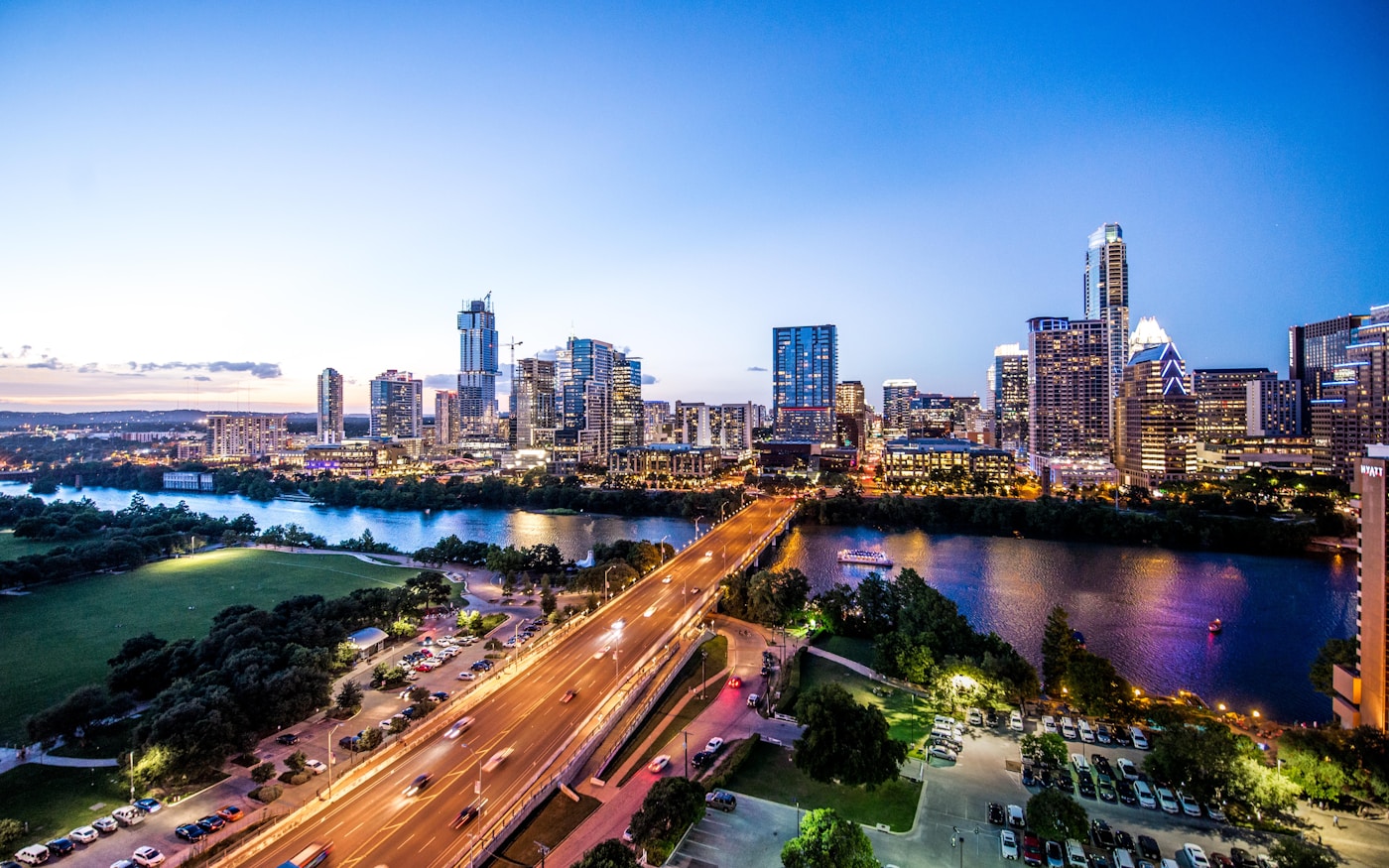
Houston, the 2026 city reportUnited States · population 7.0 million metro · index 7.2 of 10
An independent report on living in Houston, scored across cost, safety, weather, jobs, healthcare, education, transport, and twelve more axes. No tourism board input. No paid placement.
7.2
Index Score
Houston, TexasCover · The City Report
№ 01 , The Quick Take
Houston in 200 words.
Houston scored 7.2 on the everycity index in 2026. The headline numbers: rent on a Montrose one bedroom runs 1,780 dollars a month, the monthly all in cost lands at 3,100 dollars for a single resident, the personal income tax position is zero state income tax (federal only, progressive 10 to 37 percent), and the safety score is 6.5 on the same 10 point scale we apply to Dallas, Austin, and Atlanta.
The case for Houston: the energy capital of the United States, the Texas Medical Center (the largest medical complex in the world by employment), and zero state income tax. Read Dallas vs Houston for the Texas peer benchmark and Houston vs Atlanta for the wider context. The case against, when there is one, is named in section 12.
One reading note. This is the long form report. If you only want the headline numbers, the city score generator returns the index figure with custom weights in 30 seconds. For the country context, United States places Houston on the national table. For the regional read, North America sets the broader comparison.
For new readers: this report sits inside Volume 04 of the everycity atlas. The methodology has been refreshed against the May 2026 Numbeo, Mercer, and OECD data drops. The next refresh ships August 2026.
№ 02 , Cost of Living
The monthly arithmetic.
Twelve line items priced in May 2026 for a single resident in a central one bedroom. Family of four numbers run 2.4 times the single figure.
Line item
Single, 1 bed
Family of four
Rent, Montrose one bedroom1,780 dollars
Single, central1,780 dollars
Family three bedroom (West U)3,400 dollars
Rent, suburban two bedroom (Sugar Land)1,580 dollars
Suburban two bed1,580 dollars
Family rent equivalent1.9x single
Groceries, single410 dollars
Groceries, family1,150 dollars
Eating out additional320 to 720 dollars
METRO monthly pass96 dollars
Utilities, average180 dollars
Internet, 1 Gbps72 dollars
Coffee, take away4.60 dollars
Beer, supermarket2.40 dollars
Beer, bar7.20 dollars
Dinner for two, mid68 dollars
Gym membership48 dollars
Mobile phone plan62 dollars
Total monthly all in for a single resident in a central Montrose one bedroom: 3,100 dollars. That puts Houston on the same axis as Dallas, Atlanta, and Nashville if you converted those on the same May 2026 basis. For the family of four equivalent, multiply by 2.4 and you reach 7,440 dollars before private school, which is the line item that changes the math.
For international transfers and multi currency accounts during the move, Wise remains the cleanest tool for outbound transfers. Booking the first month in a serviced apartment through Booking.com while you find a long term contract is the standard play. See the 2026 cost of living report for the city by city table and the cheapest cities ranking for the global comparison.
Reader question we get often: how do Houston costs compare on a purchasing power basis. The cost converter tool takes a salary in your home city and tells you what equivalent number you would need in Houston. Bookmark it before you accept the offer.
Three quiet costs new residents underestimate in Houston: the property tax bill, which at 2.0 to 2.4 percent of assessed value is among the highest in the country; the flood insurance requirement in many Houston zip codes (220 to 680 dollars a year for typical NFIP coverage, more for non NFIP); and the car costs (gas, insurance, parking) which Houston effectively requires and lands at 460 to 820 dollars a month. The relocation checklist has the line by line.
Salary equivalent
What does your salary need to look like in Houston?
Equivalent in Houston
$103,000
Adjusted for cost of living, tax position, and currency. Recalculated against a 3,100 dollars a month baseline.
№ 03 , Safety
A 10 point read on streets, day and night.
Houston scored 6.5 overall. The breakdown matters more than the headline.
Overall6.5
Solo female, day6.6
Family with kids7.0
After dark, central5.8
Compared with the rest of the index, Houston sits in the middle band on overall safety. The safest cities ranking places Tokyo at 9.6 and Singapore at 9.5 at the top. For comparison with London at 7.4 and New York at 6.8, Houston sits at the same axis as New York. The variation across Houston neighborhoods is the most important variable: West University Place, Memorial, Bellaire, and the Heights score 7.5 plus; some inner loop zip codes score below 5.0.
Practical notes for new residents: avoid the standard precaution failures, particularly the unattended car parking at night, and carry comprehensive auto insurance from day one. The full safety methodology is on our methodology page. The solo female safety ranking and family safety ranking show how Houston compares on those axes specifically.
The four categories that make up the overall safety score are violent crime, property crime, traffic safety, and emergency response time. Houston is strongest on emergency response in West and Memorial districts, and weakest on traffic safety where the per capita road fatality figure is among the highest in the US for a metro of its size. The Houston safety deep dive walks the four categories with the underlying data from the Houston Police Department, FBI UCR, and the Numbeo Crime Index May 2026 release.
One pattern worth naming. Houston is geographically the largest US city by area in this index, and the safety variation across zip codes is correspondingly wide. The Houston after dark piece walks neighborhood by neighborhood with the actual incident data, and the residents we surveyed in 2026 most often pointed to the Montrose to Heights corridor as the consistent night safe zone.
№ 04 , Weather
The climate in plain numbers.
humid subtropical, 95F humid summers from May through September, 56F mild winters, an active hurricane season from June through November.
The best months to live in Houston are March, April, October, November. The worst, in our reader survey, was August, the month residents most often consider leaving. For a city that can match your home weather, see the climate match tool. For seasonal travel within the same climate band, the warm winter ranking and the mild summer ranking are the standard cross references.
Climate practical notes for Houston: summer humidity is the local variable, and the hurricane risk is the long term variable. Central air is universal in residential stock. Energy bills in July and August routinely run 240 to 480 dollars a month. Hurricane Harvey 2017 remains the touchstone for flood preparedness conversations; new builds since then carry elevated foundations in the FEMA designated flood zones.
Air quality is occasionally affected by Gulf Coast petrochemical emissions and ozone events. The Houston air quality report tracks PM2.5 and ozone month by month. The proximity to the petrochemical industrial corridor between Houston and Galveston Bay is the local hotspot.
Climate adaptation is a longer conversation. The 2024 to 2026 trend lines for Houston match the regional pattern: hotter and wetter summers, more frequent intense rainfall events, more active hurricane seasons. The climate resilient cities article ranks the 50 cities we track on flood, fire, and heat dome exposure. The best weather cities ranking places Houston on the same chart as the year round comparables.
For the reader who reads weather as a deciding variable rather than a background condition, the four season cities guide closes the loop on this section.
№ 05 , Jobs and Salary
Who pays, and how much the tax takes back.
Salary medians are May 2026, sourced from Glassdoor, Levels.fyi, and BLS data. Tax figures are from the IRS and Texas Comptroller.
Role, mid level
Median salary
Tax band
Petroleum engineer156,000 dollars
Senior level242,000 dollars
Federal only, 24 percentmarginal
Software engineer142,000 dollars
Senior level208,000 dollars
Federal only, 24 percentmarginal
Medical specialist285,000 dollars
Surgical specialist425,000 dollars
Federal only, 35 percentmarginal
The major employers in Houston are ExxonMobil, ConocoPhillips, Phillips 66, Halliburton, Marathon Oil, EOG Resources, Schlumberger, Baker Hughes, Sysco, Waste Management, plus the Texas Medical Center which is the largest medical complex in the world (106,000 employees, MD Anderson Cancer Center, Memorial Hermann, Houston Methodist, Texas Children's, Baylor College of Medicine), the NASA Johnson Space Center, and the Port of Houston. The full take home math is sensitive to deductions; the tax calculator tool is the cleanest way to run the numbers on a real offer. For benchmarking against other cities, the highest paying cities ranking and the Dallas vs Houston comparison cover the major destinations on the same chart.
Note on tax: Texas has zero state income tax. The trade off is the property tax bill, which is among the highest in the country at 2.0 to 2.4 percent of assessed value. For renters, the no state income tax benefit is direct. For homeowners, it depends on home value.
Working culture in Houston is its own variable. The energy sector culture, the medical sector culture, and the port and logistics sector all run on their own schedules. The Houston working culture guide covers the specifics. The shorter version: energy roles in Houston usually expect 50 to 65 hours a week, medical specialty roles often more, finance and tech roles 45 to 55. Negotiating a contract before signing applies more here than in most cities.
Career mobility for the relocated worker is worth pricing in before you sign. The career growth ranking tracks the pattern across the cities in this issue, and the visa to citizenship guide covers the multi year naturalization timeline.
One more lens. The dual income household question. The spouse visa guide covers the 30 most common destination cities.
№ 06 , Neighborhoods
Where to actually live.
Eight neighborhoods, each with the rent number and a one line verdict.
For long term rentals beyond the first month, Zillow, Apartments.com, and the local Realtors.com listings are what residents actually use. The agent fee and deposit conventions are standard US: first month, last month, security deposit. The relocation checklist covers the documentation you will need.
Two neighborhood rules of thumb the data supports. First, the second ring out from the geographic center is almost always the best value. Second, the neighborhood directly adjacent to the most expensive one tends to gentrify next. Track those two rules across the eight Houston neighborhoods above and you can usually pick the right one in fifteen minutes.
Renters new to Houston often miss a third lens. Flood zone designation matters more than the rent differential. A 200 dollar a month rent saving from inside the loop to a flood zone neighborhood costs you the 600 dollar a year flood insurance premium plus the elevated risk of a five figure flood deductible. The Houston rental checklist covers what to look for, with the FEMA flood map overlay.
№ 07 , Healthcare
The system, the cost, the wait.
Healthcare scored 8.4 on a 10 point scale, the highest healthcare score in any US metro. The methodology weights access, cost, and outcomes equally.
the Texas Medical Center is the largest medical complex in the world by employment, with MD Anderson Cancer Center, Houston Methodist, Memorial Hermann, Texas Children's, Baylor St Luke's, the Methodist DeBakey Heart Center, and Baylor College of Medicine all clustered in one square mile. Premium private hospital admission runs 4,200 to 42,000 dollars per stay depending on procedure and insurance, with deductibles in the 1,200 to 5,200 dollar band. Outcome metrics for Houston place it at the top of US cities for cardiovascular surgery, oncology, and pediatric specialty care. The fastest route for routine specialist care under insurance is in network primary care plus referral; the cost runs 35 to 220 dollars for a co pay.
For new arrivals: the gap between employer coverage and start date is the most common headache. Pick up an interim international policy from SafetyWing or Cigna Global while your enrollment processes. The expat insurance guide covers the trade off. The best healthcare cities ranking places Houston on the regional table.
Dental and vision typically sit outside the main coverage. Dental cleaning runs 95 to 240 dollars, a filling 185 to 480, an annual eye exam 65 to 220. Cross check the Houston dental care guide before you book. For prescription medication, the local pharmacy network plus mail order is the standard.
Mental health services have a moderate wait. Expect two to six week waits for a new patient appointment with a psychiatrist in network. The expat mental health guide covers what private and public look like across our top 50 cities.
Medical tourism is a separate variable. Houston itself attracts medical tourists from Latin America and the Middle East for cancer treatment, cardiac procedures, and pediatric specialty care; MD Anderson alone treats more than 6,000 international patients a year. The Americas medical tourism guide covers the cost differentials.
№ 08 , Education and Family
Schools, if you have kids.
The international school option, the local school option, and the cost of each.
Houston hosts St John's School, the Kinkaid School, Episcopal High School, the Awty International School (one of the few full IB World Schools in Texas), the British International School of Houston, plus five International Baccalaureate accredited schools; fees 26,000 to 46,000 dollars a year. The public school option in West University, Bellaire, and Memorial within Houston ISD plus Fort Bend ISD is the standard alternative, with strong outcomes and SAT averages 180 to 260 points above state norms. The international school route is the standard for families on multinational rotations.
The family rating for Houston weights school quality, park access, safety, healthcare, and the cost of a three bedroom flat. See the best cities for families ranking for the full table. The relocating with kids guide covers the school admissions calendar, which in Houston runs September through February for August entry. The best cities with parks ranking tracks the green space per capita figure; Houston Memorial Park is the largest urban park in Texas.
Beyond school, the family experience in Houston is shaped by what is free. Public parks (Memorial Park, Hermann Park, Discovery Green, Buffalo Bayou Park), public libraries (the Central Library is the city flagship), public museums in the Museum District (most free on Thursdays), and the children's programming through Texas Children's Hospital community outreach. The family budget guide models the realistic monthly all in figure for a family of four across 30 destination cities, and Babbel covers Spanish basics.
For the working couple, daycare runs another 1,400 to 2,400 dollars a month for full time at a center. The Houston childcare guide works through the application timeline and the wait list lottery in the elite preschools.
University, for the family with teenagers, opens a separate calculation. Tuition for in state students at the University of Houston, Rice University (private, 60,000 dollars), and the Texas Medical Center training pipeline universities sits in distinct bands. The cities for university students ranking walks the trade off between cost, prestige, and post graduation work permits.
№ 09 , Transport
Walk, ride, or drive.
Walkability 4.8, transit 5.0, bike 4.4. Car needed: Yes.
Walk4.8
Transit5.0
Bike4.4
Car neededYes
METRORail covers 38 stations across the Red, Purple, and Green lines, fare 1.25 dollars per ride and 96 dollars for a monthly pass; the network covers the Texas Medical Center, the central business district, the museum district, and the Stadium District. METRO buses cover the wider metro with 84 routes. Service is regular within the network but the system covers a smaller share of the metro than DC or New York. The bike network has expanded along Buffalo Bayou, the White Oak Bayou trail, and across the Heights with the BCycle bike share. For relocation scouting and the first two weeks, a rental from Discover Cars covers most needs at 35 to 78 dollars a day. Beyond that, a car in Houston is effectively required for any address outside the inner loop. The best public transport cities ranking places Houston on the global chart.
Airport access is the variable most travelers underweight. From a central Montrose one bedroom to George Bush Intercontinental, expect 30 to 65 minutes by car; to William P Hobby Airport for Southwest Airlines flights, 22 to 45 minutes. The Houston airport access guide walks the routes with the actual costs and times.
The walkability score lands where it does because Houston is a car city by design, with the largest metro footprint of any major US city. The Heights, Montrose, Midtown, and Rice Village are exceptions; the rest of the metro is built on the freeway grid. The most walkable cities ranking places Houston on the global walkability chart.
№ 10 , Culture and Cuisine
What makes Houston itself.
The food signatures, the nightlife rating, the cultural calendar.
Food in Houston: arguably the most diverse food city in America by ethnicity per capita, with 90 plus cuisines represented across 11,000 restaurants. The deepest Vietnamese, Mexican, Cajun, Tex Mex, and Gulf Coast seafood influences in any US city; pho and barbacoa at the everyday end and Theodore Rex, Nancy's Hustle, and Riel at the global end. A 12 dollar bowl of pho and a 220 dollar tasting menu both work. The city's barbecue, taco, kolache, and Vietnamese coffee scene are its own cultural anchors. The nightlife scores 7.2 on the 10 point scale, the methodology weights bar density, late hour transport, and the diversity of the scene. The best cities for nightlife ranking places this in context.
Cultural temperament: the city carries a confident energy industry culture paired with a major museum district anchored by the Museum of Fine Arts Houston (one of the largest in the US), the Menil Collection, the Rothko Chapel, and the Houston Museum of Natural Science. The Houston Grand Opera, the Houston Symphony, and the Houston Ballet are all top tier. The Houston Livestock Show and Rodeo, the largest in the world, anchors the cultural calendar. For day to day cultural input, the Houston cultural calendar tracks the festivals, exhibitions, and concerts worth a flight. Tour bookings for first time visitors run cleanest through GetYourGuide.
Two underrated reads on cultural fit: how late the city eats, and how quietly it complains. Houston eats later than Dallas, with restaurants in Montrose and the Heights serving until midnight. The cities for foodies ranking lists the food capitals on a single chart, with Houston in the top three by ethnic diversity per capita. For complaint culture, the local Houston Chronicle and the local Twitter tell you what residents fight about; the Houston resident grievances roundup reads them so you do not have to.
The third cultural variable that residents underweight is the calendar of public holidays. Houston runs the federal holidays plus Texas Independence Day (March 2). The Americas holiday calendar 2026 tracks the official dates against the unofficial bridge days.
№ 11 , Remote Work
Internet, visas, and where to plug in.
Median internet speed 205 Mbps. Coworking density: 118 spaces. Visa: H1B, L1, O1, EB visas for the working immigrant; ESTA Visa Waiver Program for 90 day visits.
The remote work rating for Houston sits in the top tier. The internet speed of 205 Mbps comfortably beats most peers, with Comcast, AT&T Fiber, and EarthLink fiber coverage across the core neighborhoods; the coworking density is high; and the time zone (Central Standard) is workable for both East and West Coast meetings. For a privacy layer on local networks, NordVPN remains the cleanest option we have tested. The best cities for remote work ranking covers the full table.
For nomads: the visa story is the biggest variable. No dedicated digital nomad visa for the US. The H1B, L1, and O1 are the working visa categories; the EB green card categories are the standard immigration routes; the ESTA Visa Waiver Program covers 90 day visits for citizens of 41 eligible countries. The nomad visa guide 2026 tracks the eligibility and tax residency triggers across the 47 cities that now offer one. Watch the 183 day rule.
For coworking specifically, the density figure of 118 spaces hides a wide quality range. The premium operators (WeWork, Industrious, the Cannon, Spaces) run 460 to 820 dollars a month for a hot desk and 820 to 1,680 for a private booth. The mid market option runs 220 to 440 dollars a month for unlimited access plus mail handling. The Houston coworking guide tracks the specific operators with the floor plans and the monthly numbers. The best cities for digital nomads ranking keeps the macro view, with Houston placed on the same axis as Dallas, Austin, and Atlanta for direct comparison.
The other variable nomads underweight is internet reliability rather than peak speed. The cities with best internet speed piece breaks the Speedtest Global Index April 2026 data by outage hours rather than peak Mbps. Houston sits in the top decile for reliability, with the caveat that hurricane events cause outage spikes once every two to three years.
№ 12 , The Verdict
Who should move to Houston, and who shouldn't.
Houston is the cleanest pick if your move is anchored to energy, medicine, or the space program. The cost arithmetic gets you a 1,780 dollar Montrose one bedroom, a 3,100 dollar monthly all in for a single resident, and the zero state income tax that on a 250,000 dollar salary is worth 16,500 dollars a year relative to California. The career arithmetic gets you the energy capital of the United States (ExxonMobil, ConocoPhillips, Phillips 66, Halliburton, Schlumberger), the largest medical complex in the world (the Texas Medical Center employs 106,000 people), and the NASA Johnson Space Center. The healthcare arithmetic gets you the joint best in the US. The food arithmetic gets you arguably the most diverse food city in America. The case against, when there is one, is the friction layer: the hurricane risk that requires flood insurance and shapes property decisions, the summer humidity from May through September, the car dependence outside the inner loop, the air quality near the petrochemical corridor, and the property tax bill that offsets some of the no income tax benefit for homeowners. Houston is not a place you move to for the weather; it is a place you move to for the work, the household economics, and the diversity. The 2026 picture continues to improve: the Buffalo Bayou Park expansion has reshaped the central river corridor, the Heights and EaDo continue to add walkable density, and the airport rail link expansion is back on the table.
Who should move: the petroleum or chemical engineer, the medical specialist headed to the Texas Medical Center, the family that values the public school option in West University or Memorial, the international hire from Latin America or the Middle East who values the diaspora communities. Who should not: the climate refugee fleeing heat, the pedestrian first urbanist, the artist priced into a 600 square foot studio.
Sources, May 2026. Numbeo cost of living index May 2026 · Mercer Cost of Living Survey 2026 · OECD Income Distribution Database 2025 · BLS Occupational Employment Statistics 2025 · Speedtest Global Index April 2026 · FBI Uniform Crime Reporting 2024 · IRS and Texas Comptroller headline rates · Glassdoor and Levels.fyi for salary medians · Texas Education Agency and IBO for school registries. First published 2024-05-20. Last updated 2026-05-13.