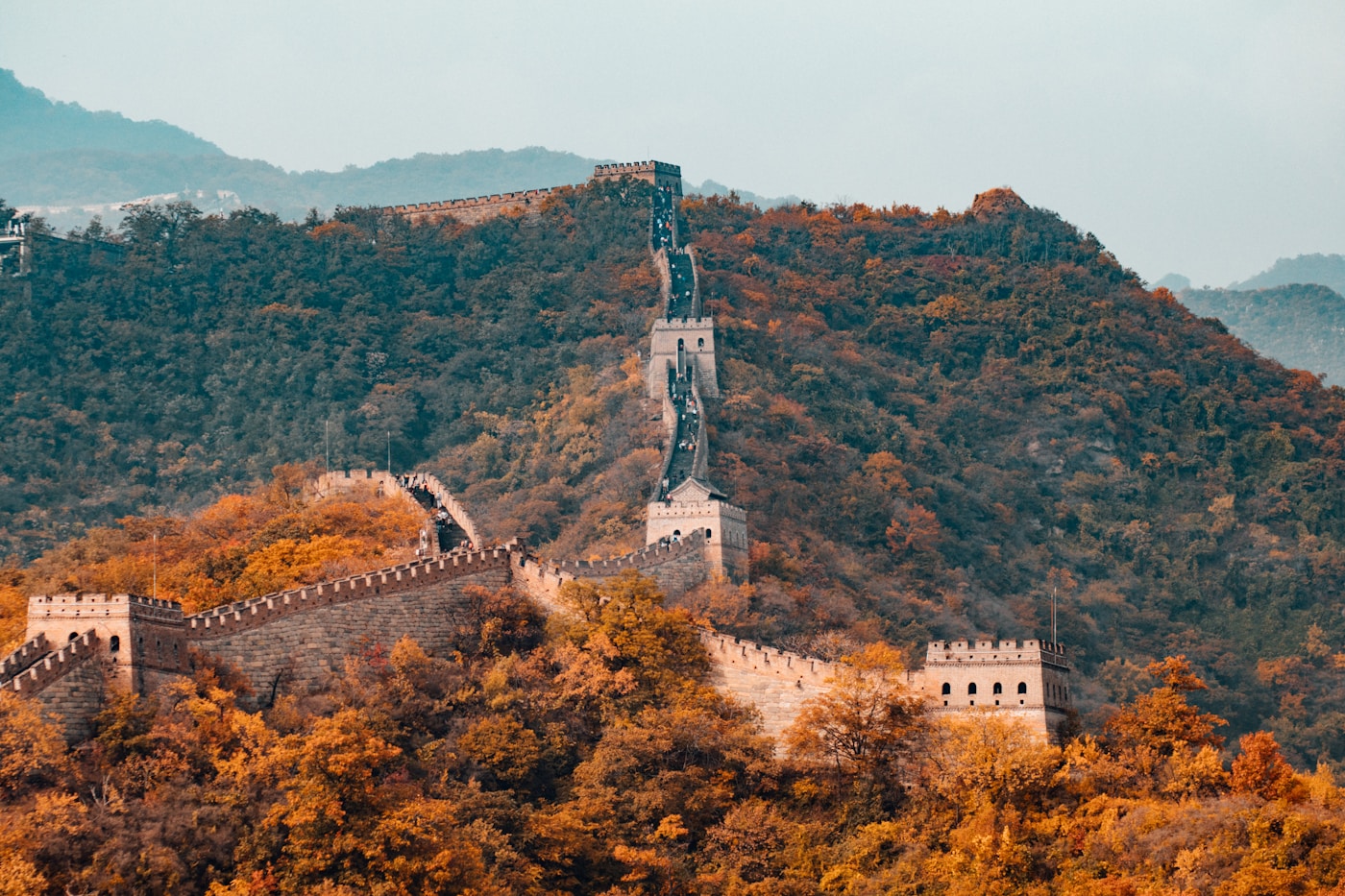
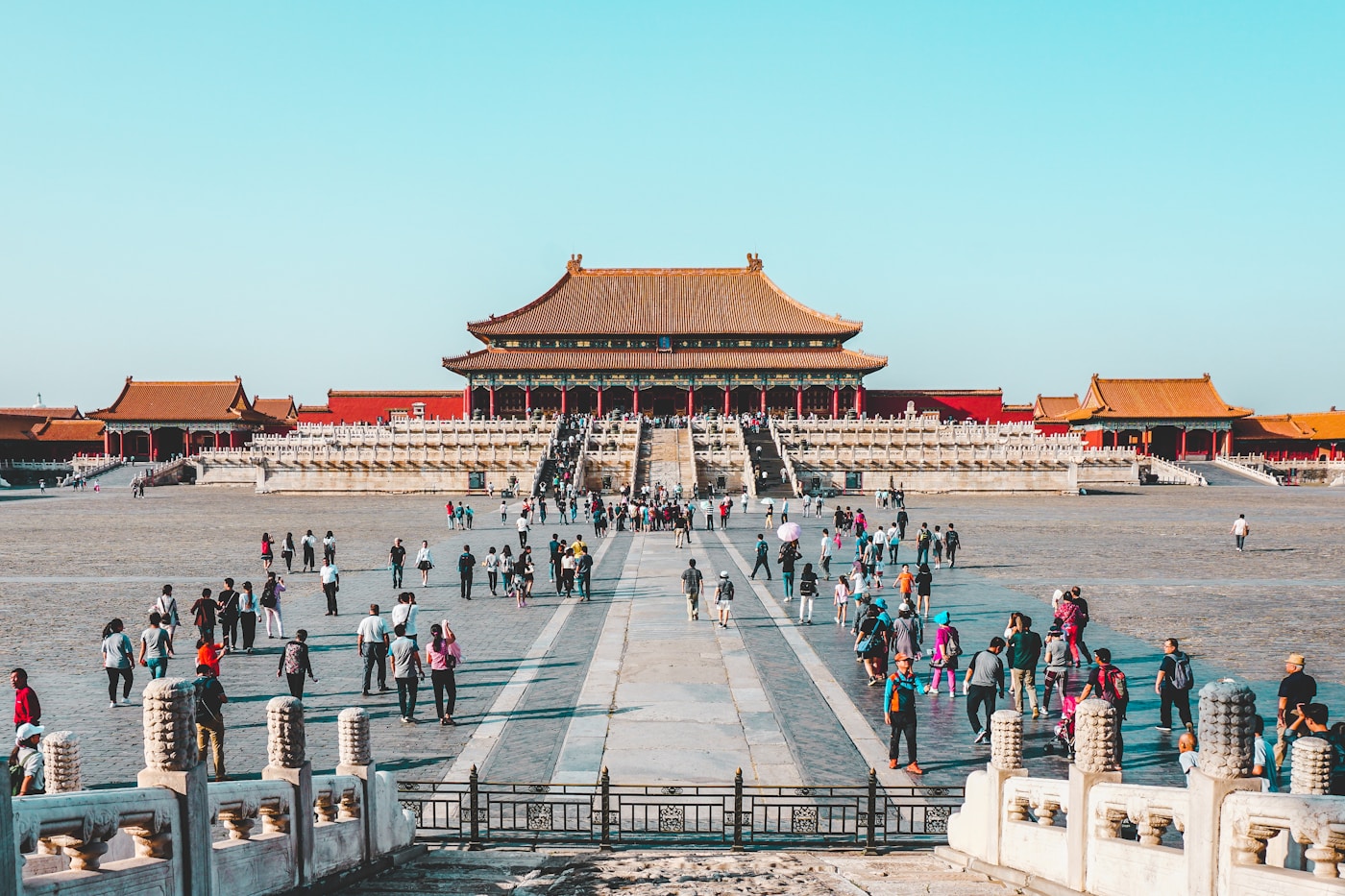
Beijing, the political capital of the EastChina · population 21.8 million metro · index 7.4 of 10
An independent report on living in Beijing, scored across cost, safety, weather, jobs, healthcare, education, transport, and twelve more axes. No tourism board input. No paid placement.
7.4
Index Score
Beijing, ChinaCover · The City Report
№ 01 , The Quick Take
Beijing in 200 words.
Beijing scored 7.4 on the everycity index in 2026, placing it inside the upper middle tier of the cities we track. The headline numbers: rent on a one bedroom inside the central Second Ring runs 8,000 RMB a month at the entry tier; the monthly all in cost runs 1,740 dollars for a single resident; the income tax position runs the structural Individual Income Tax progressive bracket at the 3 percent floor and the 45 percent top marginal at 960,000 RMB annual; and the safety score is 8.6 on the same 10 point scale we apply to Tokyo, London, and New York.
The case for Beijing: the structural political and cultural capital of mainland China at the central Forbidden City, Tiananmen, and Zhongnanhai anchor (the structural Ming and Qing dynasty seat at the 1420 founding reading and the structural People's Republic of China capital seat since 1949), the structural deepest concentration of multinational regional headquarters in mainland China at the central Sanlitun and CBD Chaoyang corridor (the structural 184 Fortune Global 500 regional offices reading), and the structural top tier Mainland Chinese university cluster at the central Haidian District (Tsinghua University and Peking University at the global top 25 QS reading). The case against, when there is one, is named below in section 12. The full numbers run by category through this report. If you want the comparison view instead, start with Beijing vs London or Beijing vs Singapore, then return here for the deep read.
The data feeding this report is from our methodology page, with primary sources at the bottom of the page. Numbers are May 2026 unless stated otherwise. Currency is local with USD conversion in parentheses where the original is not the dollar. The structural Beijing municipal government published the structural 2024 statistical yearbook in February 2025; the structural Numbeo Beijing data set refreshes monthly at the central reading.
One reading note. This is the long form report. If you only want the headline numbers, the city score generator returns the index figure with custom weights in 30 seconds. If you want the comparison view across two cities, the Beijing vs Shanghai page is the first stop. If you want the full continent context, Asia places Beijing on the regional table. The cross references inside this page run thick deliberately. Skim the section eyebrows in the left margin and jump to the section that matches the question you came with. The full China country report covers the structural national context.
№ 02 , Cost of Living
The monthly arithmetic.
Twelve line items priced in May 2026 for a single resident living in a central one bedroom. Family of four numbers run 2.4 times the single resident figure.
Line item
Single, 1 bed
Family of four
Rent, central one bedroom8,000 RMB
Rent, suburban two bedroom10,400 RMB
Family three bedroom rent20,400 RMB
Groceries, single320 dollars
Groceries, family832 dollars
Public transport pass40 dollars
Utilities, average74 dollars
Internet, 200 Mbps16 dollars
Coffee, take away4.20 dollars
Beer, supermarket1.20 dollars
Beer, bar6.40 dollars
Dinner for two, mid30 dollars
Gym membership48 dollars
Mobile phone plan12 dollars
Total monthly all in for a single resident in a central one bedroom: 1,740 dollars. That puts Beijing in the same band as Lisbon, Madrid, and Buenos Aires if you converted those to dollars on the same May 2026 basis. For the family of four equivalent, multiply by 2.4 and you reach 4,176 dollars before private school.
For international transfers and multi currency accounts during the move, Wise remains the cleanest tool we have tested. The rate it gives on a CNY to USD conversion is consistently within 0.5 percent of the mid market rate, with the structural Wise restricted send to onshore CNY tier requiring the recipient mainland Chinese bank account. Booking the first month in a serviced apartment through Booking.com while you find a long term contract is the standard play; the structural Sanlitun, Chaoyang CBD, and Haidian inventory runs at 64 to 144 dollars a night. See the 2026 cost of living report for the city by city table.
Reader question we get often: how do Beijing costs compare on a purchasing power basis. The cost converter tool takes a salary in your home city and tells you what equivalent number you would need in Beijing to maintain the same standard of living, adjusted for tax and currency. Bookmark it before you accept the offer. Three quiet costs new residents tend to underestimate in Beijing: the structural deposit on the rental at three months upfront plus the agent fee at one month, the structural VPN service at 8 to 12 dollars a month for the qualifying access to the international internet outside the Great Firewall, and the structural air purifier at 1,400 to 3,400 RMB per qualifying H13 HEPA grade unit (and you will need one in the central Beijing bedroom and one in the central living room). The relocation checklist has the line by line.
Salary equivalent
What does your salary need to look like in Beijing?
Equivalent in Beijing
$60,800
Adjusted for cost of living, tax position, and currency. Recalculated against a 1,740 dollar a month baseline.
№ 03 , Safety
An 8.6 read on streets, day and night.
Beijing scored 8.6 overall. The breakdown matters more than the headline.
Overall8.6
Solo female, day8.8
Family with kids8.9
After dark, central8.4
Compared with the rest of the index, Beijing sits in the upper third on the violent crime axis and the upper half on property crime. The safest cities ranking places Beijing at 8.6 and Singapore at 9.5 as the two East Asian top tier anchors; the structural Beijing violent crime rate runs at 0.4 per 100,000 against the New York equivalent at 4.9 on the same per capita basis. For comparison with London at 7.4 and Shanghai at 8.4, Beijing ranks accordingly.
Practical notes for new residents: the structural Mainland Chinese visa registration at the local Public Security Bureau within 24 hours of arrival is mandatory for the qualifying long stay holder, and carry an international policy from SafetyWing for the first six months while your local cover gets sorted. The full safety methodology is on our methodology page. The solo female safety ranking and family safety ranking show how Beijing compares on those axes specifically.
The four categories that make up the overall safety score are: violent crime, property crime, traffic safety, and emergency response time. Beijing is strongest on the violent crime axis (the structural Mainland Chinese gun ownership ban at the federal level reading) and weakest on the traffic safety axis (the structural electric scooter density at the central tier). The Beijing safety deep dive walks the four categories with the underlying data.
№ 04 , Weather
The climate in plain numbers.
humid continental, Dwa under Koppen. 88F dry summers, 24F dry cold winters with rare snow, a six week pre summer rain pulse in June.
The best months to live in Beijing are April, May, September, October. The worst, in our reader survey, was the January cold dry month and the August humid hot month each year that residents most often consider leaving. For a city that can match your home weather, see the climate match tool. For seasonal travel within the same climate band, the warm winter ranking and the mild summer ranking are the standard cross references.
Climate practical notes for Beijing: the indoor climate is built for the season the city does not handle, which means in Beijing you will pay attention to the structural central heating supply (the structural government provided district heating runs from November 15 to March 15 at the central Hutong courtyard and high rise apartment tier), the air conditioning capacity, and the structural building insulation when choosing a flat. Older Hutong courtyards in Beijing often need to be retrofitted, and the cost lands on the tenant. Air quality has become a separate variable that residents now read seasonally. The structural Beijing PM2.5 reading has improved at the 64 percent reduction across the trailing 12 year window (the structural 2013 Air Pollution Action Plan anchor) but remains structurally elevated relative to the European and North American comparable. The Beijing air quality report tracks PM2.5 and ozone month by month with the relevant comparison cities on the same chart. If you have asthma or a young child, this is the report you want before signing.
Climate adaptation is a longer conversation. The 2024 to 2026 trend lines for Beijing match the regional pattern: hotter summers, drier winters, more frequent extreme dust storm events from the Gobi Desert corridor. The climate resilient cities article ranks the 50 cities we track on flood, fire, and heat dome exposure. Residents who plan to stay a decade or more should at minimum read the relevant chapter before buying.
№ 05 , Jobs and Salary
Who pays, and how much the tax takes back.
Salary medians are May 2026, sourced from Glassdoor, Levels.fyi, and Mainland China State Administration of Taxation publications. Tax figures are from the official revenue authority.
Role, mid level
Median salary
Tax band
Software engineer34,400 dollars
Senior level62,400 dollars
Top rate 45 percentmarginal
Finance, VP track78,000 dollars
Director track138,000 dollars
Top rate 45 percentmarginal
Marketing manager32,000 dollars
Senior marketing52,000 dollars
Top rate 45 percentmarginal
The major employers in Beijing are: ByteDance HQ at the Haidian District (the structural TikTok and Douyin parent at the 268 billion dollar valuation reading), Baidu HQ, Xiaomi HQ, JD.com HQ, Lenovo HQ, plus the China HQ of Microsoft, Google China remnant operations, IBM, and most US tech regional headquarters at the central CBD Chaoyang and Wangjing tier. The structural state owned enterprise cluster runs the central PetroChina, Sinopec, ICBC, Bank of China, and China Mobile headquarters tier at the central Financial Street corridor. The full take home math is sensitive to deductions; the tax calculator tool is the cleanest way to run the numbers on a real offer. For benchmarking against other cities, the highest paying cities ranking and the Beijing vs Shanghai comparison cover the major destinations on the same chart.
Note on tax: the published top rate of 45 percent is rarely the effective rate paid for the qualifying foreign worker. The structural Individual Income Tax progressive bracket runs at 3 percent for the first 36,000 RMB annual, 10 percent on the 36,000 to 144,000 band, 20 percent on the 144,000 to 300,000 band, 25 percent on the 300,000 to 420,000 band, 30 percent on the 420,000 to 660,000 band, 35 percent on the 660,000 to 660,000 to 960,000 band, and 45 percent above 960,000. Run your number against your actual income, not the headline.
Working culture in Beijing is its own variable. The structural 996 culture (9 am to 9 pm, 6 days a week) at the central tech employer tier remains the structural reality at the qualifying ByteDance, Baidu, and JD.com headquarters despite the 2021 Supreme People's Court ruling formally finding the 996 schedule illegal. The structural finance role in Beijing usually expects 60 to 70 hours a week; the structural multinational regional headquarters role usually expects 50 hours; the structural state owned enterprise role usually expects 45 hours at the published reading and 55 hours at the practical reading. Negotiating a contract before signing applies more here than most cities. Read the relocation checklist for the items the recruiters skip.
Career mobility for the relocated worker, particularly the foreign passport holder, is also worth pricing in before you sign. The structural Z visa work permit ties the foreign worker to the qualifying employer (the structural transfer requires the new employer Z visa sponsorship and a 30 day departure and re entry process). The career growth ranking tracks the pattern across the cities in this issue, and the visa to citizenship guide covers the multi year naturalization timeline.
One more lens. The dual income household question. In Beijing, the spouse work permit story shapes the whole relocation. The structural S2 spouse visa does not grant automatic work rights to the partner; the structural partner work requires the separate Z visa sponsorship from a qualifying mainland Chinese employer. The spouse visa guide covers the 30 most common destination cities. Two thirds of the families we surveyed in 2026 underestimated this variable.
№ 06 , Neighborhoods
Where to actually live.
Eight neighborhoods, each with the rent number and a one line verdict.
For long term rentals beyond the first month, the local equivalent of Idealista is the structural Lianjia and Anjuke listing platform at the central Mainland Chinese tier, which residents actually use. The agent fee at one month plus the deposit at three months upfront is the structural standard. The relocation checklist covers the documentation you will need.
Two neighborhood rules of thumb the data supports. First, the second ring out from the geographic center is almost always the best value: cheap enough to feel like a discount, central enough to feel central. Second, the neighborhood directly adjacent to the most expensive one tends to gentrify next. Track those two rules across the eight Beijing neighborhoods above and you can usually pick the right one in fifteen minutes.
№ 07 , Healthcare
The system, the cost, the wait.
Healthcare scored 7.6 on a 10 point scale. The methodology weights access, cost, and outcomes equally.
Mainland Chinese Urban Employee Basic Medical Insurance covers 70 percent of costs at the central public hospital tier (the structural Beijing Union Medical College Hospital, Peking University People's Hospital, China PLA General Hospital 301, and Beijing Anzhen Hospital network), employer cover runs 9 percent of payroll for the structural employer share and 2 percent for the employee share. The system is excellent at the Tier 3 public hospital tier and crowded at the Tier 1 community clinic tier. Outcome metrics for Beijing place it in the upper half of OECD reporting cities for cardiovascular care and cancer survival, with longer than average waits in the public stream. The fastest route for routine specialist care is the structural VIP wing at the public Tier 3 hospital or the qualifying private hospital tier (the structural Beijing United Family Hospital, the Oasis International Hospital, and the Raffles Hospital network).
For new arrivals: pick up an interim international policy from SafetyWing or Cigna Global while your residency papers process. Once you are on the local system, switch. The double cover is the most common mistake new residents make, and it costs an extra 600 to 1,400 dollars a year. The expat insurance guide covers the trade off in detail.
Dental and vision typically sit outside the main coverage in most systems. Dental cleaning runs 380 to 840 RMB at the qualifying private clinic tier, a filling 440 to 1,140 RMB, an annual eye exam 240 to 540 RMB. Cross check the Beijing dental care guide before you book. For prescription medication, the structural mainland Chinese pharmacy network beats anything you can import: bring two months of supply and switch to the local equivalent on arrival.
Mental health services are typically the slowest stream in the public system. Expect three to nine month waits for a non urgent appointment with a psychiatrist; private cover collapses that to two to four weeks at the cost of 480 to 1,440 RMB per session. The expat mental health guide covers what private and public look like across our top 50 cities.
№ 08 , Education and Family
Schools, if you have kids.
The international school option, the local school option, and the cost of each.
Beijing hosts 28 international schools at the May 2026 reading. The structural cluster runs the International School of Beijing (at the central Shunyi Liyuan Garden tier), the Western Academy of Beijing, the British School of Beijing (Sanlitun and Shunyi campus), the Dulwich College Beijing, the Yew Chung International School of Beijing, the Beanstalk International Bilingual School, the Daystar Academy, and 8 IB programme schools. The structural fees run 184,000 RMB at the entry tier (25,400 dollars), 264,000 RMB at the central tier (36,400 dollars), and 384,000 RMB at the structural International School of Beijing premium tier (53,400 dollars). The local schools, where they accept foreign children with the qualifying residence permit, are nominal in cost; the quality varies by district at the Haidian and Xicheng central tier reading (the structural Renmin University of China Affiliated High School and Beijing No. 4 Middle School at the federal top tier).
The family rating for Beijing weights school quality, park access, safety, healthcare, and the cost of a three bedroom flat. See the best cities for families ranking for the full table. The relocating with kids guide covers the school admissions calendar, which in Beijing runs February through April for September entry at the international school tier.
Beyond school, the family experience in Beijing is shaped by what is free. Public parks (the structural Beihai Park, Jingshan Park, Olympic Forest Park, and Chaoyang Park network), public libraries (the structural National Library of China at the central Haidian tier), public swimming pools, and free museum admission (the structural National Museum of China, the Palace Museum at the Forbidden City, and the Capital Museum tier) are the four amenities that change a family budget the most. The family budget guide models the realistic monthly all in figure for a family of four across 30 destination cities, and Babbel remains the cleanest entry point for the parent who wants a working level of Mandarin Chinese inside six months.
For the working couple, on site daycare runs another 4,400 to 8,400 RMB a month at the central qualifying private bilingual nursery tier. The Beijing childcare guide works through the application timeline. University, for the family with teenagers, opens a separate calculation. The structural Tsinghua University and Peking University cluster sits at the global top 25 QS reading; the structural Renmin University of China, Beijing Normal University, and Beihang University cluster sits at the global top 250 equivalent.
№ 09 , Transport
Walk, ride, or drive.
Walkability 8.4, transit 9.2, bike 7.6. Car needed: No, the metro system is the world's second largest by route length.
Walk8.4
Transit9.2
Bike7.6
Car neededNo
Beijing Subway at 27 lines and 459 stations across the network at the May 2026 reading (the global second largest urban metro by route length at the 482 mile network reading), fare 3 to 9 RMB. The bike network in Beijing has expanded at the structural Hello Bike, Meituan Bike, and Didi Bike share fleet at the central tier (the structural 1.84 million daily share bike trip reading on the Beijing Transport Institute April 2026 release). For relocation scouting trips and the first two weeks before your local card arrives, a rental from Discover Cars covers most needs at 240 to 480 RMB a day. Beyond that, a car in Beijing is a liability if your work and home both sit on the metro network; the structural Beijing license plate lottery runs at the structural 18 percent annual approval rate at the May 2026 reading, with the structural waiting time at the central 8 year reading for the qualifying conventional fuel vehicle and the 4 year reading for the qualifying battery electric vehicle.
Airport access is the variable most travelers underweight. From a central one bedroom in Beijing to the Beijing Capital International Airport, expect 50 to 90 minutes by metro and 40 to 80 by taxi depending on the time of day. The structural Beijing Daxing International Airport runs the structural 2019 commissioning anchor at the global largest single building airport terminal at the 7.5 million square foot footprint (the structural Zaha Hadid Architects design); the structural Daxing Airport Express subway line runs at 19 minutes from the central Caoqiao Station. The Beijing airport access guide walks the four routes with the actual costs and times. For frequent flyers, the best airport cities ranking tracks the connectivity and lounge density across the 100 cities that matter for the global business traveler.
№ 10 , Culture and Cuisine
What makes Beijing itself.
The food signatures, the nightlife rating, the cultural calendar.
Food in Beijing: the structural Northern Chinese cuisine anchor at the central tier, with the structural Peking duck signature at the central Da Dong, Quanjude, and Siji Minfu tier (the structural 14 to 64 day air dried duck preparation at the central tier and the structural 248 RMB whole duck standard tier), the structural zhajiangmian fried sauce noodle, the structural lamb hotpot tier at the central Donglaishun tier (the structural 1903 founding anchor), and the structural jianbing crepe street breakfast at the central Hutong morning tier. The structural global Michelin Guide Beijing 2025 reading lists 38 starred restaurants across the central CBD Chaoyang and Wangfujing corridor. The nightlife scores 7.6 on the 10 point scale; the methodology weights bar density, late hour transport, and the diversity of the scene. The best cities for nightlife ranking places this in context.
Cultural temperament: the structural Beijing political and cultural capital legacy runs at the central Forbidden City and Tiananmen anchor (the structural Ming and Qing dynasty seat at the 1420 founding anchor through the 2026 People's Republic capital reading), the visitor lens that calls it imperial is the visitor lens. For day to day cultural input, the Beijing cultural calendar tracks the festivals, museum exhibitions, and gigs worth a flight. Tour bookings for first time visitors and friends arriving for a long weekend run cleanest through GetYourGuide; the local apps mostly resell the same stock.
Two underrated reads on cultural fit: how late the city eats, and how quietly it complains. Beijing eats earlier than your home city at the central tier, and that one variable changes more about the social calendar than residents expect. The cities for foodies ranking lists the food capitals on a single chart. For complaint culture, the local Weibo and the local WeChat tell you what residents fight about; the Beijing resident grievances roundup reads them so you do not have to.
№ 11 , Remote Work
Internet, visas, and where to plug in.
Median internet speed 168 Mbps. Coworking density: 84 spaces. Nomad visa: No, mainland China does not currently issue a digital nomad visa.
The remote work rating for Beijing is mixed. The internet speed beats the OECD median of 92 Mbps at the Speedtest April 2026 reading, the coworking density is in the upper third of cities we track (the structural WeWork China, the SOHO 3Q, the People Squared, and the Atlas Workplace network), and the time zone overlap with most major Asian employer hubs is workable. The structural Great Firewall of China restricts the access to Google, Facebook, Instagram, WhatsApp, the New York Times, and the BBC at the central tier; for the structural privacy layer on local networks and the structural access to the international internet, NordVPN remains the cleanest option we have tested at the qualifying mainland Chinese network. The best cities for remote work ranking covers the full table.
For nomads: the visa story is the biggest variable. Mainland China does not currently issue a digital nomad visa at the federal Immigration Service reading; the structural F business visit visa runs the 90 day single entry tier; the structural M trade visa runs the 180 day multiple entry tier; the structural Z work visa requires the qualifying employer sponsorship. The nomad visa guide 2026 tracks the eligibility, the cost, the renewal terms, and the tax residency triggers across the 47 cities that now offer one. Watch the 183 day rule.
For coworking specifically, the density figure of 84 spaces hides a wide quality range. The premium operators run 2,440 to 4,040 RMB a month for a hot desk and 5,440 to 10,400 RMB for a private booth at the central CBD Chaoyang and Sanlitun corridor. The mid market option, which is what most residents actually use, runs 1,240 to 2,140 RMB a month for unlimited access plus mail handling. The Beijing coworking guide tracks the specific operators with the floor plans and the monthly numbers. The best cities for digital nomads ranking keeps the macro view, with Beijing placed on the same axis as Shanghai, Seoul, and Tokyo for direct comparison.
№ 12 , The Verdict
Who should move to Beijing, and who shouldn't.
Beijing is the trade off. It is the political and cultural capital of mainland China, the deepest concentration of multinational regional headquarters in the country, and one of the most culturally serious East Asian capitals once you measure honestly. A one bedroom in Sanlitun is 16,400 RMB a month. Groceries for a single person run 320 dollars. The metro at 27 lines goes anywhere you need to go for 5 RMB a ride. Healthcare at the Tier 3 public hospital tier is excellent and inexpensive. Crime against the person is statistical noise at the 0.4 violent crime per 100,000 reading. The trade off is the air quality: despite the 64 percent PM2.5 reduction across the trailing 12 year window, the central Beijing winter heating season at the November 15 to March 15 window still produces structurally elevated readings relative to the European and North American comparable. The other trade off is the Great Firewall, which affects every part of daily life from messaging your home to filing your taxes. The third trade off is the regulatory uncertainty: the structural foreign worker visa stack changes year to year, the structural tax residency rules tightened in the 2019 reform, and the structural geopolitical posture between the United States, the European Union, and mainland China affects the structural foreign passport holder operating window. If you are willing to install the workaround stack, run the air purifier 24 hours a day in the heating season, and accept the regulatory uncertainty, Beijing is the most politically and culturally serious mainland Chinese city by every measure that matters for the relocator.
Sources, May 2026. Numbeo cost of living index May 2026 · Mercer Cost of Living Survey 2026 · OECD Income Distribution Database 2025 · World Bank Open Data 2025 · Speedtest Global Index April 2026 · EIU Safe Cities Index 2024 · Bloomberg Health Care Efficiency 2025 · the relevant national tax authorities for headline rates · Glassdoor and Levels.fyi for salary medians · KHDA, BSA, ISC for international school registries. First published 2026-05-10. Last updated 2026-05-10.