Venice, the sinking republic city reportItaly · population 254 thousand metro, 49 thousand historical center · index 7.2 of 10
An independent report on living in Venice, scored across cost, safety, weather, jobs, healthcare, education, transport, and twelve more axes. No tourism board input. No paid placement.
7.2
Index Score
Venice, ItalyCover · The City Report
№ 01 , The Quick Take
Venice in 200 words.
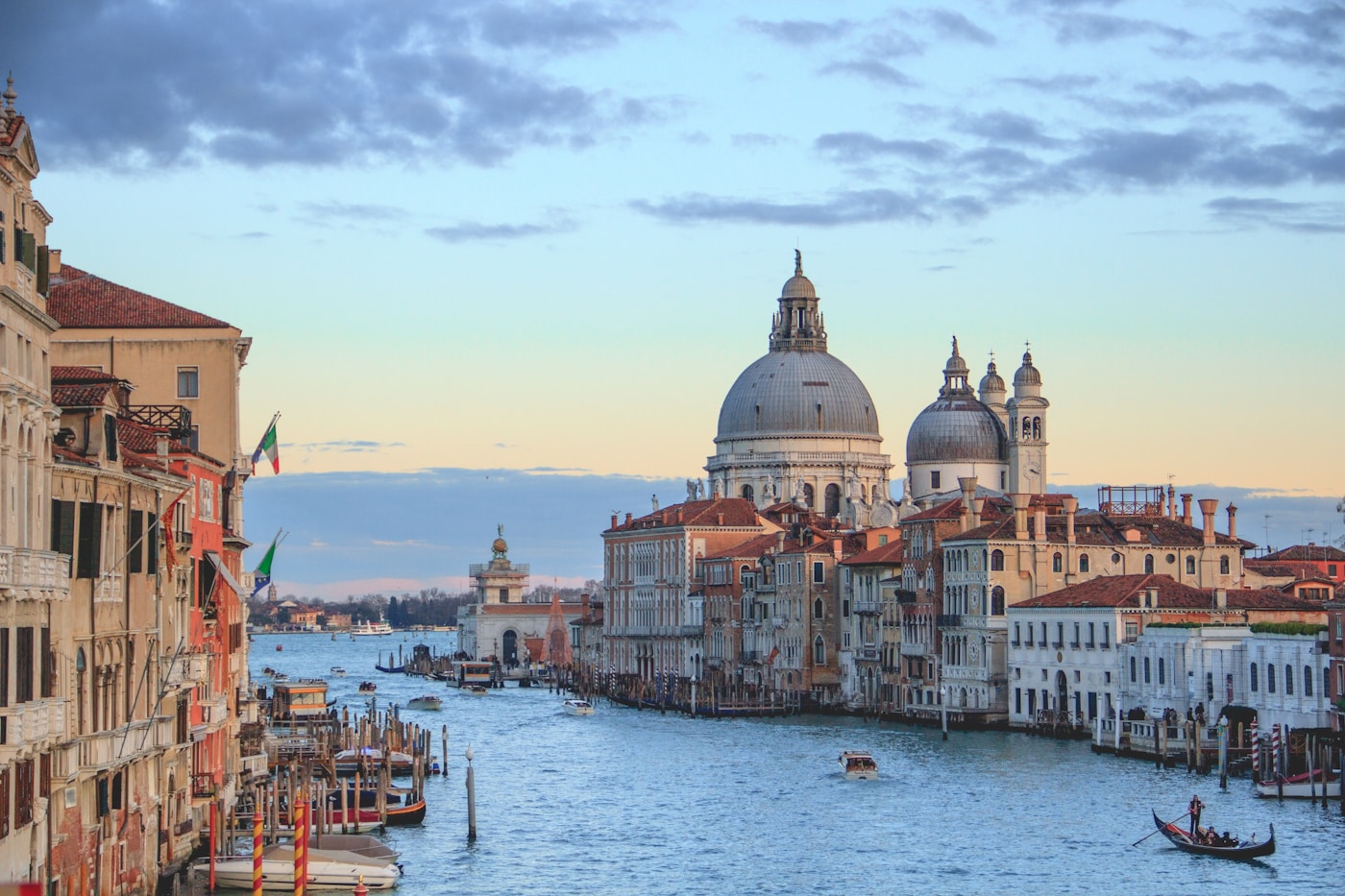
Venice scored 7.2 on the everycity index in 2026, the eighth highest score in Italy after Milan, Florence, Turin, Bologna, Verona, Padua, and Parma. The index treats Venice as a special case: this is the only major European city built entirely on water across 118 islands connected by 438 bridges, with a population structure that has halved from 174,000 in 1951 to 49,000 in the historical center in 2025 driven by housing cost, flood risk, and the mass tourism economy that now dominates the lagoon. The headline numbers: rent on a central one bedroom in Cannaregio or Castello runs 1,150 euros, the monthly all in cost lands at 2,640 dollars for a single resident, the income tax position runs 29 to 38 percent combined IRPEF plus Veneto regional plus communal effective rate for a Venezia resident on a 50,000 euro gross income, and the safety score is 8.4 on the same 10 point scale we apply to Milan, Zurich, and Munich.
The case for Venice: the unmatched urban form (no cars, no scooters, no electric bicycles, a city that operates entirely on foot and water transport in a way no other major European city does), the UNESCO World Heritage inscription that covers the entire historical center plus the lagoon, the working artistic and academic infrastructure (the Biennale, the Universita Ca Foscari, the IUAV school of architecture, the Querini Stampalia and Peggy Guggenheim collections), the MOSE flood barrier system that has materially reduced acqua alta flood frequency since the 2020 full activation, and a position 2 hours 17 minutes from Milan by Frecciarossa, 2 hours 7 minutes from Bologna, and 3 hours 18 minutes from Rome. The case against, when there is one, is named below in section 12. If you want the comparison view, start with Florence vs Venice or Milan vs Venice.
The data feeding this report is sourced from our methodology page, with primary sources at the foot. Numbers are May 2026 unless stated otherwise. Currency is the euro, with USD conversion in parentheses where useful. The 2026 update reflects the new daily tourist entry fee (5 euros for non resident day visitors on 35 peak days a year, increased from the 2024 pilot of 5 euros for 29 days), the cedolare secca rental tax adjustment, and the continued MOSE system operations data through April 2026.
One reading note. This is the long form report. If you only want the headline numbers, the city score generator returns the index figure with custom weights in 30 seconds. If you want the comparison view across two cities, the Florence vs Venice page is the first stop. If you want the full continent context, Europe places Venice on the regional table, and Italy sets the country level frame.
№ 02 , Cost of Living
The monthly arithmetic.
Twelve line items priced in May 2026 for a single resident living in a central one bedroom in the historical center. Family of four numbers run 2.4 times the single resident figure. The Mestre mainland cost basis runs 28 to 38 percent below the historical center.
Line item
Single, 1 bed
Rent, central historical center one bedroom1,150 euros
Rent, Mestre mainland one bedroom780 euros
Family three bedroom historical center2,150 euros
Groceries, single (historical center)395 dollars
Groceries, family950 dollars
Public transport pass (ACTV vaporetto resident)42 dollars
Utilities, average210 dollars
Internet, 1 Gbps38 dollars
Coffee, take away (resident bar)1.40 dollars
Beer, supermarket1.60 dollars
Beer, bar (resident neighborhood)5.80 dollars
Dinner for two, mid range bacaro72 dollars
Gym membership58 dollars
Mobile phone plan12 dollars
Total monthly all in for a single resident in a central Cannaregio or Castello one bedroom: 2,640 dollars. That puts Venice above Bologna (2,150 dollars), Florence (2,650 dollars), and below Milan (3,250 dollars). The historical center cost premium reflects two distinct structural factors: the housing supply is fixed by UNESCO heritage protection (no new construction inside the lagoon since 1960), and virtually every physical good arriving in the historical center pays a logistics premium for the water transport (groceries, furniture, building materials all transit through the Tronchetto loading dock and onto cargo boats). For the family of four equivalent in the historical center, multiply by 2.4 and you reach 6,350 dollars before international school.
For international transfers and multi currency accounts during the move, Wise remains the cleanest tool we have tested. The Italian banking system is famously slow and expensive on international wires; Wise typically processes a EUR transfer at within 0.35 percent of the mid market rate compared with the 2.5 to 4.0 percent margin most Italian retail banks apply. Booking the first month through Booking.com while you find a long term contract is the standard play. Venice is uniquely difficult for short term apartment booking inside the historical center: the city government has tightened short term let licensing since 2023, and the cheapest credible Booking inventory typically sits in Mestre on the mainland with vaporetto access to the historical center. See the 2026 cost of living report for the city by city table.
Three quiet costs new residents tend to underestimate in Venice: the caparra deposit of two to three months rent that often disappears in the post tenancy reconciliation, the cedolare secca optional 21 percent flat rental income tax that the landlord may pass through in lower headline rent, and the TARI waste collection tax of 280 to 480 euros a year that the tenant pays directly. The historical center logistics premium adds another 12 to 28 percent to virtually all consumer goods relative to the Mestre mainland equivalent. The Italy tax guide works through the IRPEF brackets, the regional surcharge, and the 7 percent flat tax regime for pensioners moving to smaller comuni. Note: the Veneto regional IRPEF surcharge sits at 1.23 percent, slightly below the Italian national average.
The bedroom range is wide. A studio in the residential Castello eastern neighborhoods runs 780 euros. A two bedroom in Cannaregio, Santa Croce, or Dorsoduro runs 1,350 to 1,750. A three bedroom in the prime San Marco perimeter runs 2,400 to 4,200. The Venice rental market guide walks the postcodes and the actual asking prices from the May 2026 sample. Note: the Mestre mainland (a 9 minute train ride from the Santa Lucia station) offers two bedroom rentals from 850 to 1,250 euros, with full ACTV vaporetto connectivity included in the resident transit pass; many working residents make the trade off explicitly.
Salary equivalent
What does your salary need to look like in Venice?
Equivalent in Venice
$2,231
Adjusted for cost of living, tax position, and currency. Recalculated against a 2640 dollar a month baseline.
№ 03 , Safety
A 10 point read on streets, day and night.
Venice scored 8.4 overall. The breakdown matters more than the headline.
Overall8.4
Solo female, day8.6
Family with kids8.6
After dark, central8.0
Compared with the rest of the index, Venice sits in the upper tier on all four safety axes. The city ranks in the European top 20 for safety on independent measures (Numbeo Crime Index, EIU Safe Cities Index). The unique urban form (no cars, no road traffic, no high speed bicycle) eliminates the dominant European traffic safety risk for pedestrians and children. The safest cities ranking places Tokyo at 9.6 and Singapore at 9.5 as the top of the global table; Venice at 8.4 sits comfortably in the upper European tier.
Practical notes for new residents: violent crime in Venice is statistically negligible (the Carabinieri recorded 0.3 homicides per 100,000 in 2024); pickpocketing on the vaporetto routes 1 and 2 along the Canal Grande and surrounding the Piazza San Marco and the Rialto Bridge is the dominant property crime against tourists; the residential neighborhoods of Cannaregio (the northern arc), Castello (the eastern arc), and outer Dorsoduro are dramatically safer than the central tourist density zone. Carry an international policy from SafetyWing for the first three months while your local SSN access gets set up. The full safety methodology is on our methodology page.
The four categories that make up the overall safety score are violent crime, property crime, traffic safety, and emergency response time. Venice is uniquely strong on traffic safety (the absence of road traffic eliminates the dominant pedestrian fatality risk that affects every other major European city) and family safety, weaker on emergency response time in the historical center (the water based ambulance service runs slower than equivalent road ambulance in the European context, particularly in the outer Castello and Cannaregio fingers). The Venice safety deep dive walks the four categories with underlying Polizia di Stato and Capitaneria di Porto statistics.
№ 04 , Weather
The climate in plain numbers.
humid subtropical, Cfa under Koppen, 81F summer highs, 32F winter lows, 76 percent humidity year round, 1,994 hours of sun a year
The best months to live in Venice are May, June, September, October. The worst, in our reader survey, was August for the heat and the tourist density (the historical center receives 95,000 day visitors on August peak weekends, against a resident population of 49,000) and November for the acqua alta high water risk. The MOSE flood barrier system has been fully operational since 2020 and is activated when the forecast tide exceeds 130 centimeters above the local zero; the system has prevented an estimated 84 percent of the acqua alta events that would have flooded the historical center over the 2020 to 2024 period. For a city that can match your home weather, see the climate match tool. For seasonal travel within the same climate band, the warm winter ranking is the standard cross reference.
Climate practical notes for Venice: the housing stock is uniformly historic (most central residential buildings date 1450 to 1850), the heritage protection limits insulation retrofits, and the ground floor of every building inside the historical center is structurally compromised by saltwater intrusion that has accelerated over the 20th century. The current advice for renters is to avoid any ground floor unit (regardless of price) and to verify with the landlord that the apartment sits at minimum the first piano nobile above ground level. Expect to pay 165 to 280 dollars a month in winter heating in older historical center flats and dramatically less in Mestre mainland equivalents. Check the classe energetica before you sign. The Venice housing quality guide breaks down what to look for during viewings. Air conditioning is essential for the July to August window in the historical center because the dense built form traps heat after dark.
Air quality in Venice is moderate by Western European standards, with PM2.5 averages exceeding the WHO threshold for 4 to 5 months a year, dominated by the Marghera industrial port and the cruise ship and ferry emissions in the Bacino San Marco. The cruise ship traffic was rerouted away from the Bacino in 2021 (the ships now dock at Marghera and passengers transit to the historical center by smaller tender), which materially improved air quality readings at the San Marco and Castello monitoring stations. ARPA Veneto monitoring places Venice in the middle European quartile for air quality. The Venice air quality report tracks PM2.5 and ozone month by month. If you have asthma or a young child, this is a meaningful negative variable in the Venice report.
Climate adaptation is a longer conversation, and Venice is the textbook European case study. The 2024 to 2026 trend lines for the upper Adriatic track the worst pattern: accelerating sea level rise (the relative sea level at the Punta della Salute tide gauge has risen 32 centimeters over the 1900 to 2024 period and is forecast to rise an additional 20 to 60 centimeters by 2100), warmer summers (the August 2024 heatwave hit 102F at the Tessera airport weather station), and the chronic question of whether the MOSE system can be maintained and operated at the frequency the rising sea level will require by 2050. The climate resilient cities article ranks the 50 cities we track on flood, fire, and heat dome exposure; Venice consistently scores in the lower quartile on long term flood resilience despite the MOSE infrastructure.
№ 05 , Jobs and Salary
Who pays, and how much the tax takes back.
Salary medians are May 2026, sourced from Glassdoor, Levels.fyi, and OECD wage data. Tax figures are from the official revenue authority.
Role, mid level
Median salary
Software engineer, mid level36,000 euros
Senior software engineer54,000 euros
University researcher (Ca Foscari, IUAV)30,000 euros
Senior university researcher58,000 euros
Hospitality sector manager42,000 euros
Cultural sector director (Biennale, museums)65,000 euros
Lawyer (admitted Italy)44,000 euros
Combined IRPEF top marginal47 percent at 75,000 euros
The major employers in Venice are: the city government and the regional Veneto administration (14,000 staff combined), the Universita Ca Foscari (19,000 students and 1,800 staff), the IUAV University of architecture (4,200 students and 480 staff), the Biennale di Venezia foundation (the architecture and art biennials draw 700,000 visitors each), the Generali Italia insurance regional headquarters, the Casino Municipale di Venezia at Ca Vendramin Calergi (one of two state operated casinos in Italy), the Marghera industrial port and adjacent petrochemical and shipbuilding facilities (Fincantieri operates the Venice Marghera shipyard with 1,400 staff), and the dense hospitality and cultural sector across the historical center (hotels, restaurants, museums, transport operators, cultural institutions employing 18,000 staff combined). The labor market is structurally narrower than the equivalent Italian secondary city; private sector senior tech, finance, and consulting roles concentrate in Milan, Bologna, and the broader Veneto industrial belt near Padova, Treviso, and Vicenza. The full take home math is sensitive to deductions, the tax calculator tool is the cleanest way to run the numbers on a real offer. For benchmarking, the highest paying cities ranking and the Milan vs Venice comparison cover the major Italian destinations on the same chart.
Note on tax: the Italian IRPEF runs four brackets in 2026 (23 percent to 15,000 euros, 35 percent to 28,000 euros, 43 percent above 50,000 euros) plus the regional Veneto surcharge of 1.23 percent and the Venezia communal surcharge of 0.80 percent. Combined effective rate for a 50,000 euro gross earner sits 31 to 33 percent. Self employed under the regime forfettario can elect the 15 percent flat tax up to 85,000 euros revenue with a 78 percent deemed expense allowance. The new residents flat tax for high net worth individuals moving fiscal residence to Italy was raised to 200,000 euros a year in the 2025 budget. The impatriate workers regime offers a 50 percent personal income tax exemption for the first five years for any worker transferring fiscal residence to Italy. Read the Italy tax guide before you accept any six figure offer or move your fiscal residence.
Working culture in Venice is its own variable, shaped by the cultural and hospitality dominance of the local labor market. Hours in the cultural sector and the universities are reasonable (37 to 40 hours a week, 32 days of annual leave); the hospitality sector runs longer hours, seasonal patterns concentrated in April through October, and the lower wage band typical of European hospitality work. The Venice working culture guide covers the specifics. Read the relocation checklist for the items the recruiters skip.
One more lens. The dual income household question. In Italy, the spouse visa under the family reunification framework grants work rights from day one, which is more permissive than the German or Swiss equivalent. The spouse visa guide covers the 30 most common destination cities. For the cultural sector specifically, Italian language competence is virtually required for the higher salary roles at the universities, the Biennale, and the public museums; the international and English language private sector in Venice is small.
№ 06 , Neighborhoods
Where to actually live.
8 neighborhoods, each with the rent number and a one line verdict. The historical center is organized into six sestieri plus the Giudecca and the Lido islands.
For long term rentals, residents use Immobiliare.it, Idealista, and the specialized local agencies (Immobiliare Veneziana, Carratu, Casa in Laguna) for the most complete listings. Idealista is the cleanest portal for foreign residents because it allows English language inquiries. The Venetian rental market documentation is heavy: prepare a permesso di soggiorno or codice fiscale, three months of payslips, a guarantor letter for any contract above 1,400 euros a month, and the agenzia commission of one month rent. Expect to compete with 4 to 12 other applicants on a desirable Cannaregio or Dorsoduro residential unit. The relocation checklist covers the documentation.
Two neighborhood rules of thumb the data supports. First, the outer sestieri (Cannaregio north, Castello east, Dorsoduro south) buy a quieter resident experience at a meaningful discount to the San Marco core. Second, the Mestre or Lido option (a 9 to 22 minute train or vaporetto from the Santa Lucia station) buys 30 to 45 percent cheaper rent at the cost of the daily commute back into the historical center; the trade off works for the working couple who only need historical center access on weekends. Track those rules across the eight Venice neighborhoods above and you can usually pick the right one in fifteen minutes.
№ 07 , Healthcare
The system, the cost, the wait.
Healthcare scored 8.1 on a 10 point scale. The methodology weights access, cost, and outcomes equally.
Public universal coverage through the Italian Servizio Sanitario Nazionale (SSN), administered by the regional Azienda ULSS 3 Serenissima for the Venice metropolitan area, for all residents at no premium beyond payroll tax contribution. Out of pocket costs apply at the ticket level for specialist visits (15 to 38 euros depending on the procedure) and prescription drugs (3 to 9 euros for most generics). The Italian system ranks in the OECD middle on outcomes and the upper tier on access by independent measures. The Ospedale Civile di Venezia at Castello is the main historical center hospital; the Ospedale dell Angelo at Mestre is the larger and more modern facility for serious cases. Outcome metrics for Italy place the country in the OECD top 10 for life expectancy (83.2 years at birth, 2024).
For new arrivals: register with the Azienda ULSS 3 Serenissima within 90 days of obtaining residency to enroll in the SSN. EU citizens use the EHIC card during the registration window; non EU citizens require a permesso di soggiorno before enrollment. Pick up an interim international policy from SafetyWing or Cigna Global for the gap. The expat insurance guide covers the trade off in detail.
Private healthcare is widely used by the upper income brackets to bypass the SSN wait times for non urgent specialist consultations. A private cardiology consultation runs 90 to 180 euros, a dermatology visit 80 to 160 euros, a private orthopedic specialist 110 to 220 euros. Private insurance premiums for a single adult run 1,150 to 2,600 euros a year depending on the package; the Generali Italia (headquartered in Trieste 2 hours east, with strong regional presence) and UnipolSai plans are the most widely used. Mental health services are weak by Northern European standards; the wait for an out of network psychotherapy slot in the private market runs 1 to 4 weeks at the cost of 65 to 110 euros per session. The expat mental health guide covers what private and public look like across our top 50 cities.
№ 08 , Education and Family
Schools, if you have kids.
The international school option, the local school option, and the cost of each.
Venice hosts 2 international schools accredited by IB or CIS including the H Family International School of Padua (the closest IB school, 35 minutes by direct train from Venezia Santa Lucia) and the English International School Venice (the smaller of the two, in Mestre). The local state schools are free and consistently rank in the top quartile of Italian PISA results; the Veneto region typically scores at or above the Italian national average. The Italian school system enforces a track selection at age 13 to 14 (liceo classico, liceo scientifico, technical and professional tracks). The international school route is the standard for families on a five year posting; tuition runs 12,000 to 22,000 euros a year per child plus enrollment fees. Many international families choose the local liceo route combined with private English language tutoring as the cheaper alternative.
The family rating for Venice weights school quality, park access, safety, healthcare, and the cost of a three bedroom flat. See the best cities for families ranking for the full table. The relocating with kids guide covers the school admissions calendar; in Venezia comune the deadline for state school enrollment runs January through February for September entry, with international school deadlines closer to December for the following September.
Beyond school, the family experience in Venice is shaped by what is free. The car free city center that means children can walk safely from age 5 onward without the road traffic risk that dominates every other European urban environment, the Giardini della Biennale and the Parco delle Rimembranze in Castello, the Lido beach for summer access, the substantial free museum admission days at the public museum network, and the unique cultural environment that virtually no other European city can offer for children. Venice scores extraordinarily high on the traffic safety axis for families, very low on the immediate park access axis (the historical center has limited green space, the Castello giardini and the Sant Elena park are the dominant exceptions). The family budget guide models the realistic monthly all in figure across 30 destination cities, and Babbel is the cleanest entry point for the parent who wants a working level of Italian inside six months.
For the working couple, full time daycare in Venice runs 320 to 580 euros a month at the city operated asili nido, with means tested subsidy reducing the cost to as low as 90 euros a month for lower income households. The Venice comune asili nido system covers 32 percent of demand; the waiting list runs 6 to 18 months for the popular central settings. The Venice childcare guide works through the application timeline. Tuition at the Universita Ca Foscari (founded 1868, 19,000 students) runs 410 to 3,800 euros a year on the ISEE means tested scale for Italian and EU students. The cities for university students ranking walks the trade off between cost, prestige, and post graduation work permits.
№ 09 , Transport
Walk, ride, or drive.
Walkability 10.0, transit 7.4, bike 1.0. Car needed: Impossible.
Walk10.0
Transit7.4
Bike1.0
Car neededImpossible
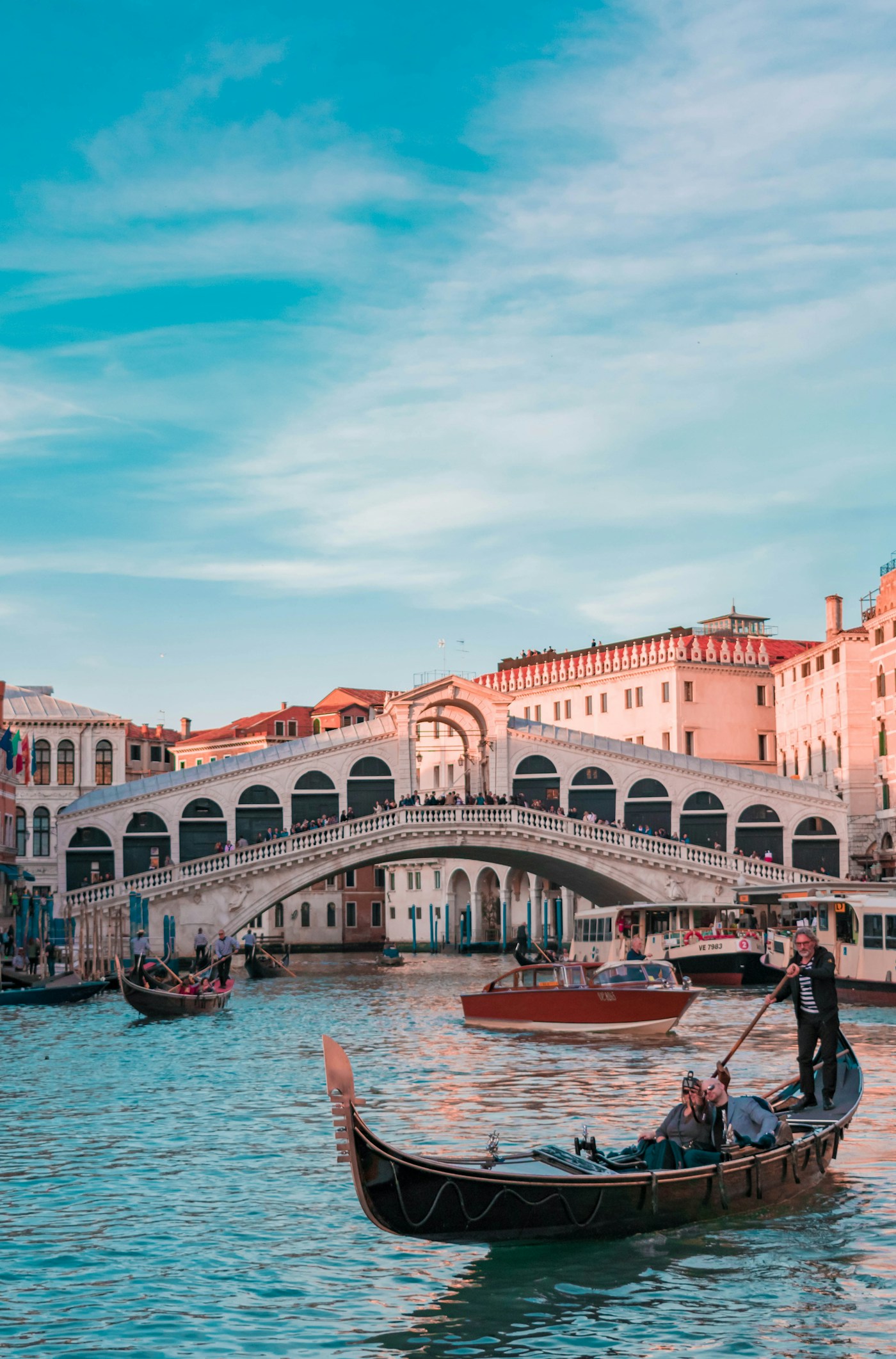
Venice is unique in the European report set: walking is the dominant mode (the historical center is 100 percent car free and 100 percent bicycle free under the city statute), the vaporetto water bus is the only motorized transit (operated by ACTV across 25 lines), and private water transport (the gondola for tourism, the motoscafo private taxi at 80 to 180 euros per trip, the private cargo boat for moving and supplies) covers the niche cases. Single vaporetto fare 9.50 euros for a tourist 75 minute ticket, 42 dollars for the unlimited monthly ACTV resident pass (the resident pass is one of the deepest discounts to non resident pricing in any European transit system). The bicycle is mechanically impossible inside the historical center (the bridges have steps and the alleys are too narrow); the Lido is the only Venetian municipal area where bicycles are permitted. For relocation scouting trips, the rental car logic only applies on the mainland (Venice Marco Polo and Venice Treviso airports both offer pickup); a rental from Discover Cars covers the mainland trip at 32 to 65 dollars a day. A car cannot enter the historical center and parking on the Piazzale Roma garage or the Tronchetto runs 26 to 38 euros a day.
Airport access is the variable most travelers underweight. Venice Marco Polo Airport handled 11.8 million passengers in 2024, ranking it the fourth busiest in Italy with direct service to 87 destinations including the major European hubs, the transatlantic schedule to New York, Atlanta, and Toronto, and the long haul to Doha and Dubai. From a central Cannaregio or Castello one bedroom, expect 75 to 110 minutes by Alilaguna water bus (every 30 minutes, 15.00 euros) and 25 to 38 minutes by ACTV land bus from the Piazzale Roma terminus to the airport (the historical center to Piazzale Roma vaporetto adds another 35 to 45 minutes). For frequent flyers, the best airport cities ranking tracks the connectivity. The Frecciarossa high speed rail option is exceptional: 2 hours 17 minutes to Milan, 2 hours 7 minutes to Bologna, 3 hours 18 minutes to Rome, 1 hour 13 minutes to Verona.
№ 10 , Culture and Cuisine
What makes Venice itself.
The food signatures, the nightlife rating, the cultural calendar.
Food in Venice: the regional Veneto kitchen anchored on the lagoon catch (sarde in saor, baccala mantecato, risotto al nero di seppia, the spider crab moeca during the spring shedding season, the lagoon fish stew brodetto, the fritto misto di pesce), the strong wine culture (the Veneto produces Prosecco from the hills 60 kilometers north, the Soave whites from the Verona side, the Amarone reds from the Valpolicella zone), the unique cicchetti tradition (small plates served at the counter of the bacaro neighborhood wine bar from late morning through 21:00), and the new wave of natural wine and modern Venetian small plates in Cannaregio and the outer Castello. The Michelin scene is small for the city profile, anchored by the Glam Enrico Bartolini at the Palazzo Venart and the Quadri on Piazza San Marco. The nightlife scores 5.8 on the 10 point scale, the methodology weights bar density, late hour transport, and the diversity of the scene. The best cities for nightlife ranking places this in context: Venice is the quietest end of the Italian major city nightlife spectrum after 23:00 because the vaporetto schedule limits night service (the dominant night vaporetto is the N1 night line running every 25 minutes from 23:30 to 04:30).
Cultural temperament: cosmopolitan, internationally minded, museum dense, with the longest continuously preserved urban form in Europe (the city plan and the building footprint have remained essentially unchanged since 1500), a thick artistic heritage that runs from the Venetian Renaissance (Tintoretto, Titian, Veronese, Carpaccio) through the Baroque (Tiepolo, Canaletto) to the modern (the Peggy Guggenheim Collection, the Punta della Dogana, the Palazzo Grassi under the Pinault Collection contemporary art), and a unique cultural calendar built on the Biennale di Venezia (the art biennial in odd years from April through November, the architecture biennial in even years), the Carnevale in February, the Venice Film Festival on the Lido in August and September, the Regata Storica in September, the Festa del Redentore in July, and the Festa della Salute in November. For day to day cultural input, the Venice cultural calendar tracks the festivals, museum exhibitions, and gigs worth a flight. Tour bookings for first time visitors run cleanest through GetYourGuide.
Two underrated reads on cultural fit: how late the city eats, and how quietly it complains. Venice eats earlier than the Italian Southern norm; dinner at 19:30 to 21:00 is the local default in the resident bacari, the kitchens close at 22:30 and the vaporetto night service limits the late evening options. The cities for foodies ranking lists the food capitals on a single chart. For complaint culture, Il Gazzettino Venezia and the local Reddit tell you what residents fight about; the Venice resident grievances roundup reads them so you do not have to. The dominant themes: the tourism load (the city receives 28 million overnight stays a year plus 12 million day trippers against a resident population of 49,000 in the historical center), the short term rental compression on the resident housing market, the depopulation of the historical center (the resident population has halved from 1951 to 2025), the MOSE long term operating cost and maintenance debate, and the persistent question of whether the cruise ship rerouting from the Bacino in 2021 should be made permanent or whether the smaller ships should be allowed back.
№ 11 , Remote Work
Internet, visas, and where to plug in.
Median internet speed 165 Mbps. Coworking density: 14 spaces. Nomad visa: Italy launched the digital nomad visa in April 2024, available to non EU professionals with a minimum 28,000 euro annual income.
The remote work rating for Venice is solid on infrastructure (with caveats for the historical center logistics) and dramatically improved on visa accessibility since the 2024 nomad visa launch. The median internet speed of 165 Mbps places Venice in the European top 50 (TIM and Open Fiber operate full fiber FTTH across the mainland Mestre and Marghera and across most of the historical center, with some heritage protected buildings limited to 100 to 200 Mbps because of the cable installation restrictions inside listed structures), the coworking density of 14 spaces is moderate for a city of this size (mostly concentrated in Mestre rather than the historical center because of the same heritage and floor space constraints), and the time zone overlap with the rest of Europe is workable. For a privacy layer on local networks, NordVPN remains the cleanest option we have tested. The best cities for remote work ranking covers the full table.
For nomads: Italy launched the digital nomad visa in April 2024 under decree law 4/2024, available to non EU professionals with a minimum 28,000 euro annual income (1.5 times the Italian minimum wage indexed annually), six months of professional experience, valid international health insurance, and proof of accommodation. The visa is initially valid for one year, renewable for up to two additional years, and grants a permesso di soggiorno that can lead to long term EU resident status after five years. The 7 percent flat tax for pensioners moving to comuni under 20,000 population in the southern regions and the impatriate workers regime (50 percent personal income tax exemption for the first five years) make Italy structurally attractive for the higher income inbound resident; neither regime applies to Venice directly because the city exceeds the population threshold, but the impatriate regime applies to any qualified professional moving fiscal residence regardless of city. The nomad visa guide 2026 tracks the eligibility across 47 cities.
For coworking specifically, premium operators like the Combo Venezia in Cannaregio, the Spazio Aiep on Giudecca, and the Wateroffice in Mestre run 180 to 320 euros a month for a hot desk and 380 to 720 for a private booth. The mid market option runs 140 to 220 euros a month for unlimited access plus mail handling. The Venice coworking guide tracks the specific operators. The best cities for digital nomads ranking places Venice as a niche destination, attractive primarily for the unique urban form rather than the infrastructure or community density of the larger nomad hub cities.
№ 12 , The Verdict
Who should move to Venice, and who shouldn't.
Venice works for the artist, the architecture researcher, the cultural sector professional at the Biennale or the universities, the writer who can earn from foreign clients via the impatriate or nomad visa, and the retired or partly retired couple with the resources to absorb the historical center cost basis and the patience to navigate the practical friction of a city that operates entirely on water and foot. Below 3,500 dollars net monthly the rent compression in the residential sestieri gets sharp; above 7,500 dollars net the city becomes a category of one in the European report set, a place where you can live for ten years and still feel that you have not exhausted the daily visual discovery. The case against has hardened since 2020: the resident population continues to fall (the historical center is projected to drop below 40,000 residents by 2030 on current trends), the short term rental compression makes long term resident housing materially harder to find each year, the climate change forecast for the upper Adriatic is the worst in the European report set (the MOSE system buys time but does not solve the long term sea level question), the logistics of daily life in the historical center (groceries arrive by boat, every furniture delivery requires a separate water transport operator, the post office and the medical appointments are not at street level but across a bridge or four), and the labor market depth for working age professionals is dramatically narrower than the equivalent Italian secondary city. None of that erases the core. The car free historical center that no other European city can offer at this scale. The Biennale, the universities, and the cultural infrastructure that put the city in the global top 20 for arts and architecture density. The lagoon and the outer islands (Burano, Murano, Torcello, San Erasmo) that genuinely justify the four day visitor itinerary. The Frecciarossa to Milan, Bologna, and Florence at high speed rail times. The cost basis that runs 35 to 50 percent below the equivalent Northern European destination at the historical center premium. If you are the right kind of professional and you accept that Venice is a working city living through a structural depopulation crisis (not the museum that visitors experience over three days), you live in the European city that virtually no other place can substitute for. That is rarer than this site usually admits.
The everycity.guide dispatch is one email a month. New city reports, the latest cost of living refresh, and the comparisons readers asked for. No tourism brochure copy.
Sources, May 2026. Numbeo cost of living index May 2026 · Mercer Cost of Living Survey 2026 · OECD Income Distribution Database 2025 · World Bank Open Data 2025 · Speedtest Global Index April 2026 · EIU Safe Cities Index 2024 · the relevant national tax authorities for headline rates · Glassdoor and Levels.fyi for salary medians · the national statistics office of Italy · OpenStreetMap and national transit operator data for transport scoring. First published May 14, 2026. Last updated May 14, 2026.