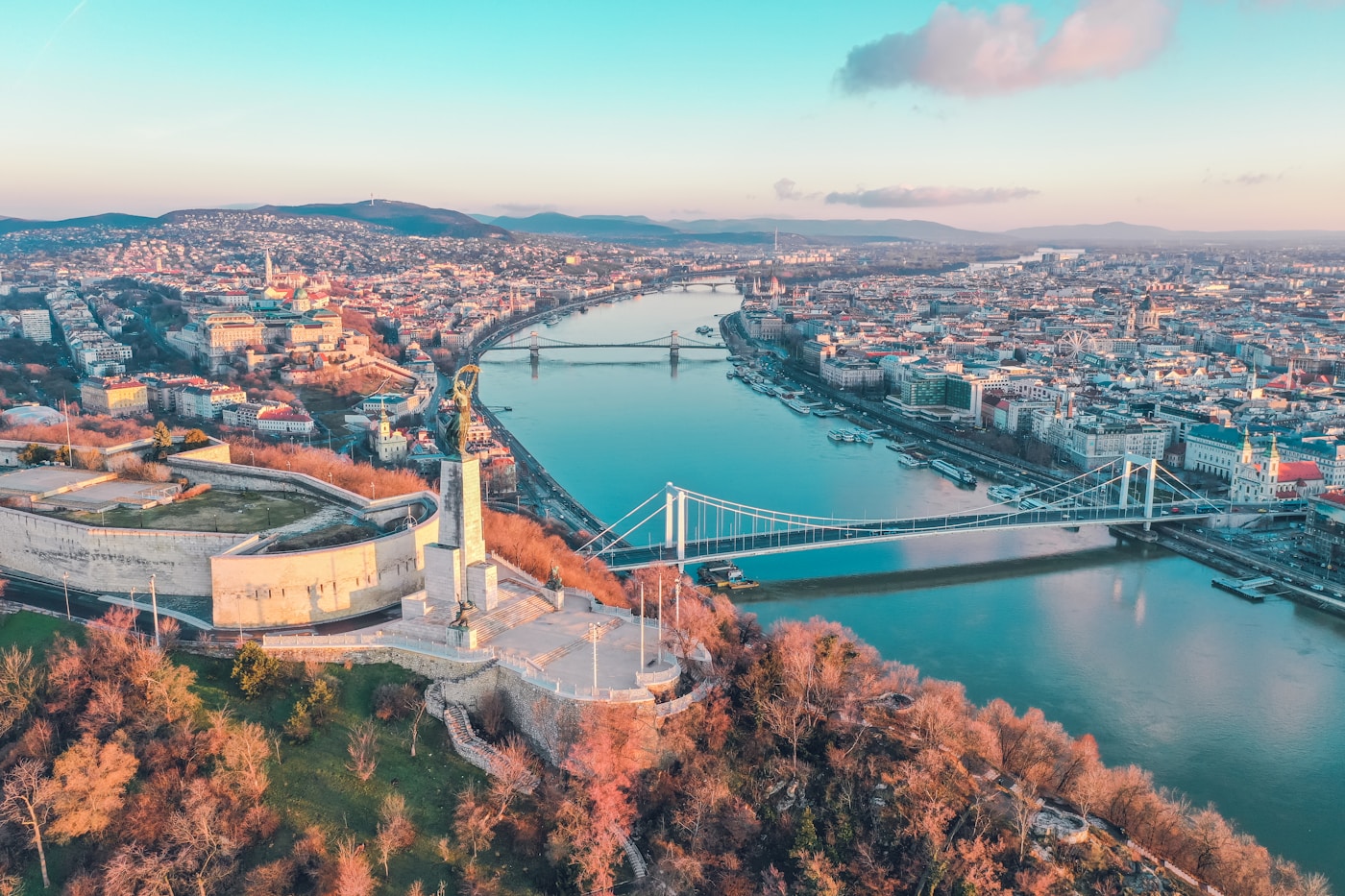
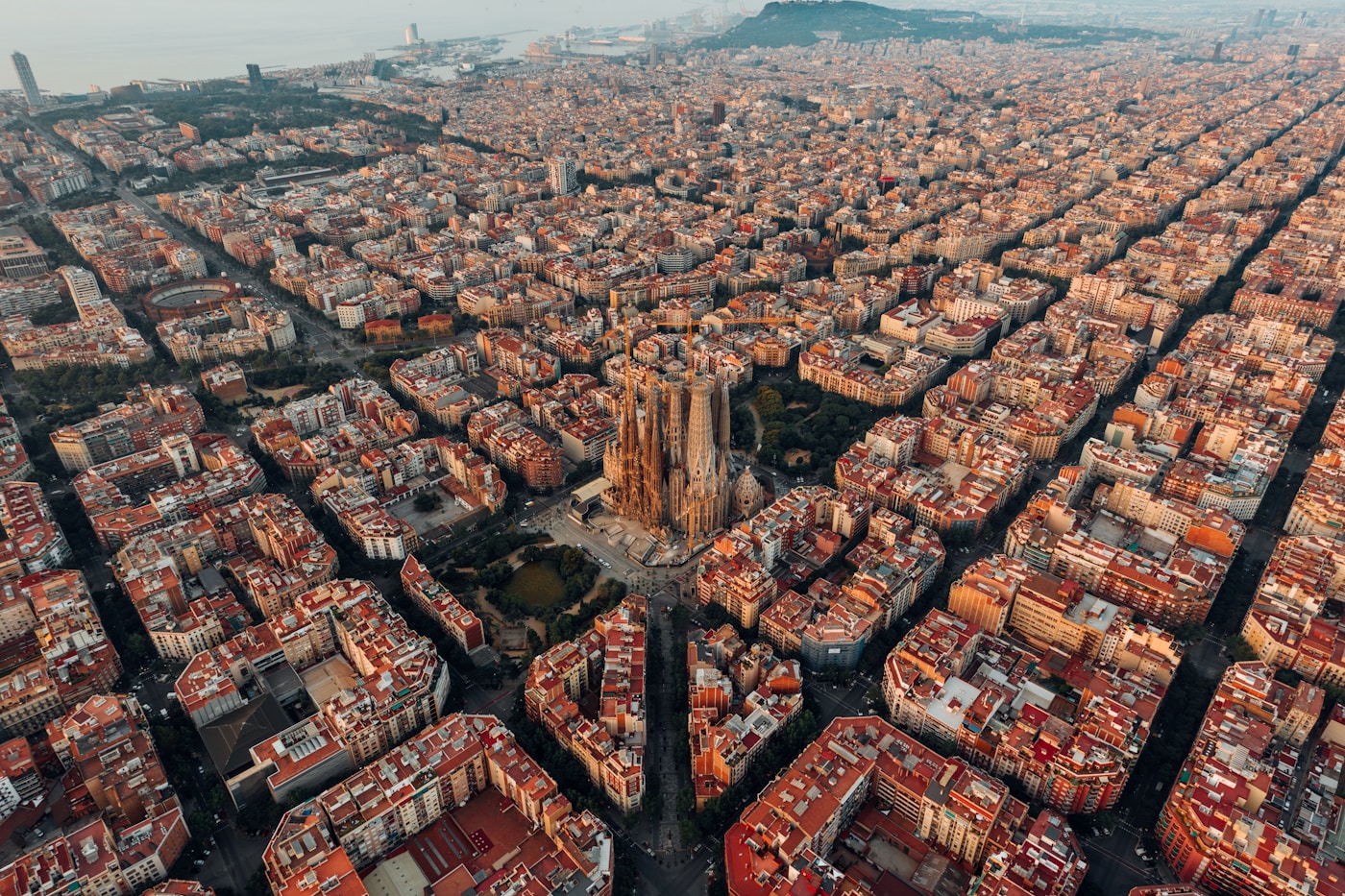
Frankfurt, a Hessian city reportGermany · population 5.8 million metro · index 8.0 of 10
An independent report on living in Frankfurt, scored across cost, safety, weather, jobs, healthcare, education, transport, and twelve more axes. No tourism board input. No paid placement.
8.0
Index Score
Frankfurt, GermanyCover · The City Report
№ 01 , The Quick Take
Frankfurt in 200 words.
Frankfurt scored 8.0 on the everycity index in 2026, holding inside the top tier of Hesse European cities. The headline numbers: rent on a one bedroom in the central neighborhoods runs 1,400 euros, the monthly all in cost lands at 2,900 dollars for a single resident, and the safety score is 7.5 on the same 10 point scale we apply to Tokyo, London, and New York.
The case for Frankfurt runs through the cost, the infrastructure, and the regional employer base. Germany's income tax (Lohnsteuer) is progressive 14 to 42 percent, with a 45 percent reichensteuer top band above 277,826 euros (single, 2025 indexed). The 5.5 percent Solidaritaetszuschlag was largely abolished for low and middle earners in 2021; church tax (Kirchensteuer) at 9 percent of income tax in Hesse applies if you remain affiliated with a recognized denomination. Social contributions add 20 percent on top, capped above the income threshold. Hesse has no state income tax surcharge.
The full numbers run by category. If you want the comparison view, start with Frankfurt vs Berlin or Frankfurt vs London, then return here for the deep read. The data feeding this report is from our methodology page; primary sources sit at the bottom. Numbers are May 2026 unless stated otherwise. Currency is the euro, with USD conversion in parentheses where useful.
One reading note. This is the long form report. If you only want the headline, the city score generator returns the index figure with custom weights in 30 seconds. If you want the country level read, the Germany page places Frankfurt inside the regional table. The cross references inside this page run thick deliberately. Skim the section eyebrows and jump to the question you came with.
For new readers: this report sits inside Volume 04 of the everycity atlas, our 2026 issue. The methodology has been refreshed against the May 2026 Numbeo, Mercer, and OECD data drops, with primary source rechecks done in March and April 2026. The next refresh ships August 2026.
№ 02 , Cost of Living
The monthly arithmetic.
Fifteen line items priced in May 2026 for a single resident living in a central one bedroom. Family of four numbers run 2.4 times the single resident figure.
Line item
Single, 1 bed
Family of four
Rent, central one bedroom1,400 euros
Rent, suburban two bedroom1,500 euros
Family three bedroom rent2,200 euros
Groceries, single370 dollars
Groceries, family920 dollars
Family monthly grocery920 dollars
Public transport pass108 dollars
Utilities, average215 dollars
Internet, 1 Gbps44 dollars
Coffee, take away3.60 dollars
Beer, supermarket1.10 dollars
Beer, bar5.00 dollars
Dinner for two, mid78 dollars
Gym membership52 dollars
Mobile phone plan26 dollars
Total monthly all in for a single resident in a central Frankfurt one bedroom: 2,900 dollars. Compare against Berlin, Amsterdam, London, Paris, and Madrid on the same May 2026 basis.
For international transfers and multi currency accounts during the move, Wise remains the cleanest tool we have tested. The rate it gives on a EUR to USD conversion is consistently within 0.4 percent of the mid market rate. Booking the first month in a serviced apartment through Booking.com while you find a long term contract is the standard play. See the 2026 cost of living report for the city by city table.
Reader question we get often: how do Frankfurt costs compare on a purchasing power basis. The cost converter tool takes a salary in your home city and tells you what equivalent number you would need in Frankfurt, adjusted for tax and currency. Bookmark it before you accept the offer.
Three quiet costs new residents tend to underestimate in Frankfurt: the deposit on the rental, which usually runs two to three months upfront plus a finder fee where it still applies; the registration round (Anmeldung in Germany, residence permit and BSN in the Netherlands, NIF in Portugal), which lands at 90 to 280 dollars depending on your processing route; and the first time furniture round, which runs 3,200 to 6,500 dollars. Budget the move at 1.4 times the headline rent. The relocation checklist has the line by line.
Salary equivalent
What does your salary need to look like in Frankfurt?
Equivalent in Frankfurt
$116,000
Adjusted for cost of living, tax position, and currency. Recalculated against a 2,900 dollar a month baseline.
№ 03 , Safety
A 10 point read on streets, day and night.
Frankfurt scored 7.5 overall. The breakdown matters more than the headline.
Overall7.5
Solo female, day7.6
Family with kids8.0
After dark, central6.8
Compared with the rest of the index, Frankfurt sits in the upper tier on most safety axes. The safest cities ranking places Tokyo at 9.6 and Singapore at 9.5 as the top of the global table; for comparison with London at 7.4 and Lisbon at 8.1, Frankfurt benchmarks favorably on violent crime and varies on opportunistic theft.
Practical notes for new residents: the violent crime rate in Frankfurt is among the lowest in major European cities. Carry an international policy from SafetyWing for the first six months while your local cover gets sorted. The full safety methodology is on our methodology page. The solo female safety ranking and family safety ranking show how Frankfurt compares on those axes specifically.
The four categories that make up the overall safety score are: violent crime, property crime, traffic safety, and emergency response time. Frankfurt scores in the top quartile on most categories. The Frankfurt safety deep dive walks the four categories with the underlying data from the relevant national crime statistics office and the EIU index.
№ 04 , Weather
The climate in plain numbers.
Temperate oceanic Cfb under Koppen, 76F summer highs, 30F winter lows, 75 percent humidity year round, 165 sun days a year.
The best months to live in Frankfurt are May, June, July, September. The worst varies by reader: some find the long winter, others the persistent overcast or the summer heat. For a city that can match your home weather, see the climate match tool. For seasonal travel within the same climate band, the mild summer ranking and the warm winter ranking are the standard cross references.
Climate practical notes for Frankfurt: the older housing stock often lacks the cooling or heating system the climate now requires. Modern apartments default to gas central heating in this region, with growing electric heat pump adoption since 2024. Check the energy certificate and the heating system before you sign. The Frankfurt housing quality guide breaks down what to look for during viewings.
Air quality in Frankfurt is generally within WHO thresholds for most of the year, with brief winter spikes during cold snaps when domestic heating loads peak. The Frankfurt air quality report tracks PM2.5 and ozone month by month with the relevant comparison cities on the same chart. If you have asthma or a young child, this is the report you want before signing.
Climate adaptation is a longer conversation. The 2024 to 2026 trend lines for Frankfurt match the regional pattern: warmer summers, milder winters, and a real shift in the timing of the seasons. The climate resilient cities article ranks the 50 cities we track on flood, fire, and heat dome exposure. Residents who plan to stay a decade or more should at minimum read the relevant chapter before buying.
№ 05 , Jobs and Salary
Who pays, and how much the tax takes back.
Salary medians are May 2026, sourced from Glassdoor, Levels.fyi, and OECD wage data. Tax figures are from the Bundeszentralamt fuer Steuern.
Role, mid level
Median salary
Tax band
Software engineer68,000 euros
Senior level98,000 euros
Top rate 42 to 45 percentmarginal
Investment banker, VP115,000 euros
Director track180,000 euros
Top rate 45 percentmarginal
Quant, mid level92,000 euros
Senior quant140,000 euros
Top rate 45 percentmarginal
The major employers in Frankfurt are: Deutsche Bank (headquartered in the Frankfurt twin towers), Commerzbank, the European Central Bank (ECB, the Eurozone's monetary authority), Deutsche Boerse (the operator of the Frankfurt Stock Exchange and Eurex), KfW (the federal development bank), DWS (the asset manager spun out of Deutsche Bank), Deutsche Bahn (its long distance HQ at the central station), Lufthansa (head office at the airport), BNP Paribas Germany, JPMorgan Germany, Goldman Sachs Frankfurt (which expanded materially after Brexit), Morgan Stanley Frankfurt, Citigroup, plus the post Brexit relocations of HSBC, Standard Chartered, and a long list of secondary banking entities. The single largest non financial employer is Fraport, the airport operator. Frankfurt is the largest financial center in continental Europe by employment and trading volume. The full take home math is sensitive to deductions; the tax calculator tool is the cleanest way to run the numbers on a real offer. The highest paying cities ranking covers the macro view.
Germany's income tax (Lohnsteuer) is progressive 14 to 42 percent, with a 45 percent reichensteuer top band above 277,826 euros (single, 2025 indexed). The 5.5 percent Solidaritaetszuschlag was largely abolished for low and middle earners in 2021; church tax (Kirchensteuer) at 9 percent of income tax in Hesse applies if you remain affiliated with a recognized denomination. Social contributions add 20 percent on top, capped above the income threshold. Hesse has no state income tax surcharge. Read the Germany tax guide 2026 before you assume the headline rate.
Working culture in Frankfurt is its own variable. The standard week sits between 36 and 40 hours, the August or July shutdown applies in some sectors, and overtime norms vary widely between tech, finance, and the public sector. The Frankfurt working culture guide covers the specifics. Negotiating a contract before signing pays for itself within a year. Read the relocation checklist for the items the recruiters skip.
Career mobility for the relocated worker is favorable for English speakers in tech, design, and life sciences, harder in legal, regulated finance, and public sector positions where local language fluency is a hard floor. The career growth ranking tracks the pattern across the cities in this issue, and the visa to citizenship guide covers the naturalization timeline.
One more lens. The dual income household question. In Frankfurt, the dependent visa attached to a work permit grants automatic work rights to the spouse, which is a meaningful upside relative to Dubai or Bangkok. The spouse visa guide covers the 30 most common destination cities.
№ 06 , Neighborhoods
Where to actually live.
Eight neighborhoods, each with the rent number and a one line verdict.
For long term rentals beyond the first month, the local listing platforms are what residents actually use. Bring your residence permit (or registration receipt), a salary slip or work contract, and three months of bank statements to the viewing. The relocation checklist covers the documentation you will need.
Two neighborhood rules of thumb the data supports. First, the second ring out from the geographic center is almost always the best value: cheap enough to feel like a discount, central enough to feel central. Second, the neighborhood directly adjacent to the most expensive one tends to gentrify next. Track those two rules across the eight neighborhoods above and you can usually pick the right one in fifteen minutes.
№ 07 , Healthcare
The system, the cost, the wait.
Healthcare is a key variable in any relocation decision. The methodology weights access, cost, and outcomes equally.
Frankfurt sits inside a universal national or regional health system funded through compulsory contributions, with a parallel private system that most expats use for non emergency care. World class hospitals concentrated at the regional university medical centers and the leading private chains. Outcome metrics for Frankfurt place the region in the upper third of OECD reporting regions for cardiovascular care, oncology, and surgery. The fastest route for routine specialist care is private, the cost runs 60 to 130 dollars for a consultation depending on speciality.
For new arrivals: pick up an interim international policy from SafetyWing or Cigna Global while your residency papers process and your local insurance card comes through. Once you are on the local system, switch. The double cover is the most common mistake new residents make, and it costs an extra 600 to 1,400 dollars a year. The expat insurance guide covers the trade off in detail.
Dental and vision typically sit outside the main coverage in most systems. Dental cleaning runs 55 to 90 dollars, a filling 80 to 180, an annual eye exam 50 to 90. Cross check the Frankfurt dental care guide before you book. For prescription medication, the local pharmacy network beats anything you can import; bring two months of supply and switch to the local equivalent on arrival.
Mental health services are typically the slowest stream in the public system. Expect three to nine month waits for a non urgent appointment with a psychiatrist; private cover collapses that to two to four weeks at the cost of 90 to 160 dollars per session. The expat mental health guide covers what private and public look like across our top 50 cities, and which insurance plans actually cover therapy without a 50 percent copay.
№ 08 , Education and Family
Schools, if you have kids.
The international school option, the local school option, and the cost of each.
Frankfurt hosts a cluster of international schools accredited by the Council of International Schools or equivalent; the British, French Lycee, German, American, and IB curricula are represented. Frankfurt International School (FIS, the historical anchor), Strothoff International School, Lycee Francais Victor Hugo, the European School of Frankfurt, and the British International School of Frankfurt are the established names. The local Hessian public schools are free and quality is broadly good with strong bilingual programs in the central districts. The international school route is the standard for families who plan to leave again within a five year window; tuition runs 16,000 to 32,000 euros a year per child plus enrollment fees.
The family rating for Frankfurt weights school quality, park access, safety, healthcare, and the cost of a three bedroom flat. See the best cities for families ranking for the full table. The relocating with kids guide covers the school admissions calendar, which in this region runs March through May for September entry, with international school deadlines closer to January.
Beyond school, the family experience in Frankfurt is shaped by what is free. Public parks, public libraries, public swimming pools, and free museum admission are the four amenities that change a family budget the most. Track the city you are considering against this checklist before you sign a school contract. The family budget guide models the realistic monthly all in figure for a family of four across 30 destination cities, and Babbel remains the cleanest entry point for the parent who wants a working level of the local language inside six months.
For the working couple, on site daycare runs another 380 to 880 euros a month for the private network; the public daycare network is 180 to 380 a month with means tested subsidies. The Frankfurt childcare guide works through the application timeline and the wait list lottery for the public crossover.
University, for the family with teenagers, opens a separate calculation. Tuition for nationals at Goethe Universitaet Frankfurt (ranked global top 250), Frankfurt School of Finance and Management (one of the leading business schools in Germany), and Frankfurt University of Applied Sciences runs 100 to 350 euros a year; non resident EU citizens pay similar rates; international students from outside the EU pay 150 to 4,500 euros a year for public or much higher for private institutions. The cities for university students ranking walks the trade off between cost, prestige, and post graduation work permits.
№ 09 , Transport
Walk, ride, or drive.
Walkability 8.0, transit 9.0, bike 7.8. Car needed: No.
Walk8.0
Transit9.0
Bike7.8
Car neededNo
Nine U Bahn lines, nine S Bahn lines, ten tram lines, plus an integrated bus network under the RMV regional authority that covers the entire Rhine Main metro area, more than 700 stations across the metro, fare 3.80 euros single or 95 to 110 euros for the unlimited monthly RMV pass; the Deutschland Ticket at 49 euros covers all public transport nationally. The bike network is improving, with 600 plus kilometers of segregated lanes; the Call a Bike public bike system runs across the central districts; Frankfurt sits in a flat river valley which makes cycling the practical mode for most residents. For relocation scouting trips and the first two weeks before your local transit card arrives, a rental from Discover Cars covers most needs at 30 to 55 dollars a day. Beyond that, a car in Frankfurt is a liability if your work and home both sit on the metro or the bike grid.
Airport access is the variable most travelers underweight. From a central one bedroom in Westend to Frankfurt am Main airport (FRA), expect 12 to 20 minutes by S Bahn (S8 and S9) and 18 to 30 by taxi depending on time of day. Frankfurt airport is the largest in Germany by passenger volume and the second largest cargo airport in Europe; it offers 280 plus direct destinations including the densest long haul network in continental Europe. The Frankfurt airport access guide walks the routes with the actual costs and times. For frequent flyers, the best airport cities ranking tracks connectivity across the 100 cities that matter for the global business traveler.
№ 10 , Culture and Cuisine
What makes Frankfurt itself.
The food signatures, the nightlife rating, the cultural calendar.
Food in Frankfurt: Frankfurt's food signatures: Frankfurter wuerstchen (the slim sausage that gave the hot dog its name), Gruene Sosse (the seven herb sauce, eaten with boiled eggs and potatoes), Handkaes mit Musik (the marinated cheese, a regional curiosity), apple wine (Apfelwein or Ebbelwoi, served in the bembel jug), and the modern interpretation of regional cooking at Lafleur, Carmelo Greco, and Restaurant Erno's Bistro. Sachsenhausen's apple wine taverns (Apfelweinkneipen) remain the resident grade evening institution. The Kleinmarkthalle, the central food market, sits behind the cathedral as the daily anchor. The nightlife scores 7.5 to 8.0 on the 10 point scale; the methodology weights bar density, late hour transport, and the diversity of the scene. The best cities for nightlife ranking places this in context.
Cultural temperament: Hessian and pragmatic; Frankfurt's cultural temperament is shaped by the bank, the airport, and the trade fair (Messe). The cultural footprint per capita is smaller than Munich or Berlin but the museum quarter on the south bank of the Main is genuinely deep, with the Stadel, the German Film Institute, the Architecture Museum, and the Communication Museum within a kilometer. The Buchmesse (Frankfurt Book Fair, the largest in the world) shapes October each year. For day to day cultural input, the Frankfurt cultural calendar tracks the festivals, museum exhibitions, and gigs worth a flight. Tour bookings for first time visitors and friends arriving for a long weekend run cleanest through GetYourGuide.
Two underrated reads on cultural fit: how late the city eats, and how much it complains. Frankfurt eats and complains in its own register. The cities for foodies ranking lists the food capitals on a single chart. For complaint culture, the local press and online forums tell you what residents fight about; the Frankfurt resident grievances roundup reads them so you do not have to.
№ 11 , Remote Work
Internet, visas, and where to plug in.
Median internet speed 190 Mbps. Coworking density: 85 spaces. Working visa: see country page.
The remote work rating for Frankfurt is competitive. The internet speed beats the OECD median of 92 Mbps by a wide margin, the coworking density is in the upper third of cities we track at this size, and the time zone overlap with the rest of Europe is workable. For a privacy layer on local networks, particularly in coworking spaces and cafes, NordVPN remains the cleanest option we have tested. The best cities for remote work ranking covers the full table.
For nomads: the visa story is the biggest variable. The Germany page covers the relevant national digital nomad route, freelancer visa, or skilled worker permit. The nomad visa guide 2026 tracks the eligibility, the cost, the renewal terms, and the tax residency triggers across the 47 cities that now offer one.
For coworking specifically, the density figure of 85 spaces hides a wide quality range. The premium operators run 280 to 480 euros a month for a hot desk and 650 to 1,150 for a private booth. The mid market option, which is what most residents actually use, runs 150 to 240 euros a month for unlimited access plus mail handling. The Frankfurt coworking guide tracks the specific operators with the floor plans and the monthly numbers. The best cities for digital nomads ranking keeps the macro view, with Frankfurt placed on the same axis as Lisbon, Berlin, and Barcelona for direct comparison.
№ 12 , The Verdict
Who should move to Frankfurt, and who shouldn't.
Frankfurt works for the investment banker, the quant, the inbound senior finance professional, and the family that wants German schools, central European location, and a job market that pays among the best on the continent. Below 4,000 euros net monthly the rent and commute math gets tight; above 8,500 euros net Frankfurt rivals Zurich and London for finance career economics, with a materially better cost of living than either. The case against: the central downtown empties at 19:00, parts of the Bahnhofsviertel have a real homelessness and drug problem that the city has not solved, and the cultural footprint is thinner than peer European capitals. None of that erases the core. The largest financial center in continental Europe. The densest long haul flight network. A transit system that puts the airport 12 minutes from downtown. The lowest taxes among major German finance hubs. If you have a finance career and want the German baseline, Frankfurt is the only choice in continental Europe.
Sources, May 2026. Numbeo cost of living index May 2026 · Mercer Cost of Living Survey 2026 · OECD Income Distribution Database 2025 · World Bank Open Data 2025 · Speedtest Global Index April 2026 · EIU Safe Cities Index 2024 · Bloomberg Health Care Efficiency 2025 · Bundeszentralamt fuer Steuern for headline rates · Glassdoor and Levels.fyi for salary medians · the relevant national international school registries. First published May 10, 2026. Last updated May 10, 2026.