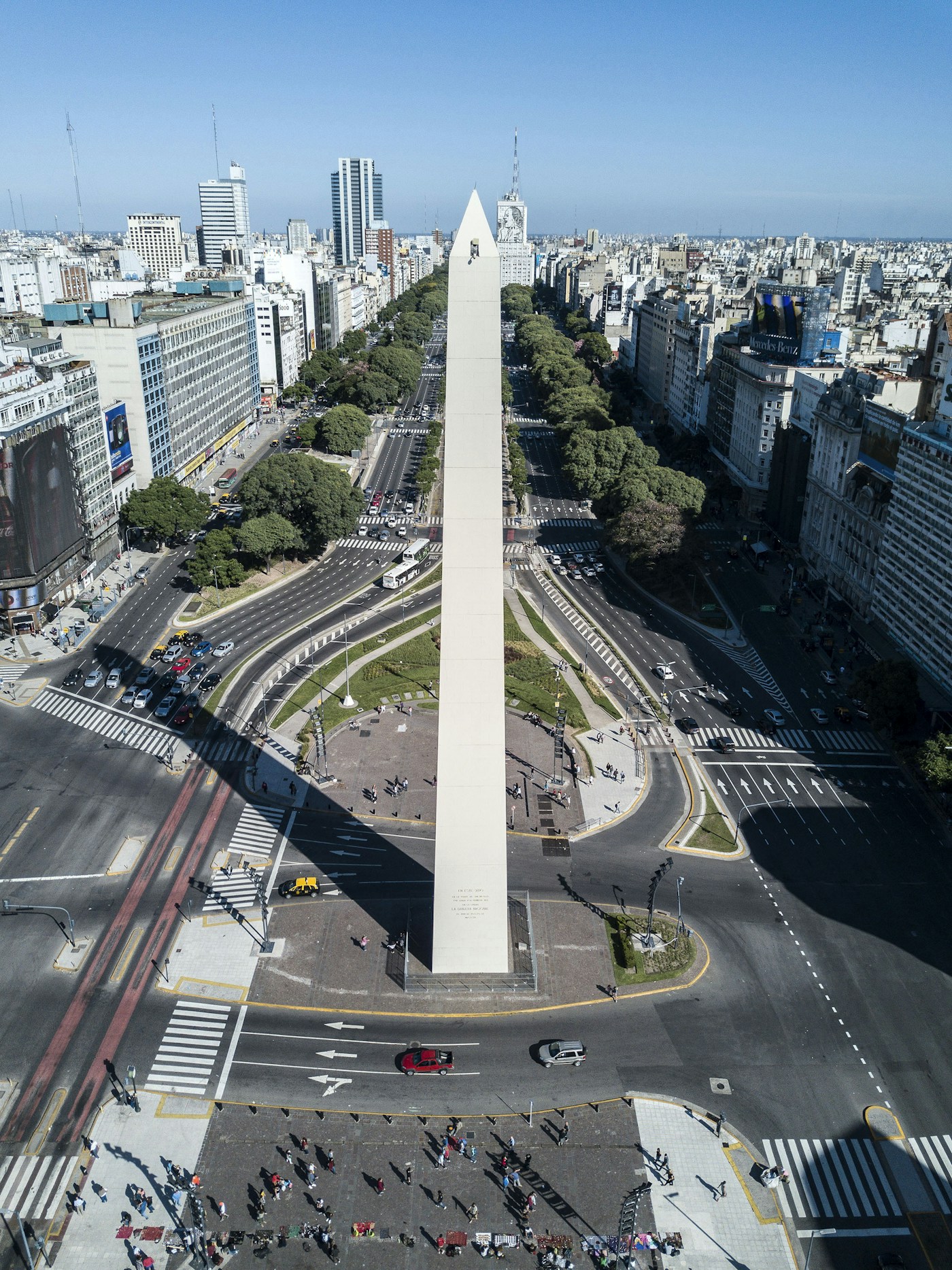
Buenos Aires vsMedellinthe independent comparison · index 7.6 vs 7.4
Buenos Aires and Medellin sit 2,800 miles apart on the same South American mainland, separated by the Andes range, a 5 hour flight, and two of the most distinctive Latin American urban cultures. Buenos Aires is the Argentine capital at sea level, with the deeper European architectural inheritance, the Spanish that the Argentines call castellano, and the Friday night asado tradition. Medellin is the Colombian second city at 1,495 meters elevation, with the eternal spring climate and the dominant Latin American nomad scene.
7.6
Index
Buenos Aires
7.4
Index
Medellin
№ 01 , The Verdict
Which city wins.
Different countries, different currencies, different climate bands. The verdict turns on the peso volatility, the climate stability, and the cultural fit.
The Verdict
Buenos Aires wins on balance.
Buenos Aires wins the index by 0.2 of a point on the strength of the cultural depth, the food scene, the lower top tax rate for residents, the larger employer base, and the EZE airport that runs 50 plus international destinations. Medellin wins on climate stability with the 72F eternal spring annual average, on safety by 1.0 of a point on the after dark axis, on cost predictability since the Argentine peso runs 35 to 80 percent annual inflation, and on the 3 hour flight to Miami. The call hinges on whether the household leads with culture and food or with climate and predictability.
Buenos Aires
on the everycity index 2026
Buenos Aires scored 7.6 on the everycity index in 2026, Medellin scored 7.4. Both cities sit inside South America but under different national regulatory frames. Argentina runs the peso argentino, the post Milei dollarization debate that continued through 2025, the income tax band that tops at 35 percent, and a CPI inflation rate that ran 117 percent in 2024 and fell to 33 percent through April 2026. Colombia runs the peso colombiano, the income tax band that tops at 39 percent, and a CPI inflation rate that ran 5.2 percent in 2024.
If the role is in the Argentine corporate cluster near YPF, Mercado Libre, Globant, Galicia, Santander Rio, or Banco BBVA Argentina, the design and creative agency cluster in Palermo and Soho, the asado culture, the larger food and wine scene anchored by the Mendoza wine regions a 90 minute flight away, or any household weighing the cultural and architectural depth of the city European inheritance, Buenos Aires wins. If the role is remote with a US salary, the household weighing the eternal spring climate, the deeper safety floor, or the dominant Latin American nomad scene anchored in El Poblado, Medellin wins. The cheapest cities ranking places Medellin at 9.2 and Buenos Aires at 9.0 on the dollar denominated read, with peso volatility carrying a separate risk premium.
Twelve line items priced in May 2026 for a single resident in a central one bedroom. Green text marks the cheaper city per line.
Line item
Buenos Aires
Medellin
Rent, central one bedroom
580 dollars
650 dollars
Rent, suburban two bedroom
520 dollars
480 dollars
Family three bedroom rent
950 dollars
950 dollars
Groceries, single
245 dollars
215 dollars
Public transport pass
28 dollars
32 dollars
Utilities, average
85 dollars
78 dollars
Internet, 500 Mbps
42 dollars
38 dollars
Coffee, take away
2.80 dollars
2.20 dollars
Beer, bar
3.20 dollars
2.40 dollars
Dinner for two, mid
38 dollars
32 dollars
Gym membership
32 dollars
35 dollars
Monthly all in, single
1,180 dollars
1,150 dollars
The headline all in monthly figure runs 1,180 dollars in Buenos Aires against 1,150 in Medellin, the narrowest cost gap across any major Latin American comparison once translated to dollar denominated rents. Medellin wins on 7 of the 12 lines; Buenos Aires wins on rent for a central one bedroom and on the public transport pass. The cheapest cities ranking places Medellin at 9.2 and Buenos Aires at 9.0 in dollar terms.
The Buenos Aires cost line carries a separate peso volatility premium that does not appear on the table. Dollar denominated rents have stabilized since the Milei administration adjusted the dollar exchange controls in December 2023, and the official rate converged with the blue rate through 2025. Long term peso denominated leases under the Argentine Ley de Alquileres are now permitted in dollars or CER indexed terms for foreign tenants. The 580 dollar central one bedroom in Buenos Aires covers Palermo Soho, Palermo Hollywood, and Recoleta; the 650 dollar Medellin number covers El Poblado, Provenza, and the upper Laureles. The Buenos Aires Belgrano and Villa Crespo neighborhoods drop the rent by 30 percent.
For the currency line, Wise handles dollars at within 0.4 percent of mid market for both currencies. The Argentine peso line carries the highest spread of any Latin American currency through 2026 at 0.8 to 1.2 percent. For the first month, Booking.com covers both cities. The cost converter tool takes your salary against both Latin American cities.
Two specific cost notes. Argentine rentals require a Argentine garantia or co signer with property in Argentina; many foreign nomads pay 12 months upfront. Colombian rentals require a fiador or 6 months upfront. Property purchase carries the Argentine ITP at 3.5 percent and the Colombian impuesto de registro at 3 to 4 percent. The relocation checklist walks both leases.
№ 03 , Safety Side by Side
Streets, day and night.
The 10 point safety read across the four sub axes the methodology weights equally.
Safety axis
Buenos Aires
Medellin
Overall
6.6
6.4
Solo female, day
6.8
6.6
Family with kids
7.2
7.0
After dark, central
5.4
5.2
Traffic safety
6.0
5.8
Both cities score in the amber band on overall safety, with Buenos Aires edging Medellin by 0.2 of a point on each sub axis. The Buenos Aires risk concentrates in the Once and Constitucion neighborhoods, the Retiro train station at night, and the express kidnapping or salidera bancaria pattern that targets people leaving banks with cash. The Medellin risk concentrates in El Centro at night and the scopolamine drug crime pattern that targets foreign nomads in El Poblado and Provenza bar districts. The 2024 Global Peace Index ranked Argentina 57th and Colombia 140th in the world; the per city homicide rate sat at 6.2 per 100,000 in Buenos Aires CABA and 13 per 100,000 in Medellin in 2024.
For new arrivals private prepagada health plans cover the gap in both cities. In Buenos Aires the Swiss Medical, OSDE, or Galeno plans run 120 to 280 dollars a month per adult. In Medellin the Sura, Colsanitas, or Coomeva plans run 130 to 280 dollars. SafetyWing covers either gap. The safest cities ranking places Buenos Aires at 6.6 and Medellin at 6.4.
№ 04 , Weather Side by Side
The climate trade off.
Annual averages, the sunshine hour count, and the rainy season effect.
Climate
Buenos Aires
Medellin
Climate type
Humid subtropical (Cfa)
Subtropical highland (Cfb)
Summer high
85F January
78F daily annual
Winter low
46F July
60F daily annual
Sunshine hours per year
2,536 hours
1,950 hours
Rainfall per year
47 inches
64 inches
Temperature swing
40F seasonal
4F seasonal
Medellin runs the eternal spring climate with the 72F annual average and the 4F seasonal swing on the back of the 1,495 meter Aburra Valley elevation. Buenos Aires runs the humid subtropical Cfa pattern with a 40F seasonal swing, southern hemisphere summer in January through March, and the August cold snap that can drop the lows to the high 30s. The Buenos Aires summer humidity hits 75 percent in February; Medellin humidity sits at 65 percent year round with afternoon bursts of rain in the bi modal April to May and October to November wet seasons.
For climate matching, the climate match tool finds cities with similar profiles. The Medellin pattern is matched by Quito, Cuenca, and parts of highland Mexico. The Buenos Aires pattern is matched by Montevideo, parts of the Gulf Coast US, and Brisbane. The best weather ranking places Medellin inside the global top 15 and Buenos Aires at 95.
№ 05 , Jobs and Salary
Who pays better, after tax.
Median salaries for four mid level roles, the headline tax bands, and the practical take home.
Role and tax
Buenos Aires
Medellin
Software engineer, mid
32,000 dollars
24,000 dollars
Senior engineer
52,000 dollars
42,000 dollars
Local marketing manager
24,000 dollars
24,000 dollars
Remote worker, US salary
85,000 dollars
78,000 dollars
Income tax top rate
35 percent
39 percent
Effective tax, 60K single
24 percent
22 percent
Buenos Aires pays 25 to 35 percent more on the local dollar denominated gross line for tech, engineering, and senior roles, on the strength of the Argentine tech and outsourcing cluster led by Globant, Mercado Libre, and Despegar. The remote worker line favors Buenos Aires by 9 percent on average since US clients pay slightly more for the Argentine talent pool. The Argentine top income tax rate of 35 percent kicks in at the equivalent of 65,000 dollars a year in 2026 currency; the Colombian 39 percent kicks in at 158,000 dollars. The effective rate for the 60,000 dollar single earner runs 24 percent in Argentina against 22 percent in Colombia. The tax calculator tool runs your number against both tables.
Major employers in Buenos Aires include YPF, Mercado Libre, Globant, Despegar, Banco Galicia, Santander Rio, Banco Macro, Banco BBVA Argentina, Pampa Energia, Techint, Loma Negra, Bridgestone Argentina, the Universidad de Buenos Aires research orbit, and the design and advertising agency cluster in Palermo. Major employers in Medellin include Grupo Nutresa, Bancolombia, Grupo Sura, Cementos Argos, Empresas Publicas de Medellin EPM, Postobon, Universidad EAFIT, Universidad de Antioquia, Hospital Pablo Tobon Uribe, and the textile cluster anchored by the Inexmoda fair. The remote work ranking places Medellin at 8.4 and Buenos Aires at 8.2.
№ 06 , Lifestyle Side by Side
Food, nightlife, and culture.
The qualitative axes scored on the same 10 point scale the index uses elsewhere.
Lifestyle axis
Buenos Aires
Medellin
Nightlife
9.0
8.8
Walkability
8.2
6.6
Public transit
8.0
8.4
Food scene
8.8
8.0
Cultural depth
9.0
8.0
Buenos Aires wins on walkability, food, and cultural depth. The 14 metro lines of the Subte network, the Bosques de Palermo, the Teatro Colon opera house at world standard, the asado culture that runs through the parrilla restaurants in every neighborhood, the Mendoza wine list, and the European architectural inheritance from the 1890 to 1930 boom years combine to make Buenos Aires the deepest cultural city in South America. Medellin wins on the Metro system that runs only 2 lines but connects to 6 Metrocable gondolas climbing the Aburra Valley hillside, the El Poblado and Provenza bar density, and the salsa scene. The cities for foodies ranking places Buenos Aires at 8.8 and Medellin at 8.0. The remote work ranking places both inside the global top 30.
№ 07 , Practical Side by Side
Visa, language, and transport.
The boring section that decides whether the move actually happens.
Practical
Buenos Aires
Medellin
Visa difficulty (1 to 10)
3
4
Working language
Spanish
Spanish
English in business
Moderate
Moderate
Internet speed
142 Mbps
125 Mbps
Walk score
8.2
6.6
Time zone vs NYC
1 to 2 hours ahead
0 to 1 hour ahead
Flight to Miami
9 hours
3 hours
Visa rules. Argentina runs the Visa de Nomada Digital from May 2022 at the dollar denominated minimum income requirement of 2,500 dollars a month, valid for 180 days renewable once. Argentina also runs the Migrante Rentista visa for passive income earners at the 2,000 dollar monthly minimum, and the Argentine residency by investment route at 1.5 million pesos. Argentine citizenship opens after 2 years of legal residency, the shortest in Latin America. Colombia runs the Migrante visa with a digital nomad subtype at 3 times the Colombian minimum salary or 1,000 dollars a month, valid for up to 2 years, plus the V Migrant Investor visa and the Pension visa. The Argentina visa guide and the Colombia visa guide cover both.
Healthcare. The Argentine public system through the Hospital de Clinicas Jose de San Martin and the network of hospitales publicos is free at point of use for residents and non residents alike, with the private prepagada plans through Swiss Medical, OSDE, or Galeno running 120 to 280 dollars a month per adult. The Colombian Sistema General de Seguridad Social en Salud requires EPS enrollment plus the optional prepagada through Sura, Colsanitas, or Coomeva at 130 to 280 dollars a month. The Hospital Italiano de Buenos Aires sits inside the Latin American top 5; the Hospital Pablo Tobon Uribe in Medellin sits inside the Latin American top 25. The SafetyWing coverage runs the enrollment gap.
Education. International schools in Buenos Aires include the Lincoln American School, St Andrew's Scots School, Belgrano Day School, the Lycee Francais Jean Mermoz, and the Deutsche Schule Cangallo; tuition runs 6,000 to 18,000 dollars a year. In Medellin the options include The Columbus School, the Colegio Aleman, and the Colombo Britanico; tuition runs 6,000 to 18,000. The relocating with kids guide covers both Latin American calendars.
Move logistics. Shipping container math from any North American origin to Buenos Aires runs 2,400 to 4,800 dollars on a 20 foot through the port of Buenos Aires; to Medellin through the port of Cartagena and the truck haul runs 2,400 to 4,200. The Buenos Aires Ezeiza International Airport EZE handles 11 million international passengers a year as the Aerolineas Argentinas hub; the Medellin Jose Maria Cordova International handles 9 million as the Avianca and LATAM hub. Time zone: Buenos Aires runs 2 hours ahead of Miami year round; Medellin runs 0 to 1 hour ahead depending on US daylight saving. The Buenos Aires to Miami flight runs 9 hours; the Medellin to Miami runs 3 hours. The relocation checklist covers both end to end.
№ 08 , The Final Word
The read for each reader.
For the food and wine lover, the design and advertising agency professional, the household weighing the European architectural inheritance, the asado culture, or any career inside the Globant, Mercado Libre, or YPF orbit, Buenos Aires wins. The Teatro Colon, the Palermo nightlife, the 2 year naturalization path, and the Mendoza wine country a 90 minute flight away all favor Buenos Aires.
For the climate stability seeker, the remote worker prioritizing the 3 hour flight to Miami, the household weighing the eternal spring against the Buenos Aires August cold snap, or any reader who reads the predictable Colombian peso line against the Argentine peso volatility as the deciding axis, Medellin wins. The El Poblado bar district, the Metrocable gondola network, and the absence of the Argentine inflation tail risk align with a Latin American base for the US time zone overlap.
One reading note. The Buenos Aires versus Medellin comparison is one of 25,000 we maintain on the same methodology. The underlying scores feed the rankings on remote work, cheapest cities, best weather, and foodies. The numbers refresh quarterly.
For the deeper comparison set, the comparisons index tracks every two way matchup. The relocation score tool takes your current city and target city and returns a 1 to 100 fit score. The where should I live quiz is the entry point for readers without a target.
№ The Dispatch
Numbers, every Tuesday.
One city, one comparison, one ranking. No fluff. Unsubscribe with one click.
Sources, May 2026. Numbeo cost of living index May 2026 · Mercer Cost of Living Survey 2026 · OECD Income Distribution Database 2025 · INDEC Argentina 2025 demographic update · DANE Colombia 2025 demographic update · AFIP Argentine income tax tables 2026 · DIAN Colombian income tax tables 2026 · Buenos Aires Ciudad cost of living indicators 2025 · Medellin Como Vamos 2024 quality of life report · Speedtest Global Index April 2026 · Servicio Meteorologico Nacional and IDEAM climate normals 1991 to 2020 · Global Peace Index 2024 · Glassdoor and Levels.fyi for salary medians. First published May 15, 2026. Last updated May 15, 2026.