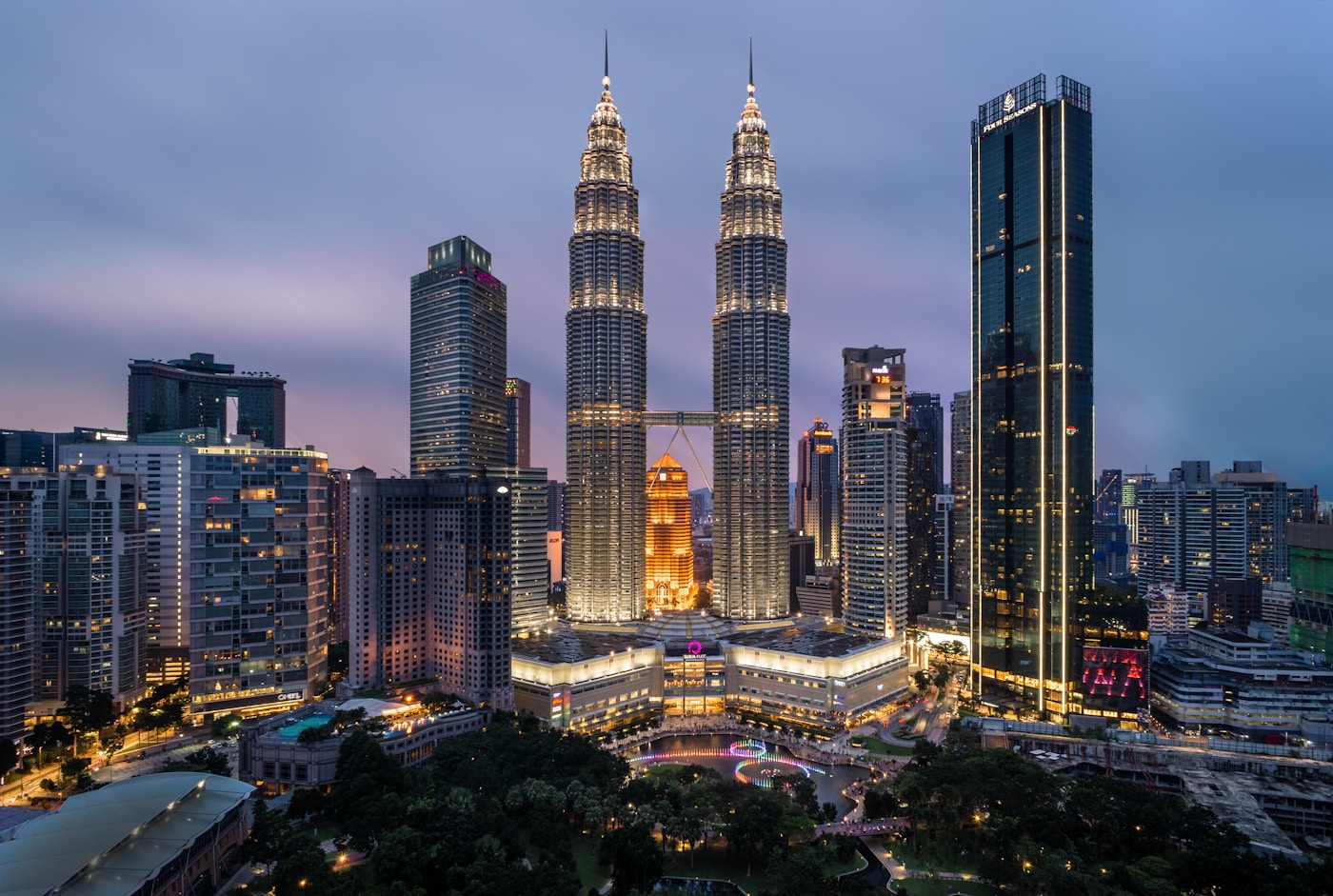
George Town, Malaysia. The island scores 7.9 on the everycity index for 2026: a UNESCO heritage core, the cheapest serious food culture in Asia, monthly costs near 900 dollars, and a remote work visa that few have noticed.
By the EditorsIndex 7.9Updated May 24, 2026
PenangGeorge Town, the UNESCO World Heritage core, scored 8.0 in its own right.
Index score7.9
Cost, single, monthly900 dollars
Income tax, top rate30 percent
Safety score7.5
№ 01 , The Quick Take
The value capital of Southeast Asia.
Penang scored 7.9 on the everycity index in 2026, the highest value adjusted score of any city in Malaysia and a point clear of the national capital, Kuala Lumpur, at 7.6. The case is simple: a single resident lives comfortably on 4,000 ringgit a month, near 900 dollars, in a city with a UNESCO listed old town, a private healthcare system that draws medical tourists from across the region, fiber internet at 500 megabits for 34 dollars, and a food culture that international panels routinely place among the best on earth. The island gives up two things in exchange, a rail network it does not yet have and a local salary structure that trails the West by a wide margin.
The result is a city that rewards the resident who earns elsewhere. The remote worker on a Western salary, the retiree on a fixed pension, and the entrepreneur billing foreign clients all convert Penang cost of living into a standard of life that a 900 dollar budget cannot buy in any comparable Western city. For the local professional the math is harder, and we treat that split honestly through the sections below. Penang sits in Malaysia and anchors the cheapest cities in Asia ranking alongside Kuala Lumpur and the wider Asia atlas.
Penang George Town heritage shophouse streetPenang clan jetty over the water at duskPenang colonial street in the UNESCO corePenang street food hawker stall at nightPenang coastline and headland greeneryPenang temple detail in George Town
№ 02 , Cost of Living
What 900 dollars buys.
Priced in May 2026 for a single resident. The ringgit traded near 4.45 to the dollar.
A central one bedroom in George Town rents for 1,800 ringgit a month, near 405 dollars; a two bedroom in a suburban block runs 1,500 ringgit, near 337 dollars; a family three bedroom condo in the newer Tanjung Tokong towers runs 2,800 ringgit, near 629 dollars. Groceries for one come to 900 ringgit, near 202 dollars, though the resident who eats at the hawker stalls spends far less. A monthly Rapid Penang bus pass is 100 ringgit, near 22 dollars. Utilities with air conditioning run 250 ringgit, near 56 dollars.
The everyday lines are where Penang separates from the West. A hawker meal of char kway teow or nasi kandar costs 8 ringgit, near 1.80 dollars; a flat white in a George Town cafe costs 12 ringgit, near 2.70 dollars; a mid range dinner for two runs 80 ringgit, near 18 dollars. Add it up and a single resident lives well on 4,000 ringgit a month, near 900 dollars, and comfortably on 5,500. The value cities ranking places Penang inside the global top tier on value, and the cost converter tool converts a foreign salary into local terms.
For the resident paid in another currency, Wise moves money into a ringgit account at the mid market rate, which matters when the local banks quote a spread of 2 to 3 percent on a transfer. The cost of living calculator lays out the full monthly budget, and the local property portals iProperty and PropertyGuru run the rental search; expect a two month deposit and a one year lease as the norm.
№ 03 , Safety
Calm, with one caveat.
Penang scores 7.5 on safety, a solid mid table figure built on a low violent crime rate and a strong sense of personal security across the island. Women report walking George Town and the residential suburbs at night without trouble, and the family reading is among the better in the region. The one persistent caveat is motorbike snatch theft: a rider grabs a bag or a phone from a pedestrian or a passing scooter, and the advice every resident gives is to carry your bag on the side away from the road. It is an annoyance rather than a danger, but it is real.
Petty theft aside, the island is calm. Scams target tourists more than residents, and the usual sense applies in the nightlife strip at Batu Ferringhi. Penang sits comfortably inside the safest cities in Asia ranking, and for the new arrival a policy from SafetyWing covers the gap before any local cover begins, at 45 to 70 dollars a month. The expat insurance guide walks the longer term options.
№ 04 , Weather
Hot, humid, and even.
Penang runs a tropical rainforest climate, the Koppen Af, which means there is no winter and barely a season. Daytime highs hold near 32 degrees Celsius, 90 Fahrenheit, all year, and nights drop only to 24 degrees, 75 Fahrenheit. Humidity sits near 80 percent, and the resident from a temperate country needs a month or two to adjust. Air conditioning is a utility, not a luxury, and it is built into the cost figures above.
Rain comes in two monsoon peaks, April to May and September to November, when afternoon thunderstorms are near daily but rarely last long; the island collects near 2,500 millimeters a year. There are no typhoons, which sets Penang apart from the Philippines and Vietnam coasts. The household that loves heat and never wants a coat will thrive; the household that needs four seasons should look elsewhere, and the climate match tool finds the comparable tropical profiles such as Bangkok and Singapore.
№ 05 , Jobs and Salary
The silicon island.
Penang is the manufacturing heart of Malaysia, and the engine is the Bayan Lepas Free Industrial Zone, where Intel has run a plant since 1972 alongside AMD, Bosch, Dell, B. Braun, Osram, and Jabil. The cluster has earned the island the name the Silicon Valley of the East, and it anchors a real engineering labor market: a mid level engineer earns 6,000 to 10,000 ringgit a month, near 1,350 to 2,250 dollars, which is strong by Malaysian standards and modest by Western ones. Tourism and a growing business process outsourcing sector fill out the rest.
The honest read is that local salaries are the weak axis. A professional outside the chip plants earns 3,500 to 5,000 ringgit a month, and that is the structural reason Penang scores so well on value but cannot top the index outright. Malaysia taxes residents progressively to a top rate of 30 percent, with residency triggered at 182 days in the country; the tax calculator tool runs the brackets. The city is built for the person who earns abroad and spends here, and the remote work ranking reflects that.
№ 06 , Neighborhoods
Eight places to live.
From the heritage core to the durian orchards, one verdict each.
George Town
The UNESCO core, profiled separately as George Town. Heritage shophouses, the best street food on the island, walkable, and the one part of Penang where a car is optional.
Pulau Tikus and Gurney Drive
The expat and middle class anchor. Wet market, international groceries, the Gurney seafront malls, and a rent premium of near 15 percent over the island average.
Tanjung Tokong and Seri Tanjung Pinang
Reclaimed waterfront with the newest high rise condos, marina, and the largest concentration of family sized units. Quiet, modern, and car dependent.
Tanjung Bungah
The hillside residential belt between the city and the beach, popular with families for the international schools and the sea views.
Batu Ferringhi
The beach strip. Resorts, the night market, and Uplands School. A 30 minute drive from George Town and a different pace entirely.
Bayan Lepas
The work address. The Free Industrial Zone, the airport, and the engineers who staff Intel and the chip plants. Functional rather than charming.
Air Itam
The inland heart below Penang Hill and the Kek Lok Si temple. Local, cheap, and home to the island most famous assam laksa stall.
Balik Pulau
The rural west, durian orchards and paddy fields. The cheapest land on the island and the slowest life, 45 minutes from the city.
The decision splits on transit. Only George Town and the Pulau Tikus belt support a near car free life; everywhere else on the island assumes a car or a motorbike. The resident who wants to walk to dinner lives in the core and pays the premium; the resident who wants space and a sea view takes Tanjung Tokong or Tanjung Bungah and drives. For the head to head with the mainland capital, see Kuala Lumpur, and for the wider regional picture the Singapore and Bangkok profiles set the comparison.
№ 07 , Healthcare
A medical tourism hub.
Healthcare is one of Penang strongest cards and the reason the island draws patients from Indonesia, the wider region, and the West. The private hospitals, Gleneagles Penang, Island Hospital, Penang Adventist, Loh Guan Lye, and Mount Miriam, run to international standards at a fraction of Western prices: a specialist consultation costs 100 to 200 ringgit, near 22 to 45 dollars, and a private room with surgery runs a small share of the equivalent in the United States. We score healthcare near 8.0 on quality and access.
English is universal in the private system, waiting times are short, and many doctors trained abroad. The public system is cheaper still but slower and busier. For the resident, comprehensive private insurance runs far less than it would in the West, and the new arrival typically bridges the first months with SafetyWing before settling on a local or international plan; the international health insurance guide compares the options.
№ 08 , Education
Schools for the relocating family.
Penang carries a deep international school market for its size, a legacy of the expat engineering community and the medical tourism economy. Uplands School at Batu Ferringhi runs the International Baccalaureate; Tenby, Prince of Wales Island International School, Straits International, and Dalat International round out a field that charges 20,000 to 60,000 ringgit a year, near 4,500 to 13,500 dollars, well below the equivalent in Singapore or Bangkok. We rate the island a strong choice for families on this axis.
For higher education, Universiti Sains Malaysia is one of the country leading public universities and sits on a large campus on the island, which keeps a steady student population and the cafes and rentals that follow it. The combination of affordable international schooling, strong private healthcare, and low cost living is exactly why the island ranks well for the relocating family; the relocation score tool weighs the trade against your current city.
№ 09 , Transport
A car, for now.
Transport is the weak axis, and it is the honest reason Penang does not score higher. There is no rail system yet. The Rapid Penang bus network covers the main corridors and is cheap, but it is slow and infrequent away from the trunk routes, so most residents keep a car or a motorbike. Grab, the regional ride hailing app, fills the gaps cheaply, a cross island trip running 15 to 30 ringgit. The answer is coming: the Mutiara light rail line is under construction and is expected to open near 2031, and it will reshape this section when it does.
The island connects to the mainland by two of the longest bridges in Southeast Asia, the 13.5 kilometer Penang Bridge and the 24 kilometer Sultan Abdul Halim Muadzam Shah Bridge, plus a passenger and car ferry to Butterworth. Penang International Airport at Bayan Lepas links the island to the regional hubs and to Kuala Lumpur in under an hour. Against the cities at the top of the public transit ranking, Penang is a generation behind, and the resident plans on that.
№ 10 , Culture and Cuisine
The food capital of Malaysia.
This is where Penang is not modest. George Town earned UNESCO World Heritage status in 2008 for a historic core where Chinese clan houses, Indian temples, British colonial civic buildings, and Malay kampung sit within a few streets of one another, the product of two centuries as a Straits trading port. The Peranakan, or Straits Chinese, culture that grew from it gives the island its distinctive food, architecture, and festivals, and the street art that Ernest Zacharevic began in 2012 turned the old town into an open gallery.
The food is the headline. Penang is widely called the best street food city in Asia, and the case is the assam laksa, the char kway teow, the Hokkien mee, the nasi kandar, the cendol, and the rojak, most of it sold from hawker stalls for a dollar or two. The clan jetties, the Khoo Kongsi clan house, Kek Lok Si temple above Air Itam, and the annual George Town Festival and Thaipusam procession fill the calendar. Nightlife is modest, near 6.5, weighted toward beach bars and heritage cafes rather than clubs; the resident who needs a serious nightlife scene looks to Bangkok or Singapore.
№ 11 , Remote Work
The nomad visa few have noticed.
For the remote worker, Penang is one of the strongest value plays in Asia. Fiber internet runs 500 megabits for 150 ringgit a month, near 34 dollars, through Unifi and TIME, and the average fixed connection clears 100 megabits, ample for video calls across time zones. Coworking exists, led by Common Ground and a deep bench of cafes in George Town that tolerate the laptop resident, though the scene is smaller than Bangkok or Kuala Lumpur.
The visa case is the part most people miss. Malaysia launched the DE Rantau Nomad Pass in 2022, a remote work visa open to the worker earning above 24,000 dollars a year, and Penang is a designated hub under the program. The longer term Malaysia My Second Home program offers a multi year residency for those who meet the financial threshold. Both make a Penang base far easier than the visa runs that define life in some neighboring countries. The island ranks well on the digital nomad ranking and the nomad visa cities ranking, and the 2026 visa guide walks the application.
№ 12 , The Verdict
Who should move, who should not.
Penang is the clearest value proposition in Southeast Asia for the person who earns elsewhere. The remote worker on a Western salary, the retiree on a fixed pension under the Malaysia My Second Home program, the entrepreneur billing foreign clients, and the food obsessed should all take a serious look. For near 900 dollars a month you get a UNESCO heritage city, private healthcare that draws medical tourists, international schools at a fraction of Singapore prices, fiber internet, and a hawker food culture that is genuinely among the best on earth. The DE Rantau visa removes the bureaucratic friction that complicates the rest of the region.
It is not for everyone. The person who needs a rail network and a car free life should wait for the 2031 light rail or choose Singapore or Kuala Lumpur instead. The person who needs a high local salary will find the engineering market solid but capped and the wider professional market thin. The person who cannot tolerate constant heat and 80 percent humidity will struggle. And the person who needs a deep nightlife scene will find Penang quiet after ten. Weigh it honestly: as a place to earn, Penang is mid table; as a place to live well on money made elsewhere, it is close to the top. Run your own numbers through the cost of living calculator and the relocation score, and read the island against the region in Bangkok and George Town.
№ 08 , Subscribe
The Monthly Mover.
One letter a month. The fastest rising cities, new visa programs, and the cost of living shifts that move the index. Read by 240,000.
Sources, May 2026. Numbeo Cost of Living Index May 2026 · Mercer Cost of Living and Quality of Living Surveys 2025 · OECD Income Distribution and Tax Database 2025 · World Bank Open Data 2025 · Speedtest Global Index April 2026 · EIU Safe Cities and Liveability Index 2024 · the relevant national statistics offices and tax authorities for headline rates · Numbeo, Glassdoor and Levels.fyi for salary medians. First published January 22, 2025. Last updated May 24, 2026.