Vol. 04 / 20261,418,000 people surveyedUpdated Apr 2026
№ 00 , The City Report
Adelaide 2026The independent atlas report on Adelaide, Australia.
A Mediterranean climate state capital of 1,418,000 on the South Australian coastal plain between the Gulf St Vincent and the Adelaide Hills, currency AUD, primary language English. Scored 8.2 on the everycity index across cost, safety, weather, jobs and twelve more axes.
8.2
Index Score
Adelaide, AustraliaFeatured · Vol. 04
№ 01 , The Quick Take
Adelaide in 200 numbers. Read this before you read anything else.
A Mediterranean climate state capital of 1,418,000 on the South Australian coastal plain at 50 meters elevation, currency AUD, primary language English.
8.2
$2,380
8.4
92 Mbps
Adelaide scored 8.2 on the everycity index. A single person spends $2,380 a month here in USD including rent, groceries, transport and utilities. A working couple spends $3,640. Internet runs at a median 92 Mbps per OOKLA Speedtest April 2026. The average full time salary is $5,360 a month before tax per the Australian Bureau of Statistics Average Weekly Earnings November 2024 release. Australia's personal income tax under the Stage 3 schedule effective July 2024 sits at 0 percent below 18,200 AUD a year, 16 percent from 18,201 to 45,000 AUD, 30 percent from 45,001 to 135,000 AUD, 37 percent from 135,001 to 190,000 AUD, and 45 percent above 190,000 AUD. The Medicare levy adds 2 percent on most incomes. Safety reads 8.4 on a 0 to 10 scale, in the green band, the second highest in the country after Hobart, with the night safety subindex at 8.2, the female solo subindex at 8.0, and the family subindex at 9.0. The metro area sits at 34.9285 degrees south, 138.6007 degrees east. The summer high lands at 29 Celsius, the winter low at 8. The city averages 2,580 sunshine hours a year, the highest of any Australian state capital. Compared with peer cities, Adelaide sits 28 percent below Sydney on monthly outlay, 22 percent below Melbourne, and 18 percent below Brisbane. See Adelaide vs Perth for the head to head. The methodology page covers the full index method.
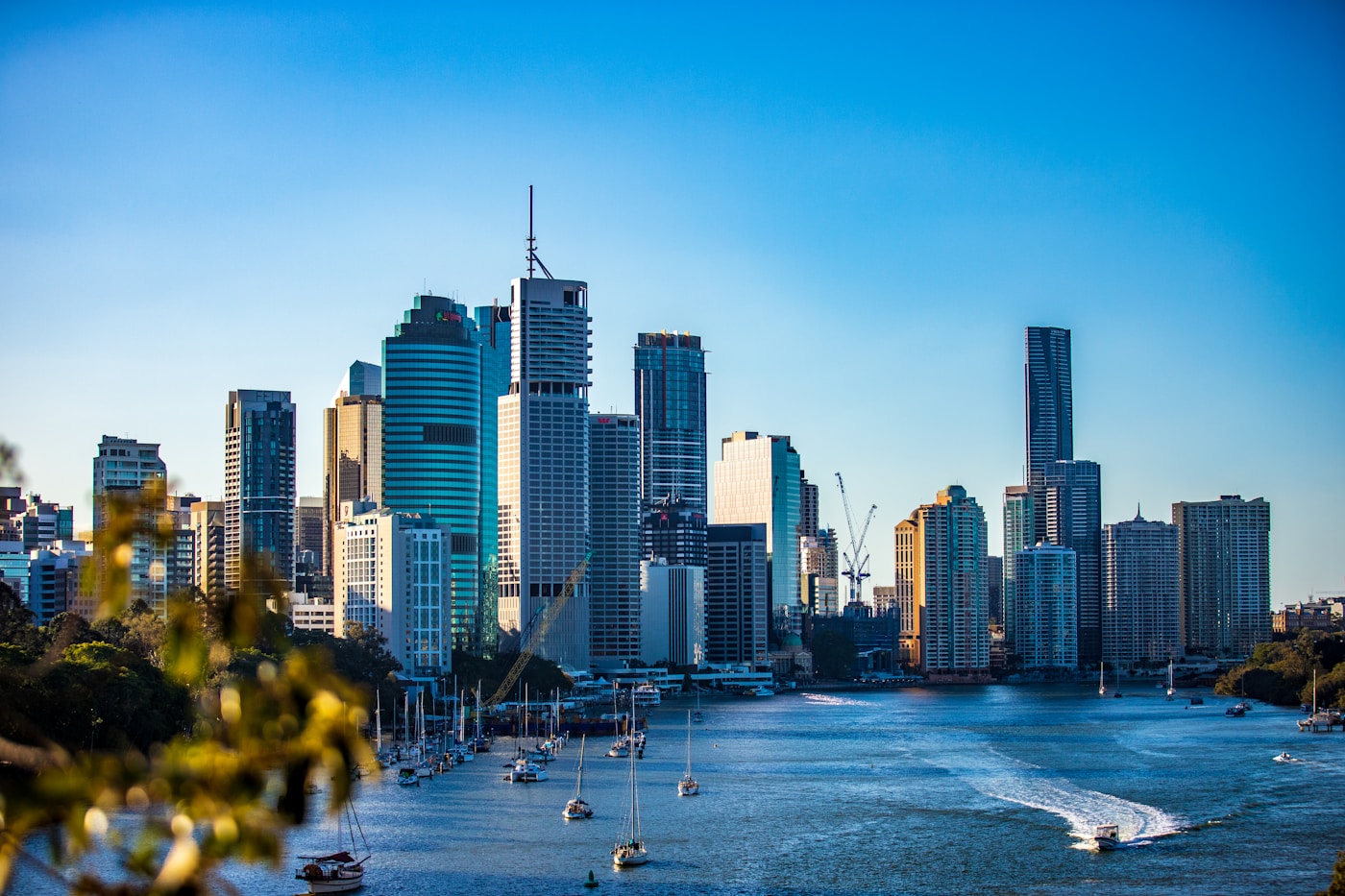
Adelaide · the central city skyline across the Torrens, looking south to the Adelaide Hills
№ 02 , Cost of Living
The math, before the spin.
Every number below comes from Numbeo Q1 2026, cross checked against the Australian Bureau of Statistics Selected Living Cost Indexes March 2025 quarter and CoreLogic rent data for Greater Adelaide.
Item
Detail
USD per month
Rent, one bedroom, city center
furnished, North Adelaide or CBD
$1,420
Rent, one bedroom, outer ring
Glenelg, Norwood, Unley
$1,080
Rent, three bedroom, city center
family unit
$2,720
Groceries
per person, Woolworths or Coles
$380
Transport
monthly Adelaide Metro pass
$92
Utilities
electricity, water, gas
$180
Internet
NBN 100 Mbps, Aussie Broadband
$58
Dinner for two
mid range restaurant, Rundle Street or O'Connell
$84
Coffee
flat white, single origin
$3.80
Gym
full service Anytime Fitness or Fitness First
$78
Single person total
$2,380
Working couple total
$3,640
A single person budgets $2,380 a month to live in Adelaide at the median Numbeo basket; for those returning from Sydney or Melbourne the read is closer to $2,100 because the rent component is structurally lower. Rent is the largest line item, with a furnished one bedroom in the CBD or North Adelaide commanding $1,420 a month and an outer ring equivalent in Glenelg, Norwood, Unley, or Prospect landing at $1,080. The CoreLogic March 2025 rent data placed Adelaide as the fastest growing rent market in the country at 14 percent year on year, narrowing the historic gap to Brisbane and Perth. Most international relocators and dollar earning remote workers use Wise for the USD to AUD conversion at the interbank rate.
Compared regionally, Adelaide sits 47 percent below Sydney on rent, 28 percent below Sydney on the full basket, and 22 percent below Melbourne. The cheapest Australian capitals ranking places Adelaide second behind Hobart. See Adelaide vs Hobart for the head to head value read.
Salary equivalence calculator
$ 0
North Terrace · the cultural boulevard with the Art Gallery, the State Library, and Adelaide University
№ 03 , Safety
Risk, by the subindex.
No moral panic, no rose tint. Four subindices, referenced to the South Australia Police annual report 2024 and the Australian Bureau of Statistics Recorded Crime Victims 2024 release.
Subindex
Score 0 to 10
Band
Overall safety
8.4
Excellent
Solo female safety
8.0
Excellent
Family with children
9.0
Excellent
Night walk, alone
8.2
Excellent
Adelaide's overall safety score lands at 8.4, in the excellent green band. South Australia's homicide rate per the ABS 2024 release was 0.9 per 100,000 residents, the second lowest in the country after Tasmania and well below the OECD median. Property crime in the CBD and the inner ring has trended down 6 percent year on year since 2022 per the SA Police data. The structural safety drivers are the relatively flat population growth profile (Adelaide is the slowest growing of the mainland Australian capitals), the stable housing market, the relatively low income inequality, and the cohesive public service ecosystem. The structural risks that exist are alcohol related violence near Hindley Street and the West End on weekend nights, the rare cluster of organized crime activity tied to historic bikie gang turf (the Hells Angels, Comanchero, and Finks chapters have a structural South Australian presence but the violence is gang internal not random), and standard urban property crime in the outer northern suburbs. The structural read is calm: most residents leave the front door unlocked during the day, and walking home from the Adelaide Oval after a Crows or Power match at 10 PM is the default mode. SafetyWing covers expat short term insurance; Medicare and the private health system covers the residents. See Adelaide vs Melbourne for the head to head safety read.
№ 04 , Weather
Twelve months at a glance.
The full year, pulled from the national meteorological service 1991 to 2020 normals.
Jan
29°
17°
Feb
29°
17°
Mar
26°
15°
Apr
22°
12°
May
19°
10°
Jun
16°
8°
Jul
15°
8°
Aug
17°
8°
Sep
20°
10°
Oct
23°
12°
Nov
25°
14°
Dec
27°
16°
The climate is classified as Mediterranean, Köppen Csa, the only Australian state capital in the Csa band along with Perth. The defining feature is the dry hot summer and the mild wet winter: monthly high reaches 29 Celsius in January and February with occasional 40 Celsius heatwave spikes when the inland north wind dominates, monthly low drops to 8 Celsius in July with frost rare in the suburbs. Annual rainfall is 540 millimeters concentrated in the May through August winter, with the summer dry stretch one of the longest of any state capital. The 2,580 sunshine hours a year is the highest of any Australian state capital. The Adelaide Hills add a microclimate band 250 meters above the plain with 8 Celsius cooler summer days, useful for the Stirling, Aldgate, and Mount Lofty residential band. The single most comfortable months are October, November, March, and April. The harshest stretch is the four day heatwave in late January and early February when the high tops 40 for several days; the heat is dry and the night cools to 22 Celsius even on the hottest days. The single best month for outdoor work is April. Bushfire risk in the Adelaide Hills is structural between November and March; the 1983 Ash Wednesday fires and the 2015 Sampson Flat fire are the historic anchors.
Adelaide Hills · a cool climate vineyard near Hahndorf, 25 kilometers east of the CBD
№ 05 , Jobs and Salary
Who pays, and how much.
Salaries are gross monthly figures from the national statistics office and the international employer market.
Role
Detail
USD per month, gross
City average
full time, ABS Average Weekly Earnings Nov 2024
$5,360
Senior software developer
five plus years, Adelaide tech sector
$8,200
Specialist medical consultant
public hospital staff specialist
$14,500
Defence engineer
BAE Systems or ASC submarine program
$9,200
University academic
senior lecturer level B
$7,800
Personal income tax
top bracket above 190,000 AUD
45 percent
Medicare levy
standard rate
2 percent
GST
goods and services tax
10 percent
Largest employers in metro Adelaide
The Government of South Australia (the largest single employer, the state public service)
BHP Olympic Dam (the copper, uranium, gold, silver mine 560 kilometers north of Adelaide, the largest single private employer in the state)
BAE Systems Australia and ASC (the Osborne Naval Shipyard, building the Hunter class frigates and the SSN AUKUS submarines, the structural strategic industrial concentration since 2018)
The University of Adelaide, Flinders University, and the University of South Australia (the three large universities, the structural research and education cluster)
SA Health and the Royal Adelaide Hospital (the largest health system employer)
Santos Limited (the headquartered ASX listed energy company)
Coopers Brewery, Treasury Wine Estates, and the Barossa and McLaren Vale wine sector (the historic agricultural manufacturing concentration)
Adelaide Airport, Australia Post, and the federal Commonwealth public service Adelaide presence (Defence, Australian Taxation Office, Services Australia)
Adelaide is the Australian defence industrial capital under the 2018 Naval Shipbuilding Plan and the 2021 AUKUS submarine program: the Osborne Naval Shipyard build of the Hunter class frigate and the SSN AUKUS submarine over the next two decades has structurally reshaped the city's labor demand, with BAE Systems Australia, ASC, Lockheed Martin Australia, Saab Australia, and the broader defence cluster hiring engineers, technicians, and project managers at a structural multi billion AUD spend trajectory. The university sector (Adelaide, Flinders, UniSA, with the 2024 merger of Adelaide and UniSA into Adelaide University effective 2026) provides the second labor base. For an after tax estimate, run the tax calculator; the Stage 3 tax cuts effective July 2024 reduced the average effective rate for the 80,000 to 130,000 AUD bracket. Wise handles cross border salary transfers without the major bank spread.
№ 06 , Neighborhoods
Six quarters, one verdict each.
A working map of where to live in Adelaide in 2026.
Quarter
North Adelaide
the historic 19th century terrace and bluestone quarter across the Torrens from the CBD, the densest fine dining strip on O'Connell Street, the standard senior professional pick.
Quarter
Norwood and Kent Town
the eastern inner ring on the Parade strip, mixed terrace and apartment stock, the densest weekend coffee and brunch scene.
Quarter
Unley and Goodwood
the southern inner ring, leafy bungalow stock, the family pick with strong primary schools and the King William Road retail strip.
Quarter
Glenelg and Brighton
the western beach suburbs, the structural family beach pick with the Glenelg tram running to the CBD in 30 minutes, the largest seafront residential concentration.
Quarter
Adelaide Hills (Stirling, Aldgate, Mount Lofty)
the eastern hill band 250 meters above the plain, cooler summer microclimate, large block stock, the high end family pick with stronger private schools.
Quarter
Adelaide CBD and East End
the central grid, the highest density apartment stock near Rundle Street and Hutt Street, the millennial professional pick walking distance to the Adelaide Oval and the Rundle Mall.
Central Market · the covered market on Grote Street, one of the largest produce markets in the southern hemisphere
№ 07 , Healthcare
The system, and the bill.
Healthcare quality is a 0 to 10 score derived from WHO and national health ministry data.
Adelaide's healthcare quality score lands at 8.6 on the everycity scale. The structural anchor is Medicare, the universal public health system that covers South Australian residents (and permanent residents and citizens) for general practitioner visits, public hospital care, and most prescription medications under the Pharmaceutical Benefits Scheme. The public hospital network is anchored by the new Royal Adelaide Hospital on North Terrace (opened 2017, the most expensive single building project in Australian history at 2.4 billion AUD), the Flinders Medical Centre in the south, the Lyell McEwin Hospital in the north, and the Women's and Children's Hospital on King William Road. The private system layer is anchored by Calvary Adelaide Hospital, Memorial Hospital North Adelaide, and Burnside War Memorial Hospital. A specialist consultation under Medicare bulk billing runs zero out of pocket for most residents; private specialist out of pocket gaps run 70 to 220 AUD. Adelaide's healthcare quality score lands at 8.6 in the excellent band: the trauma response time, the specialist density, the chronic disease management, and the maternal and neonatal outcomes all read in the OECD top quartile. SafetyWing Nomad Insurance covers Adelaide for non residents; Medicare for residents. The reciprocal health care agreement with the United Kingdom, New Zealand, Italy, Sweden, Norway, Belgium, the Netherlands, Finland, Ireland, Malta, and Slovenia is the structural feature for short term visitors from those countries.
№ 08 , Education and Family
For the kids, and the postgrads.
School and university density.
International schools
St Peter's College (the historic 1847 founded Anglican boys school in Hackney, the structural feeder to the Adelaide professional elite)
Pulteney Grammar School (the historic CBD coeducational independent)
Walford Anglican School for Girls and Wilderness School (the leading girls schools)
Pembroke School (the largest coeducational independent in Adelaide, Kensington Park)
Scotch College Adelaide (the Presbyterian boys school in Mitcham)
Glenunga International High School (the leading public IB Diploma school)
Adelaide High School (the historic public selective entry school)
Universities
Adelaide University (the 2024 merger of the University of Adelaide and the University of South Australia, effective from January 2026, the new combined research and teaching university)
Flinders University (the southern Bedford Park research university, strong in medicine, social work, and Indigenous studies)
Torrens University (the private university with Adelaide and Sydney campuses)
TAFE SA (the state vocational training network)
The 2024 merger of the University of Adelaide and the University of South Australia into the single Adelaide University, effective from January 2026, creates the third largest Australian university by student headcount and recalibrates the city's research and teaching landscape. The historic University of Adelaide (founded 1874, the third oldest in Australia, with five Nobel laureates including Howard Florey and J M Coetzee) carries the Group of Eight research baseline; UniSA provided the applied teaching and the larger international student population. Flinders University maintains its independent Bedford Park footprint with strong medical and Indigenous research clusters. The school sector splits between a relatively well funded public network and a dense Anglican, Catholic, and Presbyterian independent school cluster; the average independent school fee runs 22,000 to 36,000 AUD a year. The Australia country page covers the broader education context.
№ 09 , Transport
How the city actually moves.
Walkability, transit, biking and the car question.
Mode
Score
Notes
Walkability
8.0
The Colonel Light grid plan CBD is one of the most walkable in Australia; inner ring suburbs walk well to local strips
Public transit
7.2
Adelaide Metro runs the bus network plus the Glenelg tram and the Seaford, Outer Harbor, Belair, and Gawler rail lines; no metro rail subway
Cycling
7.6
The Bikeway network on River Torrens Linear Park, the Riverbank Plan, and the City to Coast path provide a structural commuting baseline
Car needed
No for CBD and inner ring; yes for Hills and outer suburbs
Petrol at $1.84 AUD a liter, parking is paid in CBD and free in residential areas
Adelaide scores 8.0 on walkability inside the Colonel Light designed 1837 city grid (the one square mile bounded by North, East, South, and West Terraces, ringed by the Adelaide Park Lands), one of the most walkable Australian state capitals despite the predominantly car based outer suburb pattern. The Adelaide Metro network combines bus routes, the Glenelg tram extension into the CBD (running to Festival Plaza and the Adelaide Entertainment Centre), and the Adelaide Metro rail lines (Seaford, Outer Harbor, Belair, Gawler) with electrification largely complete by 2025. The 30 day MetroCard at 92 USD equivalent covers unlimited travel. The Adelaide Airport (ADL, 7 kilometers west of the CBD) connects daily to Sydney, Melbourne, Brisbane, Perth, Darwin, Cairns, Hobart, and internationally to Singapore (Singapore Airlines), Doha (Qatar Airways), Auckland (Air New Zealand and Qantas), Kuala Lumpur (Malaysia Airlines and AirAsia X), Bali (Jetstar), and seasonal routes to Hong Kong and Tokyo. For occasional short term mobility, rental cars for relocation scouting at ADL run $42 a day for a Toyota Corolla class car. Most expat professionals on a long term posting buy a car; cycling commuters use the Linear Park Bikeway running along the Torrens through the CBD.
Glenelg · the western beach suburb at the end of the Glenelg tram line
№ 10 , Culture and Cuisine
What makes the city itself.
Food signatures, nightlife rating, and the cultural through line.
The food signatures of Adelaide are anchored by the structural concentration of South Australian agricultural manufacturing: the Barossa Valley and McLaren Vale wine regions (the structural national flagship for Shiraz and Cabernet Sauvignon, with Penfolds Grange, Henschke Hill of Grace, and Wynns Black Label among the most respected Australian wines), the Riverland and the Adelaide Hills (Sauvignon Blanc, Chardonnay, and cool climate Pinot Noir), the Coorong (mulloway, King George whiting), the Adelaide Hills cheese cluster (Woodside, Udder Delights), the Yorke Peninsula seafood (the structural blue swimmer crab and King George whiting line), the Coopers Brewery (the family owned national brewery founded 1862 in Leabrook, the structural Australian craft beer ancestor), the FruChocs (the Robern Menz South Australian icon, the chocolate coated apricot ball), the pie floater (the Adelaide working class lunch, a meat pie in green pea soup), and the dim sims and pasties of the British and Asian working class historic mix. The Adelaide Central Market in the CBD is among the largest covered produce markets in the southern hemisphere; the Adelaide Hills weekend cellar door circuit is one of the densest wine touring concentrations in the world. For longer reads, the best wine cities ranking places Adelaide in the global top 10. Tourism and hospitality cluster on Rundle Street, the East End, the Parade in Norwood, O'Connell Street in North Adelaide, and the Glenelg foreshore. Nightlife sits at a 7.2 rating.
The cultural calendar runs through the Adelaide Fringe Festival (the second largest fringe festival in the world after Edinburgh, February to March, 1,400 plus shows in 600 plus venues), the Adelaide Festival (the high arts festival, March), WOMADelaide (the world music festival in Botanic Park, March long weekend), the Tour Down Under (the UCI World Tour cycling race, January), the Adelaide 500 supercars street race (March, returning since 2022), and the seven AFL home games of the Adelaide Crows and the Port Adelaide Power at the Adelaide Oval. The Adelaide Oval is one of the most respected cricket grounds in the world (the historic 1884 ground, the 2014 redevelopment integrating the Bradman Stand and the Bradman Collection). The Art Gallery of South Australia on North Terrace, the South Australian Museum (with the largest Aboriginal cultural collection in Australia), the Adelaide Botanic Garden, the Adelaide Zoo (the only pandas in the southern hemisphere, Wang Wang and Funi until the 2024 return to China), and the Migration Museum (telling the South Australian post war migration story) anchor the cultural ecosystem. The historic German Lutheran settlement at Hahndorf in the Adelaide Hills and the Cornish copper mining heritage at Moonta and Wallaroo on the Yorke Peninsula are the structural ethnic anchors of the colonial era.
№ 11 , Remote Work
For the laptop, in 2026.
Internet speed, coworking density, nomad visa status, time zone fit.
Variable
Reading
Median residential download
92 Mbps
Coworking spaces in metro
22
Nomad visa
No dedicated digital nomad visa as of May 2026. The Subclass 600 Visitor Visa allows 3 to 12 months. The Skilled Independent Subclass 189 and the Skilled Nominated Subclass 190 (South Australia state nomination) are the standard long term routes. The Employer Sponsored Subclass 482 and Subclass 186 cover the defence and tech sector hires.
Time zone
UTC plus 9:30 ACST in winter, UTC plus 10:30 ACDT in summer (Australian Central Standard and Daylight Time)
Power reliability
Excellent; the 2016 statewide blackout has been followed by structural battery and renewable investment; SA leads Australia on the renewable share
The median residential download in Adelaide runs 92 Mbps on the NBN; Aussie Broadband, Telstra, and Superloop are the standard providers. NBN 100 Mbps runs 79 AUD a month and NBN 1000 Mbps fiber runs 129 AUD a month where the FTTP rollout reaches. The UTC plus 9:30 time zone is an unusual offset (along with Northern Territory it is one of the few global time zones at 30 minute offset; the daylight saving cycle adds a further 30 minute shift); this is a clean fit for East Asian business hours (Singapore, Tokyo, Seoul) and a structural mismatch with European hours. The coworking scene is anchored by Lot Fourteen (the South Australian government innovation precinct on the old Royal Adelaide Hospital site, hosting the Australian Space Agency, the Australian Institute for Machine Learning, and the McLaren applied technology team), the Hub Adelaide on Pirie Street, the WOTSO West Lakes, and the Stone & Chalk Adelaide fintech accelerator. For privacy on Australian ISP infrastructure under the metadata retention scheme, the editorial side note on NordVPN covers the case. Use Wise for the USD to AUD remittance and Booking.com for the first month accommodation in North Adelaide, the CBD, or Glenelg.
Adelaide Oval · the historic 1884 cricket ground with the redeveloped Bradman Stand
№ 12 , The Verdict
Adelaide is the right city, for the right reader.
Move here if you are a defence industry engineer or project manager on the BAE Systems Hunter class frigate or the ASC AUKUS submarine program, an Adelaide University, Flinders, or UniSA academic in a Group of Eight discipline, a medical specialist drawn by the Royal Adelaide Hospital and Flinders Medical Centre, a Barossa or McLaren Vale wine professional, a Sydney or Melbourne professional priced out of those markets and seeking the better space to dollar ratio with comparable infrastructure, a returning South Australian after a decade interstate or overseas, or a remote worker on the East Asian time zone arbitrage who values the Mediterranean climate.
Adelaide scored 8.2 on the everycity index because the cost stack at $2,380 a month is 28 percent below Sydney and 22 percent below Melbourne, the Mediterranean climate at 2,580 sunshine hours a year is the highest of any Australian state capital, the Adelaide Hills, the Barossa Valley, and McLaren Vale put one of the world's most respected wine touring concentrations inside a 45 minute drive of the CBD, the AUKUS submarine and Hunter class frigate program guarantees a structural multi decade defence industrial labor demand, and the 2024 university merger creating Adelaide University in 2026 consolidates the third largest Australian university into a stronger research and teaching cluster. The safety baseline at 8.4 reads excellent across all four subindices.
Do not move here if you need a Sydney or Melbourne scale labor market across every white collar sector: Adelaide concentrates in defence, health, education, agribusiness, and viticulture, and the corporate head office layer is structurally thinner (most ASX 100 head offices sit in Sydney, Melbourne, or Brisbane). The international flight network from Adelaide Airport is structurally smaller than Sydney or Melbourne, with most long haul Asian and European routes requiring a Sydney or Melbourne or Doha connection. The summer 40 Celsius heatwave stretch is a real constraint for outdoor workers and for those without robust air conditioning. The population growth has been the slowest of the mainland capitals for a generation, which means the energy is calmer and the bar density lower than Sydney or Melbourne; most who arrive expecting urban intensity find it elsewhere. Most regret in Adelaide comes from interstate transfers who arrived expecting Sydney scale career velocity in a non defence non health non university sector; the Adelaide model works for the right reader on the right career, and the wrong reader has options eastward.
One city report a week. No fluff, just the numbers behind the move.
Sources and method
Numbeo cost of living Q1 2026; Australian Bureau of Statistics Selected Living Cost Indexes March 2025 quarter; ABS Average Weekly Earnings November 2024; CoreLogic Quarterly Rental Review March 2025; Australian Taxation Office Stage 3 tax schedule effective July 2024; OOKLA Speedtest April 2026; South Australia Police annual report 2024; ABS Recorded Crime Victims 2024; Bureau of Meteorology Adelaide Airport 1991 to 2020 climate normals; Australian Institute of Health and Welfare 2024 health profile; SA Health hospital data 2024; Mercer Quality of Living Survey 2025; World Bank 2025 Australia country profile. Full method on the methodology page. Figures refreshed on May 16, 2026. Photography: Unsplash.